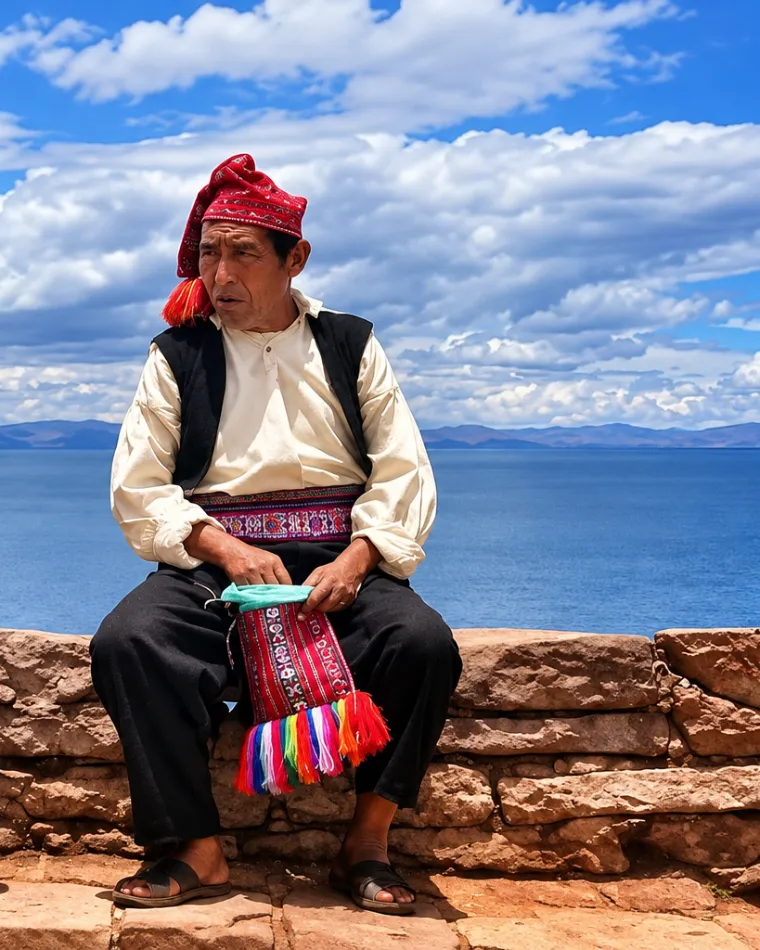

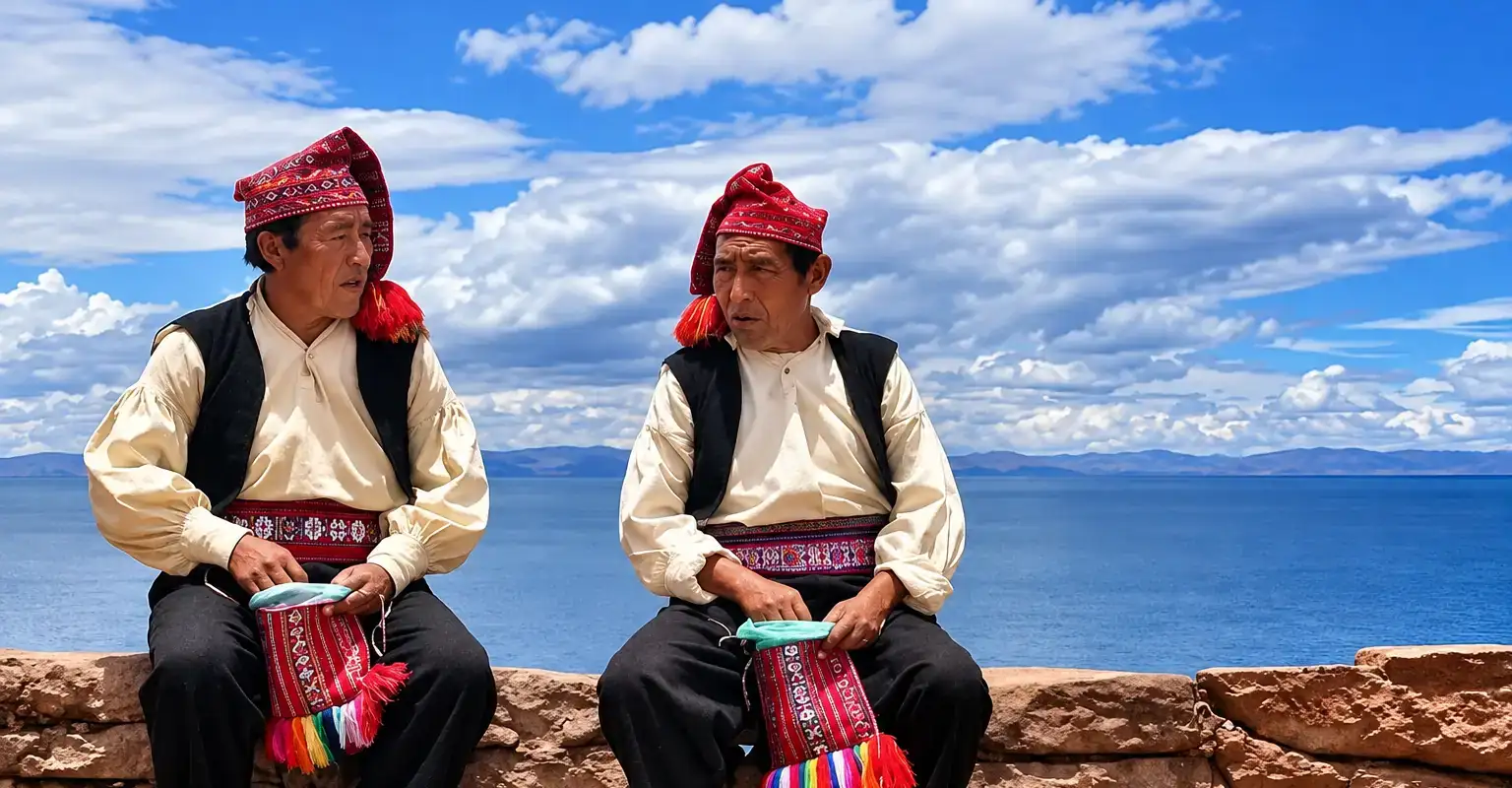
A chullo is the knitted Andean hat with earflaps, ties and tassels that you see all over Cusco and the Peruvian highlands. It is knitted in the round, usually from alpaca or sheep wool, and its colors and patterns often tell which community made it.
Most guides call it an Inca hat. The museums tell a richer story: Andean in purpose, materials and symbols, European in its knitting technique, and shaped over five centuries in the Andes.
We are a local tour operator in Cusco. This guide brings together museum records, UNESCO, Peru’s official alpaca fiber standard and what we see every week in Chinchero, Pisac and the city markets, so you can understand a chullo and buy a real one.
What Is a Chullo? Meaning of the Andean Hat
The word chullo is the Spanish form of the Quechua ch’ullu. PromPerú, Peru’s official tourism board, translates it as “traditional alpaca woolen hat”. In Aymara, the language of the Lake Titicaca region and Bolivia, the same hat is called lluch’u.
Three features make a chullo a chullo:
- Knitted in the round, often on five very thin needles.
- Two earflaps, usually ending in braided ties you can knot under the chin.
- Tassels or pompoms on the flaps and often on the top.
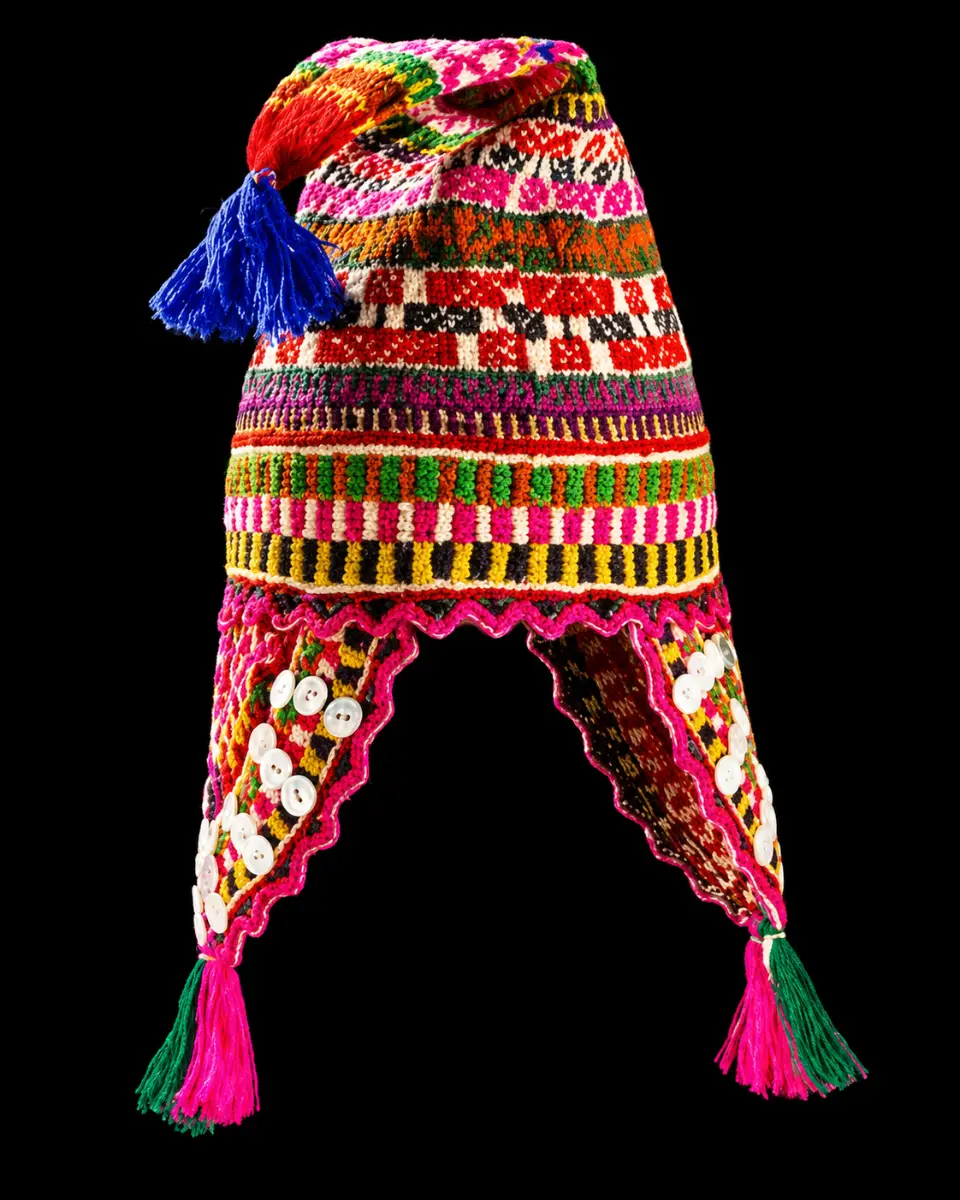
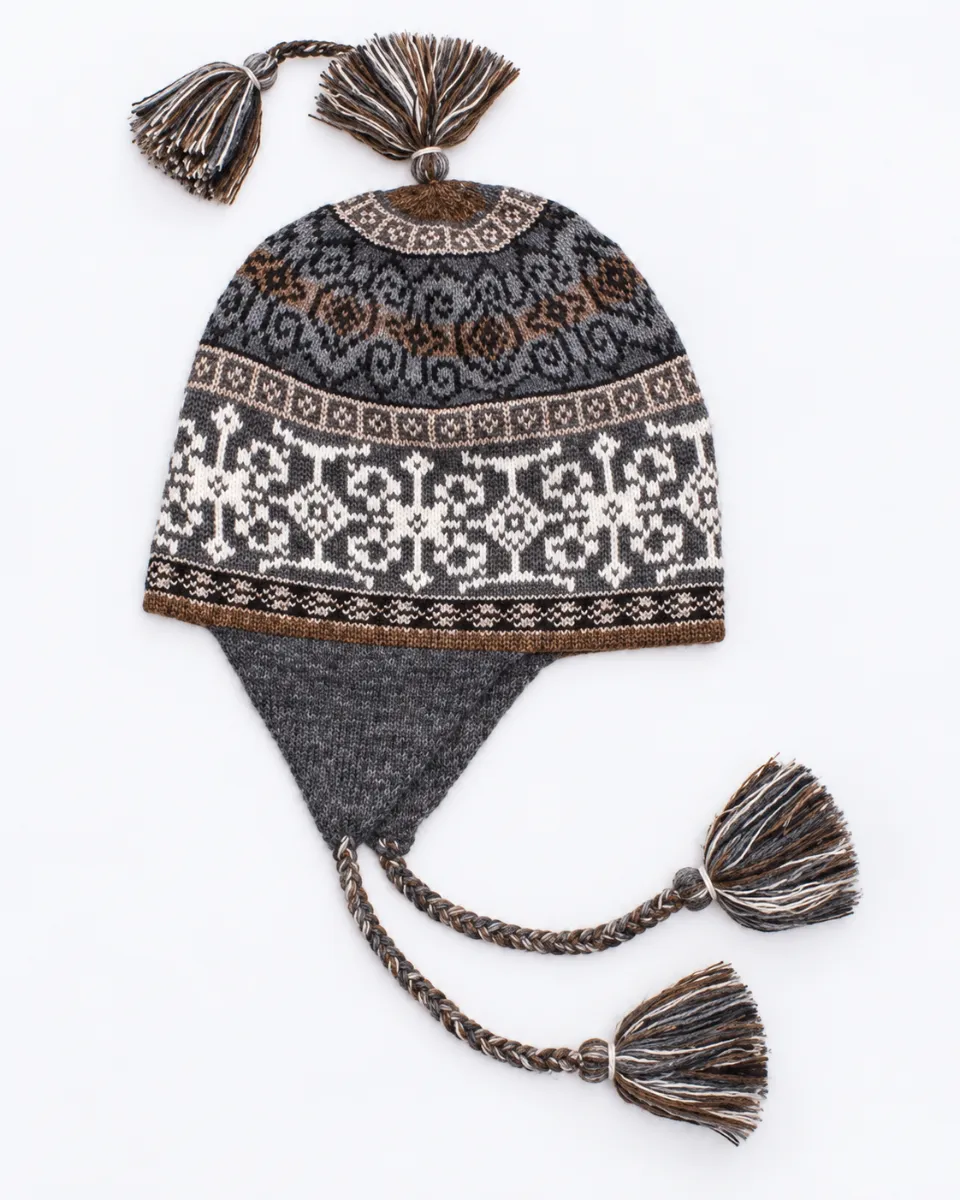
A traditional chullo from Chinchero is built in bands. The CTTC weaver Nilda Callañaupa describes a scalloped edge, a border of stripes and checks, bands of animals and farming motifs, a top ending in three tassels, and the earflaps knitted last.
Chullo vs Beanie
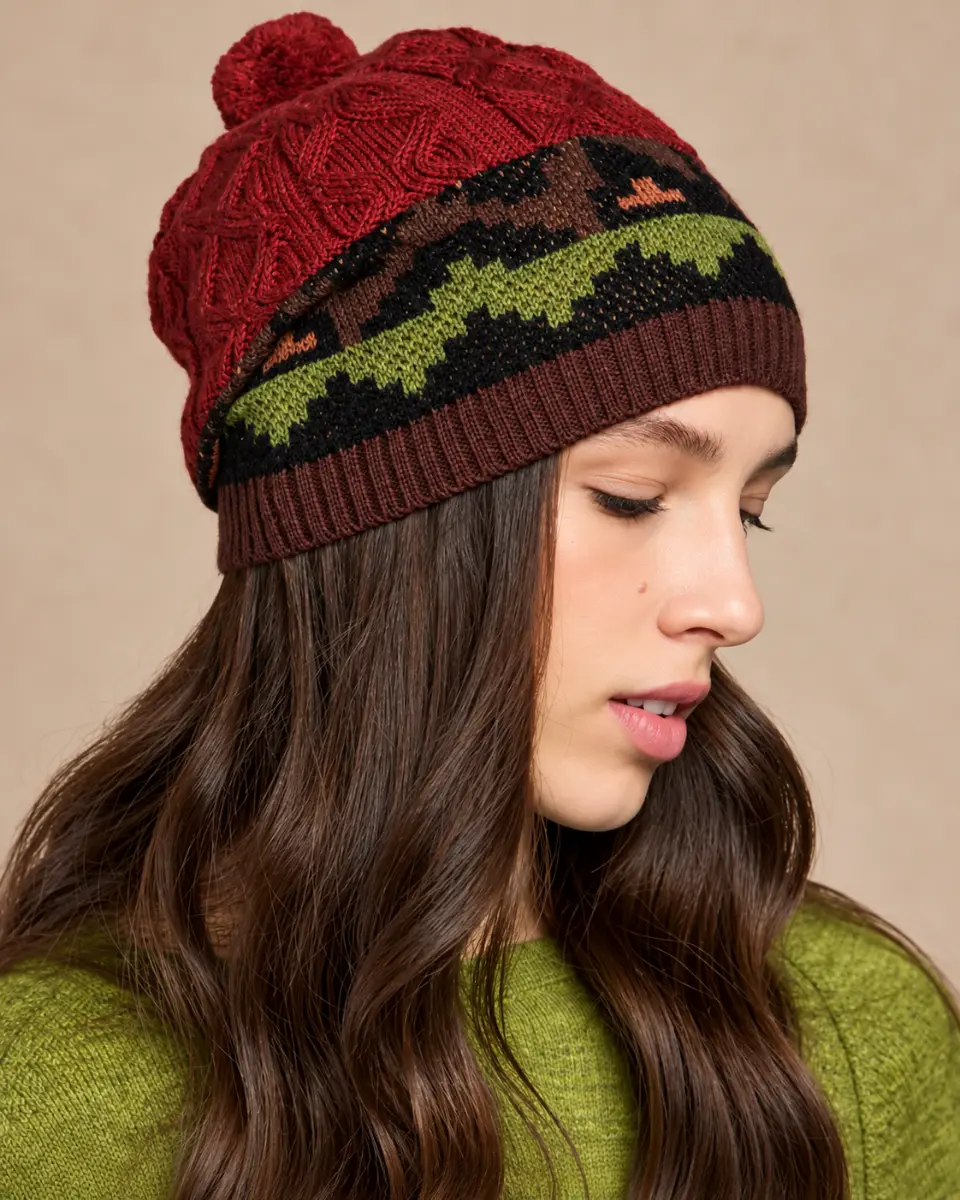
A beanie is a plain, close fitting knitted cap with no earflaps and no community designs. A chullo covers the ears, ties under the chin and carries patterns with local meaning.
Many alpaca shops sell both: the chullo for the Andean look, the beanie for everyday use.
Chullo, Chuyo or Ch’ullu: How to Spell It
Chullo is the standard spelling in Spanish and English. You will also see chuyo, which reflects how many Peruvians pronounce it, plus chullu and the Quechua ch’ullu. “Chulo” is a common misspelling. In English the hat is usually called a chullo hat or Peruvian hat.
The History of the Chullo: Inca Hat or Spanish Knitting?
The Andes have a long tradition of headwear as a sign of status.
The Metropolitan Museum of Art describes the hats with four corners of the Wari and Tiwanaku cultures, made of camelid fiber between about 500 and 1000 CE and likely worn by high ranking men.
Those hats were knotted, not knitted. The Met, the Cleveland Museum of Art and Emory’s Carlos Museum all describe them as built from knots or loops. No museum we found shows a knitted chullo from before the Spanish arrived.
Needle knitting reached the Andes with the Spanish in the 16th century, according to Cynthia LeCount’s Andean Folk Knitting (1990), the standard book on the subject. Andean knitters then took the technique and made it their own, with local fibers, colors and symbols.
Where the shape came from is still debated. The Peruvian historian Arturo Jiménez Borja linked it to the Spanish birrete cap, and other writers point to the Basque papahigo and montera.
Some Peruvian blogs claim the chullo existed before the Incas, but none names a specific artifact.
The fairest summary: the chullo is a colonial era fusion. It rests on more than a thousand years of Andean headwear, but the earflapped hat knitted on five needles is a form that took shape after 1532.
Who Knits Chullos: the Men of Taquile and the Weavers of Cusco
In many Andean communities men knit the chullos and women weave the belts, ponchos and shawls. The best known case is Taquile Island on Lake Titicaca, about 45 km from Puno.
UNESCO proclaimed “Taquile and its textile art” a Masterpiece of the Oral and Intangible Heritage of Humanity in 2005 and inscribed it on the Representative List in 2008.
Its record names the chullo, “a knitted hat with an earflap”, as one of the island’s most characteristic garments. You can read it on the UNESCO intangible heritage page.
On Taquile, boys start knitting at about 8 years old, and fathers knit the first chullo for their babies. UNESCO also warns that tourism demand has changed the materials, production and meaning of some pieces.
Around Cusco, the key institution is the Center for Traditional Textiles of Cusco (CTTC), founded in 1996 by the Chinchero weaver Nilda Callañaupa Alvarez. It works with ten communities: Accha Alta, Acopia, Chahuaytire, Chinchero, Mahuaypampa, Huacatinco, Patabamba, Pitumarca, Santa Cruz de Sallac and Santo Tomás.
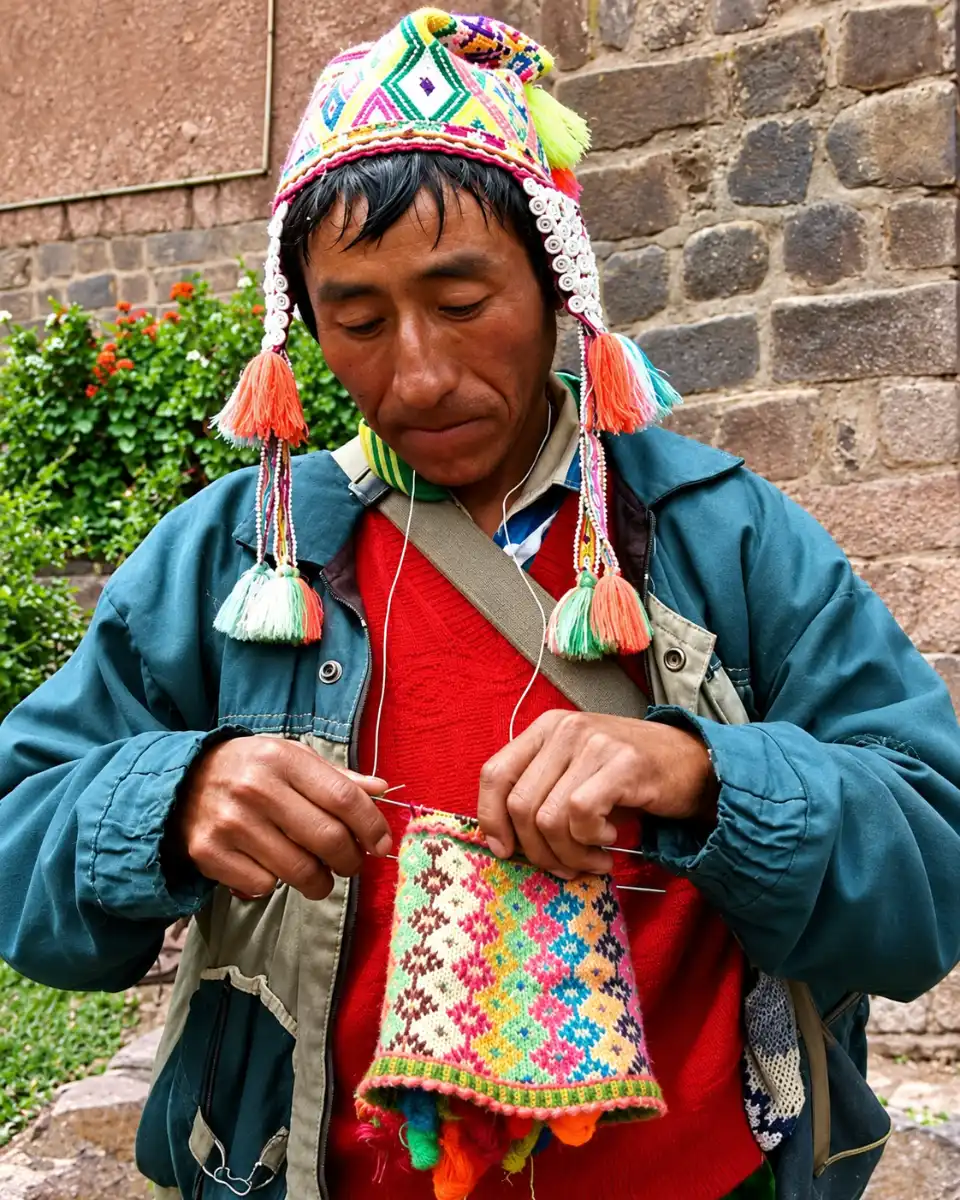
Who knits changes from place to place. In Chahuaytire men mainly design and knit the chullos, while in Accha Alta both men and women knit. In Pitumarca, young men knit caps rich in beads and tassels for themselves, their sons and visitors.
What the Colors and Symbols of a Chullo Mean
A chullo works like an identity card. As Nilda Callañaupa put it, you should be recognized by the type of clothing and textiles you make. Each community repeats its own colors, borders and motifs.
The motifs come from the same vocabulary as pallay, the picked designs of Andean weaving. Chinchero chullos show animals such as the fox, goose, hummingbird and pigeon, and farming motifs such as furrows, plants and ropes.
You can see the word pallay in the name of Pallay Punchu, the “adorned poncho” mountain.
The Taquile Color Code
Island guides explain a code that visitors love. The most common version: a solid red chullo means a married man, and a red and white chullo means a single man. The way the long tip hangs is said to show his mood.
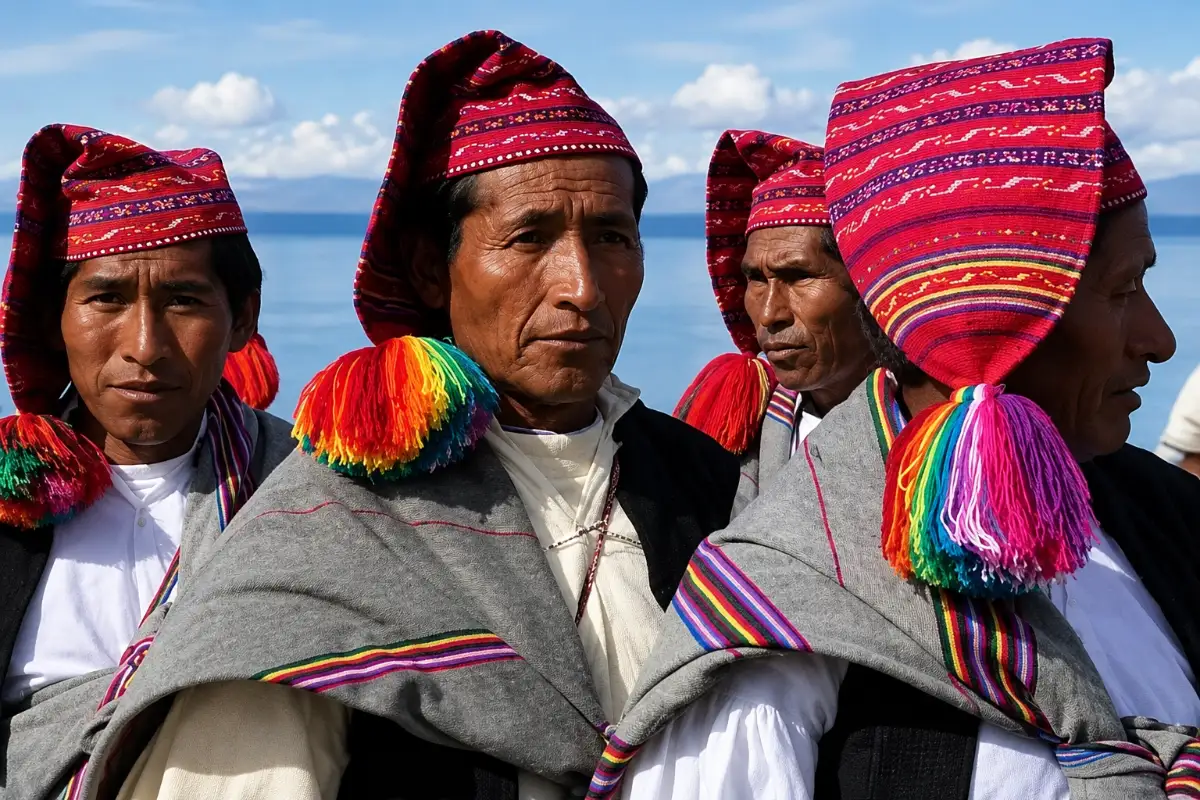
Treat this as living tradition, not a fixed rule. Sources disagree on the details, some reverse the colors, and none of it appears in the UNESCO record. Guides also tell of a suitor who must knit a chullo so fine that it can hold water.
The Meaning of Natural Dye Colors
Before synthetic dyes, every color came from a plant, an insect or a mineral:
- Red, pink and purple: cochineal, the insect that lives on prickly pear cactus.
- Blue: indigo.
- Green: ch’illka (chilca) leaves.
- Yellow: q’olle flowers.
- Brown and black: walnut.
Readings such as “red is blood and earth” or “yellow is the sun” are popular, but they come from tour blogs, not museums.
One documented fact is stronger: when natural indigo disappeared in the 20th century, Chinchero weavers wove the blue sections in black. CTTC revived natural dyeing in the late 1990s.
Types of Chullos by Region
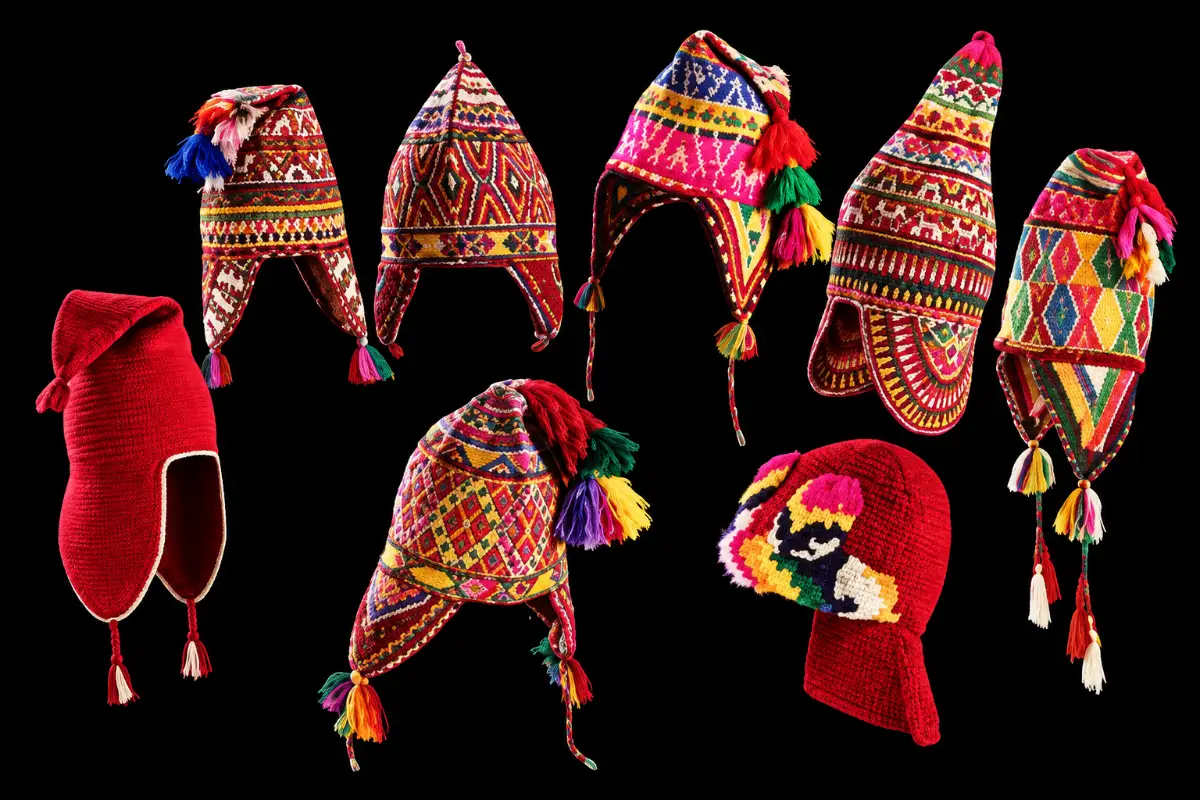
With a little practice you can tell where a chullo comes from by its shape and decoration.
| Region | How to recognize it | Who knits it |
|---|---|---|
| Chinchero (Cusco) | Scalloped edge, striped border, bands of birds and animals, three tassels on top | Mainly men |
| Chahuaytire (Cusco) | Fine bands of motifs, community colors | Mainly men |
| Accha Alta (Cusco) | Raised “bobble” texture | Men and women |
| Pitumarca (Cusco) | Hand spun alpaca, beads and tassels | Young men |
| Ocongate and Ausangate (Cusco) | Pointed tip, pompoms on the flaps, heavy white beadwork | Men |
| Q’eros (Cusco) | Traditional designs, festive beaded versions | Men |
| Taquile (Puno) | Long, narrow, floppy tip almost as long as the hat; red and white | Men and boys |
| Northern Potosí (Bolivia) | Long triangular earflaps with radiant ornaments on the ties | Men |
By use, there are everyday chullos for work in the fields, festive and courting chullos with beads and very fine stitches, children’s first chullos knitted by their fathers, and souvenir chullos.
On Taquile, a traveler noticed that the hats for sale had different designs from those the island’s men wore.
Traditional Hats of Peru Beyond the Chullo
The chullo is the most famous, but it is not the only traditional hat of Peru. Each region and often each community has its own, and many of them are worn by women.
- Montera: a flat, festive hat, woven or felted rather than knitted, worn in many Cusco communities. Its shape and colors change from village to village.
- Bombín (bowler hat): the round hat worn by many women in Puno and Bolivia.
- Head cloths and shawls: on Taquile, women cover their heads with a dark shawl instead of a hat.
- Straw hats: wide brimmed hats of the northern Andes, made for sun rather than cold.
- The hat with four corners: the Wari and Tiwanaku status hat, now seen only in museums.
As a rough rule, men wear the chullo and women wear the montera in many Cusco communities, although girls’ chullos also exist. On our Sacred Valley trips you will see both styles in Chinchero on market days.
Alpaca Chullos: Baby Alpaca, Royal Alpaca and How a Chullo Is Made
Peru is the home of the alpaca. The Ministry of Agriculture (MIDAGRI) reported on 1 August 2026 that the country has about 4.6 million alpacas, more than 80% of the world population, and produced 4,713 tonnes of fiber in 2025.
More than 90,000 families depend on it.
From Fleece to Chullo
A traditional chullo goes through three steps. First the wool is dyed. Then it is spun and twisted into yarn with a drop spindle, the puska. Finally it is knitted, color by color, with small balls of yarn hanging from the work.
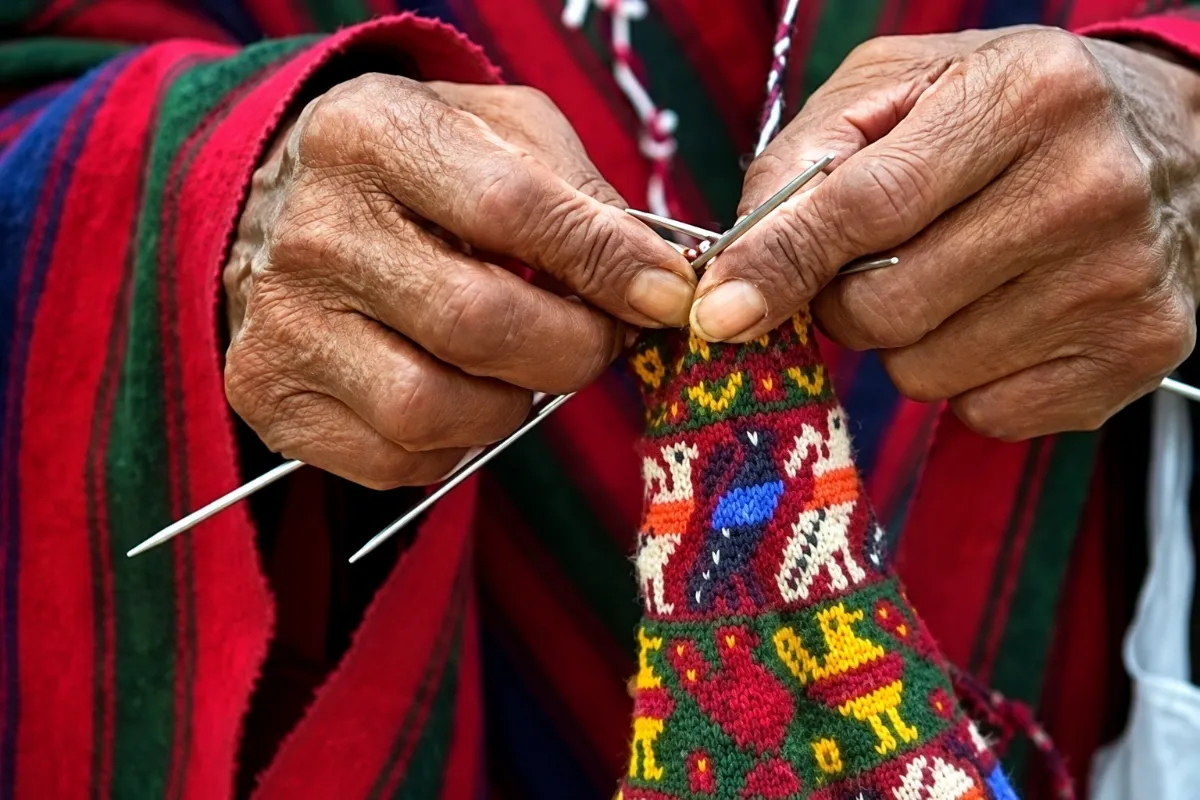
LeCount describes men knitting with five thin double pointed needles, four arranged in a square and the fifth to work the stitches, often with hooked tips made from wire.
Fine chullos reach about 12 stitches per inch in Pitumarca and up to 21 in the finest pieces.
No one has measured how long a chullo takes. A simple market piece takes days; a fine community chullo can take weeks or even months, according to Andean Textile Arts.
Baby Alpaca and Royal Alpaca: What the Labels Mean
Here is the most common myth in Cusco: baby alpaca does not come from baby alpacas. Under Peru’s technical standard NTP 231.301:2014, “baby” is a grade of fineness, measured in microns. It can come from young animals or from adults with very fine fleece.
| Grade (NTP 231.301:2014) | Fiber diameter | How it feels |
|---|---|---|
| Alpaca Super Baby | 20 µm or less | Extremely soft |
| Alpaca Baby | 20.1 to 23 µm | Very soft, no itch |
| Alpaca Fleece | 23.1 to 26.5 µm | Soft |
| Alpaca Medium Fleece | 26.6 to 29 µm | Common in hats |
| Huarizo | 29.1 to 31.5 µm | Can feel scratchy |
| Coarse (Gruesa) | More than 31.5 µm | Scratchy |
Fine fiber is scarce: studies cited in Peruvian research estimate that only 8% to 12% of a fleece is baby grade.
“Royal alpaca” is a commercial term, usually for fiber under 19 or 19.5 µm, but it is not an official Peruvian grade and every brand defines it its own way.
Alpaca vs Merino vs Cashmere
| Fiber | Typical diameter | What to know |
|---|---|---|
| Baby alpaca | 20.1 to 23 µm | No lanolin, smooth, drapes well |
| Superfine merino | About 15 to 19 µm | Crimped and elastic, contains lanolin |
| Cashmere | About 15.5 to 19 µm | Very light and lofty, pills more |
| Llama and coarse alpaca | 29 µm or more | Strong, can prickle |
Is alpaca warmer than wool? Many sellers say so, because some alpaca fibers have a partly hollow core that traps air.
It is a reasonable explanation, but we found no peer reviewed measurement to back an exact figure, so treat “three times warmer” claims with care.
How to Tell a Real Alpaca Chullo from Acrylic
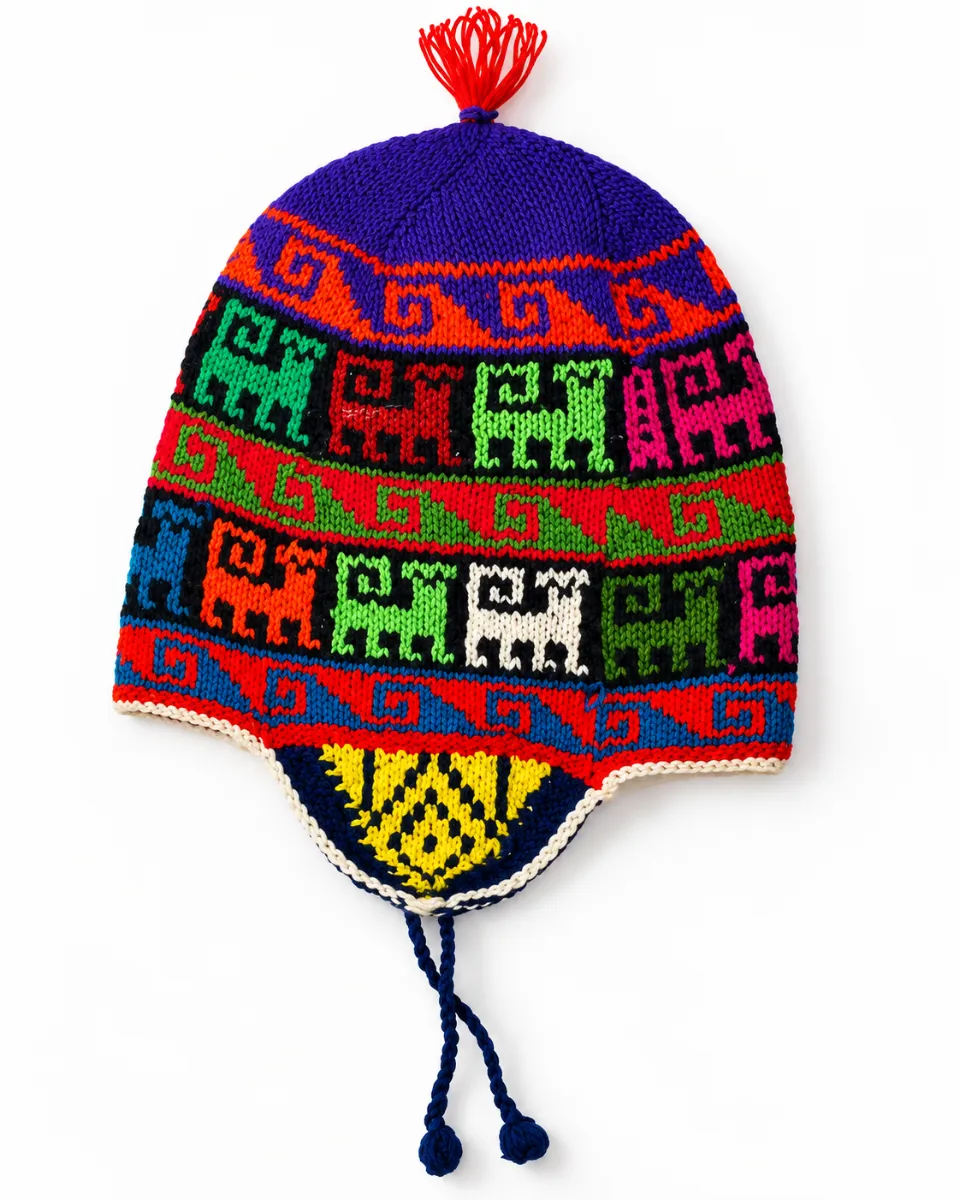
Most cheap “alpaca” chullos in Cusco’s markets are acrylic or blends. Acrylic is not bad: it is cheap, colorful and warm enough for a city day. The problem is paying alpaca prices for it. Use these four tests.
- Price. The strongest signal. A chullo at S/15 to 30 is acrylic, whatever the label says.
- Touch and weight. Alpaca feels cool at first touch, is denser and drapes; acrylic feels warm, light and springy. Check the inside too: brushed acrylic is soft outside and rough inside.
- Label. Look for a percentage, such as “100% alpaca” or “50% alpaca, 50% acrylic”. “Alpaca blend” or “tipo alpaca” means a mix.
- Burn test. Only on a loose thread and with permission. Alpaca smells like burnt hair and turns to ash; acrylic melts into a hard bead and smells of plastic.
Watch out for three tricks: calling everything “baby alpaca”, pricing every item the same, and selling machine knitted pieces as handmade. Fluorescent colors are almost always synthetic, although traditional knitters also use bright acrylic on purpose.
Where to Buy a Chullo in Cusco and How Much It Costs (2026)
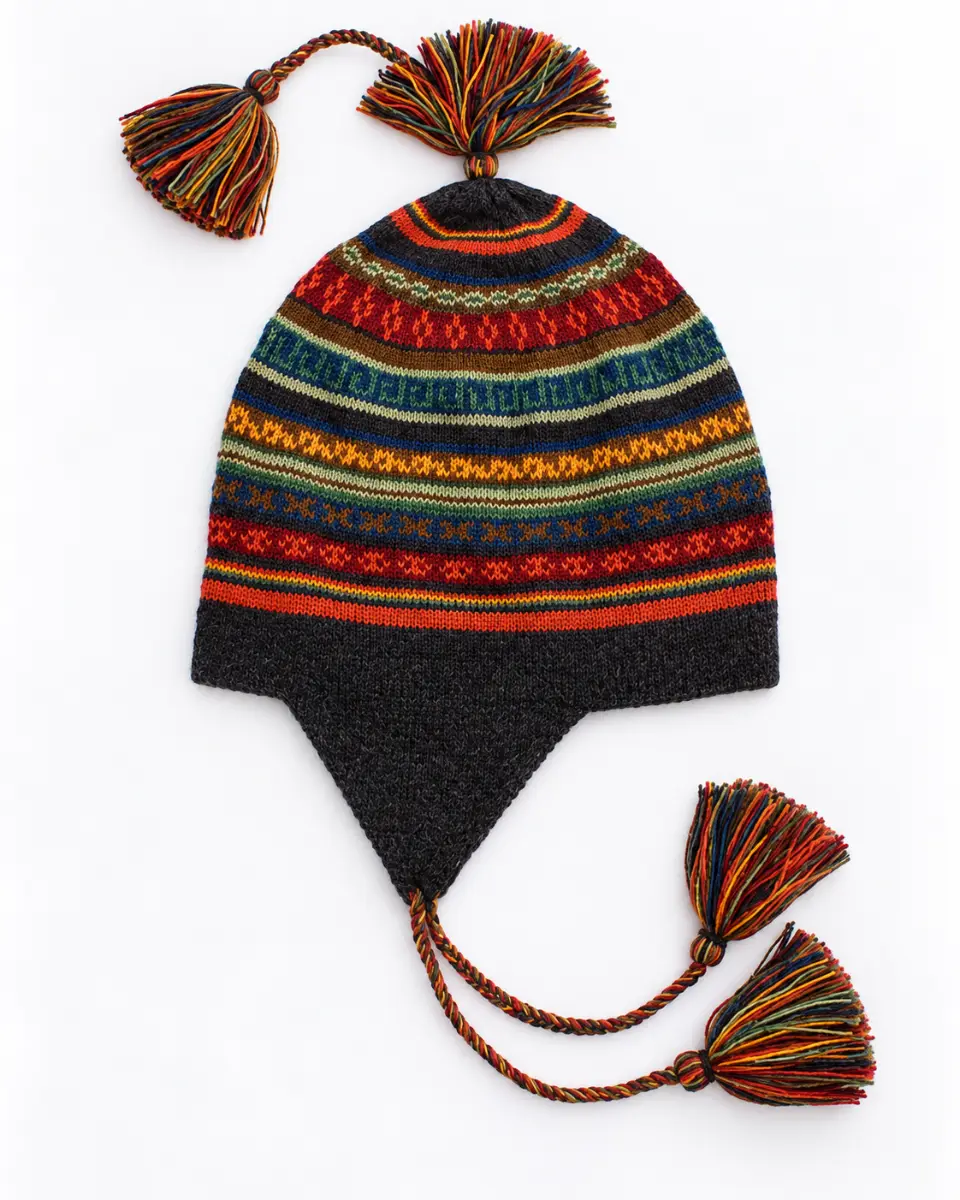
Prices depend on the fiber and on who made the chullo. These are indicative 2026 prices, compiled from market checks and traveler reports.
| Type of chullo | Typical price |
|---|---|
| Acrylic, market | S/15 to 30 (about US$4 to 9) |
| Alpaca blend, market | S/30 to 60 (about US$8 to 17) |
| 100% alpaca or baby alpaca, labeled shop | US$35 to 60 |
| Knitted by hand in a community, natural dyes | Usually more than S/100 (about US$27) |
| Fine festive or beaded chullo | S/300 or more (about US$80) |
Where to look:
- CTTC shop and museum, on Avenida El Sol in Cusco. Every piece is linked to a community, which makes it the most transparent place to buy.
- Chinchero, where the CTTC’s founding association shows how wool is spun, dyed and woven, and sells textiles from its partner communities. There is also a Sunday market.
- Pisac market, busiest on Sundays. It mixes community work with mass produced stock, so use the four tests.
- San Pedro market in Cusco, good for cheap acrylic chullos as gifts.
- Labeled alpaca shops in central Cusco, where the fiber content is printed on the tag.
Our Sacred Valley tour stops in Chinchero for a weaving demonstration, and you can buy directly from the weavers there.
Prefer to order before your trip? See our alpaca chullo hats, knitted in Cusco, with the fiber stated on every label.
If you buy acrylic on purpose, that is fine; just pay acrylic prices. And remember that a few extra soles mean little to you and a lot to the maker.
How to Wear and Care for an Alpaca Chullo
Pull the chullo down over your ears and tie the flaps under your chin when the wind picks up, or leave the ties loose. It fits under a jacket hood.
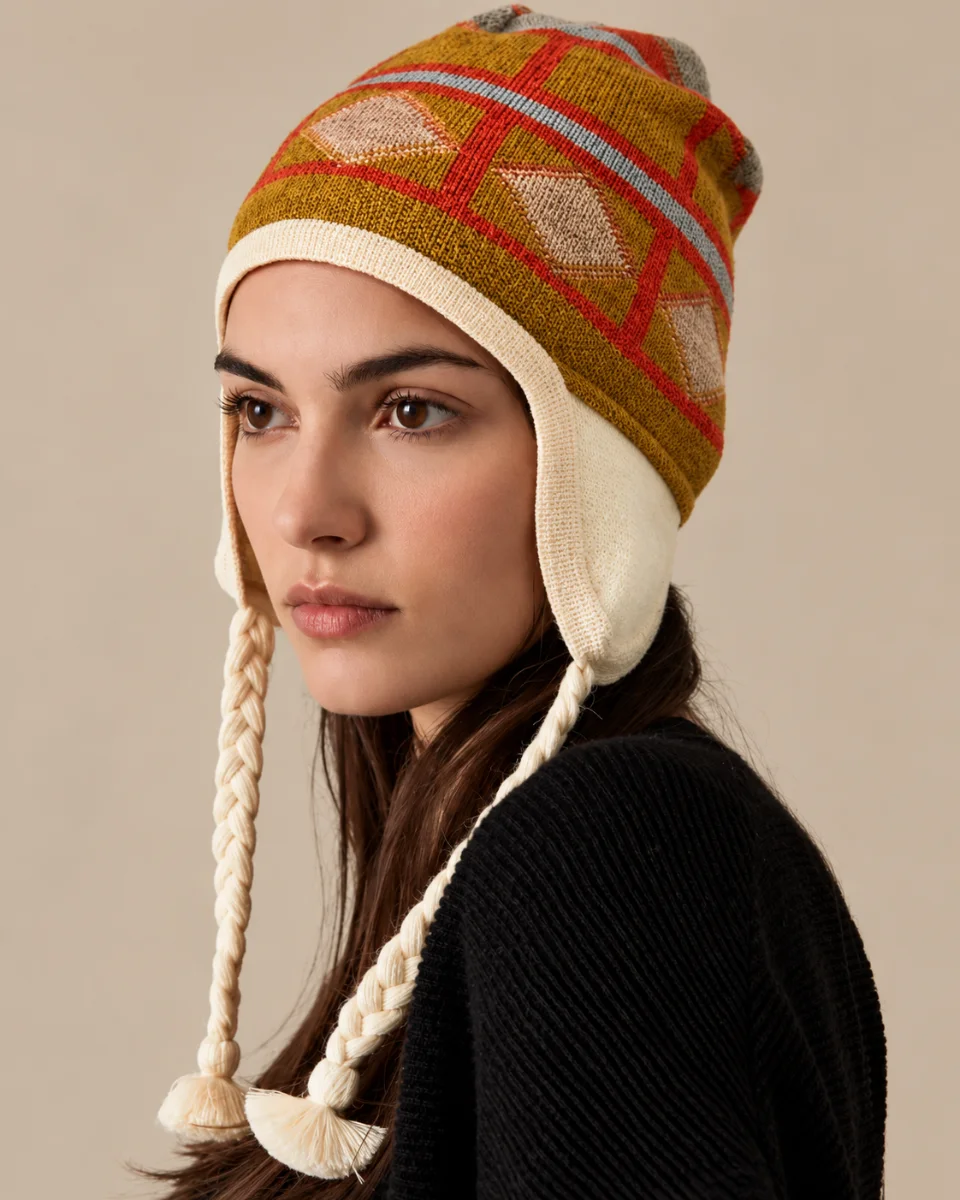
A chullo knitted by hand should sit snug at first, because the wool gives a little with use.
How to Wash Alpaca
- Wash by hand in cold or lukewarm water with wool shampoo or baby shampoo.
- Do not rub or wring it. Press the water out inside a towel.
- Dry it flat in the shade and reshape it with your hands.
- Never use a dryer: alpaca felts and shrinks.
Wash naturally dyed chullos alone the first time, because the color can bleed. Often you do not need to wash at all: alpaca resists odors, and airing it is usually enough.
Is Alpaca Itchy?
Fine alpaca is usually not itchy. It has no lanolin, and baby grade fibers (23 µm or less) are well below the thickness that makes skin prickle, often quoted at about 30 µm.
Coarse alpaca and llama can still scratch, which is why the grade matters.
Two more things: alpaca can pill at friction points, despite what some shops say, and a fabric comb fixes it. And like all animal fibers, it attracts moths, so store it clean in a sealed bag with cedar or lavender.
The Chullo Today: Trekking, Fashion and Pop Culture
On the trail, the chullo is real gear. Alpaca stays warm when damp and the earflaps block the wind above 4,000 m, which is why you see so many on the Salkantay, the Inca Trail and Ausangate. It belongs in any Salkantay packing list.
The chullo is also a symbol of Peru. PromPerú uses it in the country’s tourism image, and in 2010 President Alan García placed a chullo on the FIFA World Cup trophy in Lima.
Fashion found it too. John Galliano sent a Peruvian inspired knitted hat with earflaps down the runway in Dior’s autumn and winter 2002 collection; one of them later sold at auction for US$7,800.
And on 10 October 2026, the seven members of BTS wore ponchos and chullos on stage at the Estadio San Marcos in Lima.
Frequently Asked Questions About the Chullo
Is it disrespectful for tourists to wear a chullo?
No. Andean knitters make and sell chullos for visitors themselves, from the Taquile cooperative to the CTTC. Respect means buying from the makers and not using festive community pieces as a costume.
Do men or women wear chullos?
Both, but in many communities such as Taquile, Q’eros and Chahuaytire, men are the main knitters and wearers. Women more often wear monteras, bowler hats or shawls, although girls’ chullos exist.
Why do chullos have earflaps?
To protect the ears from cold and wind at high altitude. Taquile sits at about 3,800 m and many Cusco communities live higher, where the wind at night is fierce. The flaps can be tied under the chin.
What is the difference between a chullo and a beanie?
A chullo has earflaps, ties, tassels and community designs. A beanie is a plain knitted cap without earflaps.
How much does a chullo cost in Peru?
From S/15 to 30 for acrylic in the markets, US$35 to 60 for labeled alpaca in shops, and usually more than S/100 for a chullo knitted by hand in a community with natural dyes.
Does baby alpaca come from baby alpacas?
Not necessarily. In Peru’s official standard, baby alpaca is a fineness grade of 20.1 to 23 microns. It can come from young animals or from adults with very fine fiber.
Is a chullo an Inca hat?
Not exactly. The Incas and earlier cultures wore status hats, but those were knotted. The knitted chullo with earflaps took shape after the Spanish brought needle knitting in the 16th century.
What is a chullo called in English?
It keeps its name: chullo or chullo hat. People also call it a Peruvian hat, an Andean hat or, in Germany, an Inka Mütze.