
The Sacred Valley of the Incas is the stretch of the Vilcanota‑Urubamba River between Pisac and Ollantaytambo, 30 to 70 km (20 to 45 miles) from Cusco. You can see the highlights in one long day tour, but two days is when the valley shines.
It also sits 400 to 600 meters lower than Cusco, which makes it the best place to spend your first nights and acclimatize before Machu Picchu.
We are a local tour operator in Cusco and we drive through the valley almost every day. This guide covers each town, the order we visit them in, transport, 2026 entrance fees, where to stay and when to go.
What Is the Sacred Valley of Peru and Where Is It?
It is the valley carved by the Vilcanota River, called the Urubamba further downstream, between Pisac and Ollantaytambo. It belongs to the provinces of Calca and Urubamba in the Cusco region. Colonial records call it the “Valley of Yucay”.
Chinchero, Moray and Maras are usually included too, even though they sit on a high plateau above the valley, not by the river. These are the approximate road distances from Cusco:
| Destination | Distance from Cusco | Approximate drive |
|---|---|---|
| Chinchero | 28 km (17 mi) | 40 min |
| Pisac | 33 km (21 mi) | 45 min to 1 hr |
| Maras (town) | 40 km (25 mi) | 1 hr |
| Moray | about 50 km (31 mi) | 1 hr 15 min |
| Urubamba (via Chinchero) | about 55 km (34 mi) | 1 hr 15 min |
| Ollantaytambo | 72 km (45 mi) | 1 hr 30 min to 2 hrs |
Why It Is Called “Sacred”: A Short History
For the Incas this was prime land: lower and warmer than Cusco, perfect for corn, a crop with ritual prestige. That is why the nobility built their royal estates here: Pisac is attributed to Pachacuti, and the Quispiguanca palace in Yucay to Huayna Capac.
In January 1537, Manco Inca defeated Hernando Pizarro’s expedition at Ollantaytambo. The Incas fired from the high terraces and flooded the plain to stop the Spanish cavalry. Manco later withdrew to Vilcabamba, the last Inca refuge.
The valley as a whole is not a World Heritage Site, but the Maras Salt Mines have been on UNESCO’s Tentative List since 2019.
Things to Do in the Sacred Valley, Town by Town
Pisac: Ruins and Market
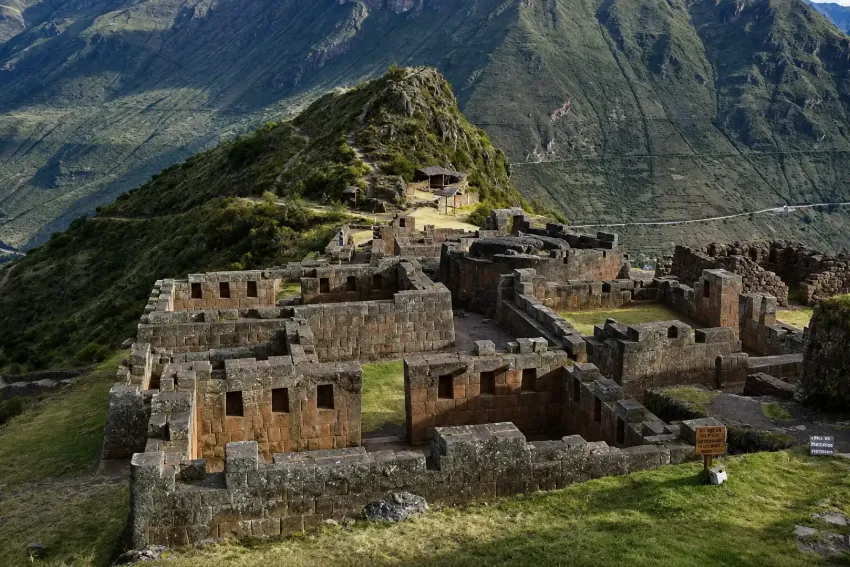
The Pisac archaeological park has huge terraces, a ceremonial sector with the Intihuatana, and the largest known Inca cemetery, with tombs carved into the cliff. It sits up on the mountain, about 9 km (5.6 mi) by road from town.
The craft market is open every day. In our experience, Monday to Friday is calm and easy to browse. Saturdays and Sundays can get busy, especially Sunday, the traditional market day, but in general it is not a problem.
Chinchero: Weavers and a Colonial Church
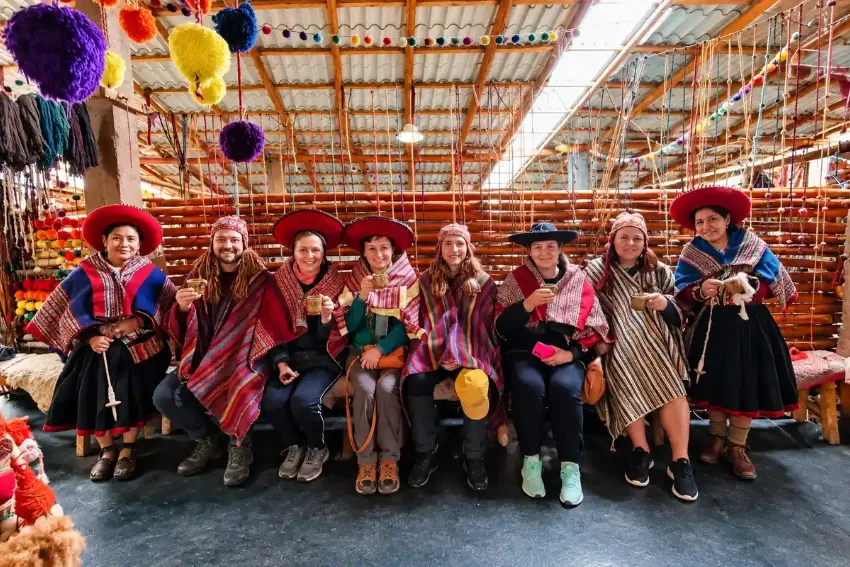
Chinchero sits at about 3,762 m (12,342 ft), higher than Cusco. Its colonial church was built on the walls of Tupac Inca Yupanqui’s palace and is framed by Inca terraces. Local textile centers show how wool is spun and dyed with plants.
The new Chinchero airport is under construction nearby. According to Peru’s Ministry of Transport, it is expected to open in 2029, so for now every flight still lands in Cusco.
Moray: The Inca Agricultural Laboratory
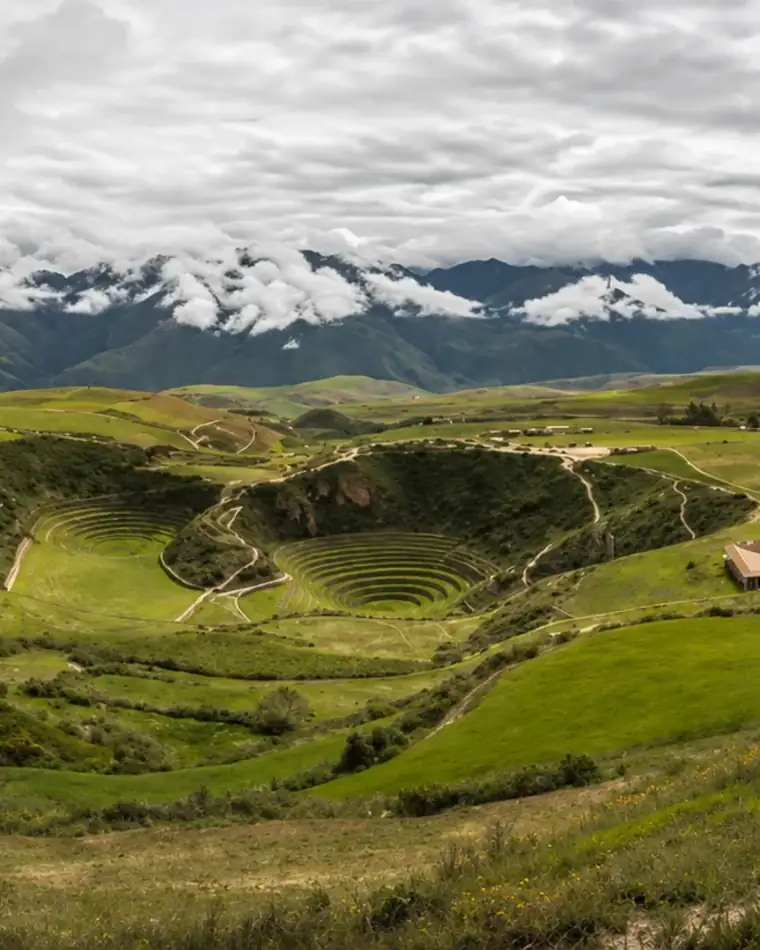
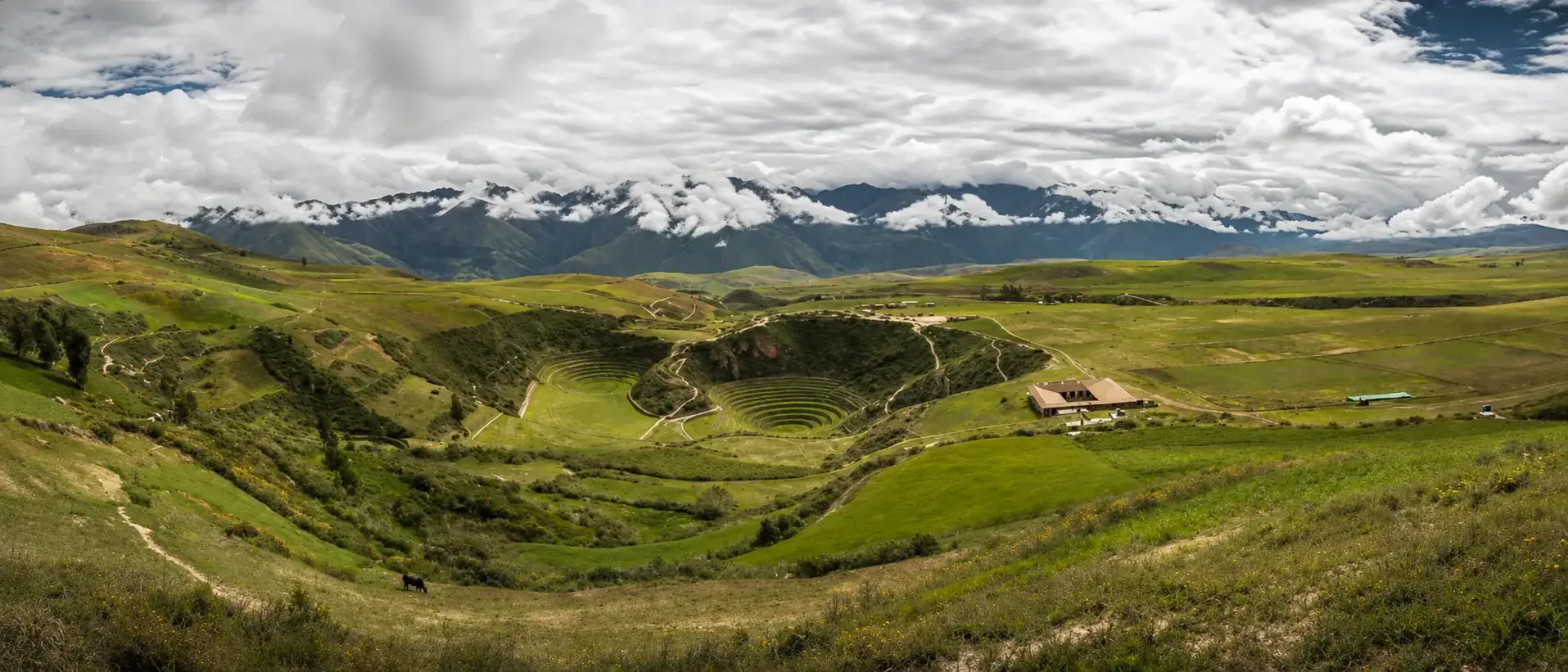
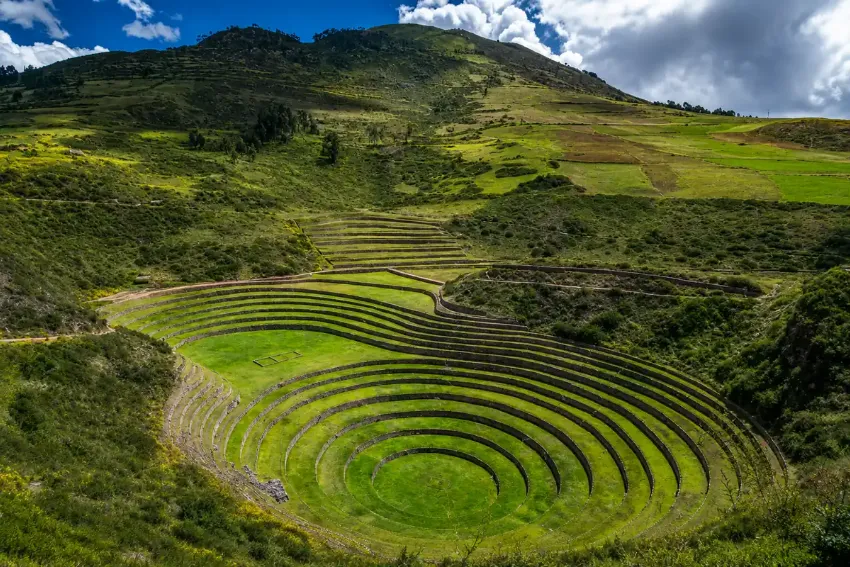
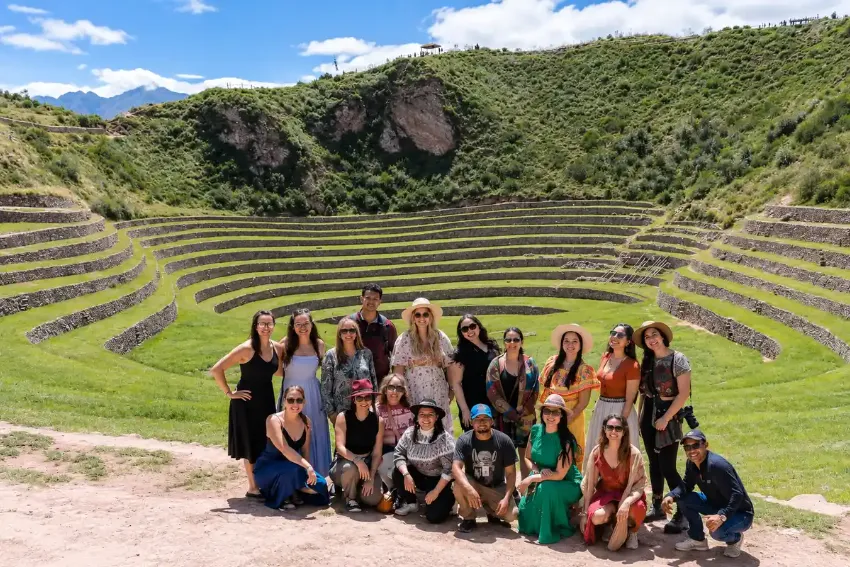
Moray is a set of natural depressions lined with circular terraces. The largest, Qechuyoq, is about 30 m (100 ft) deep. The most accepted theory is that it was an agricultural research center, where each level recreated the conditions of a different growing zone.
Watch out for a popular myth: a 15 °C (27 °F) difference between the bottom and the top. No source backs it up. Published measurements show soils 2 to 3 °C warmer from one sector to the next. The microclimates are real, just subtler.
Maras Salt Mines
They are thousands of salt pans on the hillside, between 3,000 and 5,000 depending on the source, fed by a salty spring. They are run by Marasal, a company owned by families from Maras and Pichingoto who still harvest the salt by hand.
Since June 2019 you can no longer walk among the pans, for hygiene reasons. Visits follow viewpoints and marked paths. The entrance is not part of the Tourist Ticket and is paid separately, in cash.
Urubamba and Yucay
Urubamba is the provincial capital and the practical hub of the valley: the minivan terminal, a train station, buffet restaurants and many countryside hotels. Next door, Yucay keeps remains of Huayna Capac’s palace.
Ollantaytambo: The Living Inca Town
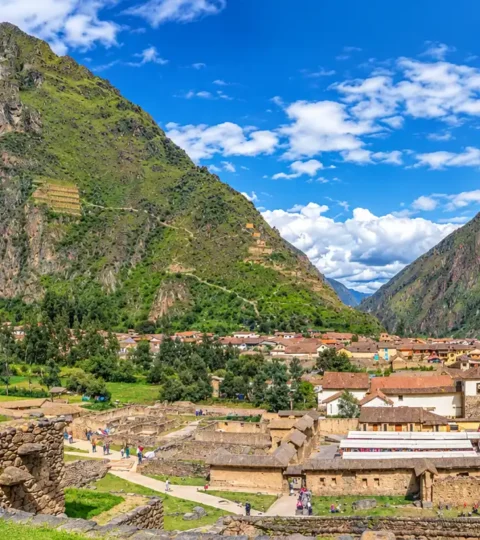
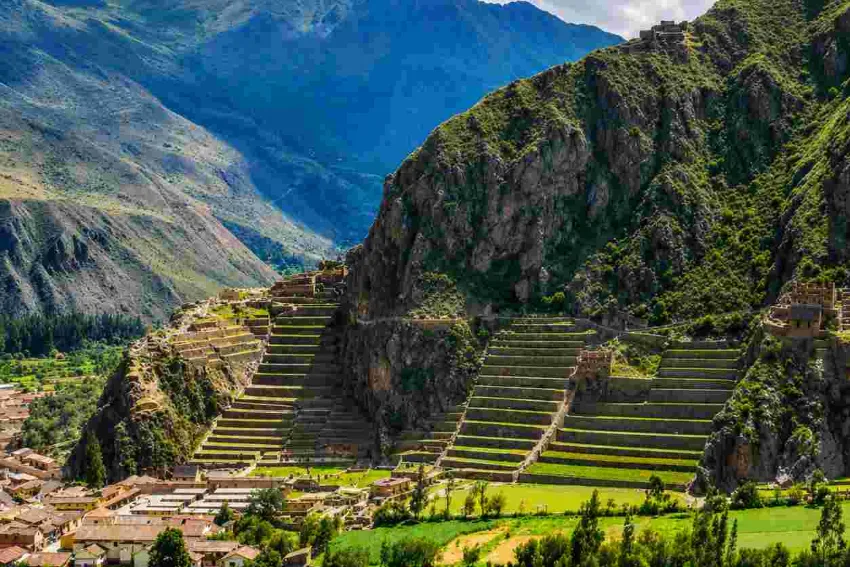
Ollantaytambo (2,792 m / 9,160 ft) combines a temple‑fortress of monumental terraces with the Temple of the Sun and its six monoliths. Across town, on Pinkuylluna hill, a free trail climbs to Inca storehouses.
What makes it special is that people still live on the original Inca street grid, with blocks and water channels that still work. It is also the main train station for Machu Picchu.
Sacred Valley Map and the Best Order to Visit
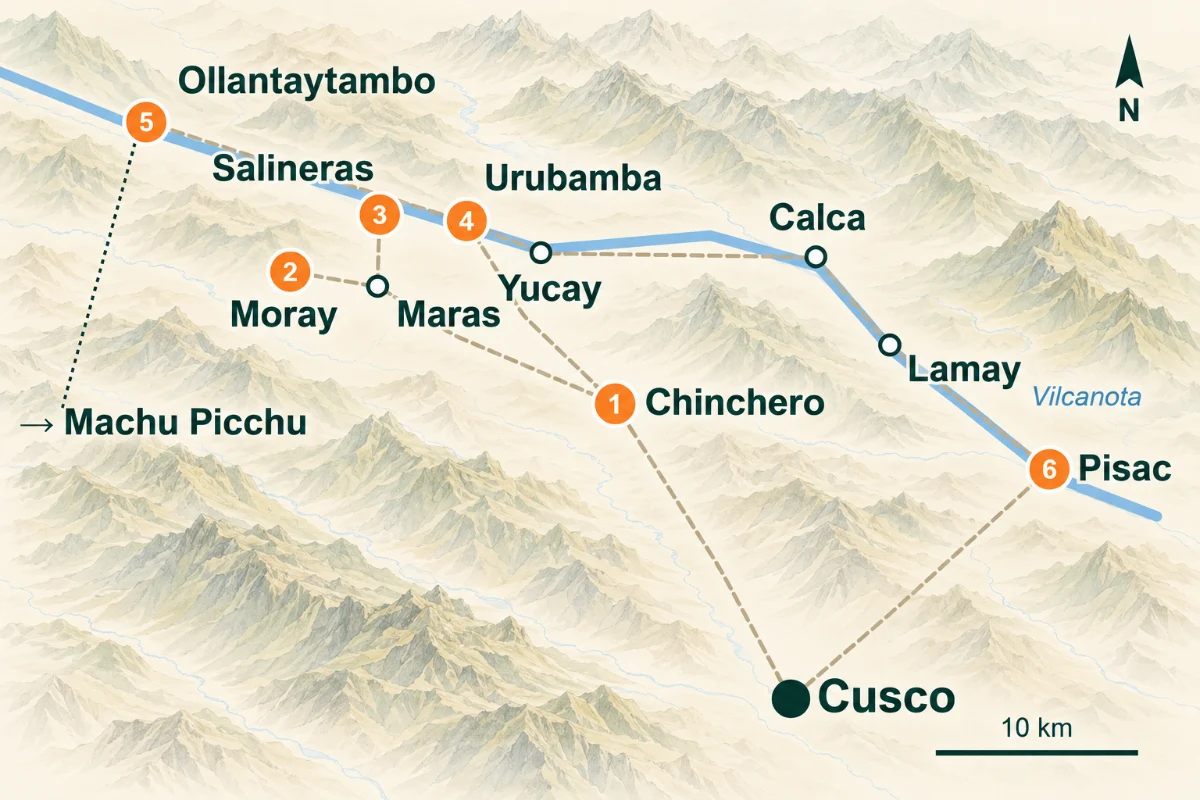
Think of the valley in two halves. To the east, by the river, are Pisac and Calca. To the west, on the plateau, are Chinchero, Moray and Maras, with Ollantaytambo at the far end. Urubamba sits in the middle.
Most day tours do Pisac in the morning, have lunch in Urubamba and continue to Ollantaytambo and Chinchero. We run the loop in reverse, so we reach each site with fewer groups:
| Approximate time | Stop |
|---|---|
| 6:30 to 7:00 a.m. | Pickup at your hotel in Cusco |
| Morning | Chinchero, Moray and the Maras Salt Mines (until noon) |
| 12:45 to 1:45 p.m. | Buffet lunch in Urubamba |
| 2:15 to 3:00 p.m. | Ollantaytambo |
| 4:30 to 5:15 p.m. | Pisac |
That way you reach Pisac late in the afternoon, after the morning groups have left. This is the order of our Sacred Valley day tour from Cusco.
How to Get to the Sacred Valley from Cusco
By Shared Minivan (Colectivo)
Minivans to Urubamba and Ollantaytambo (via Chinchero) leave from Pavitos Street in Cusco. They cost about US$3 to 6 (S/10 to 20), leave when full, roughly between 6 a.m. and 6 p.m., and take 1.5 to 2 hours.
For Pisac there are minivans on the eastern road; ask your hotel for the current stop. No public transport reaches Moray or Maras: you get off at the Maras turnoff and continue by taxi.
By Taxi or Private Transfer
A taxi from Cusco to Ollantaytambo costs about US$29 to 43 (S/100 to 150); agree on the price first. A private transfer with stops along the way runs about US$35 to 50 per car.
On a Guided Tour
It is the easiest way to see Moray and Maras, which are hard to reach on your own. Our day tour costs from US$25 and includes hotel pickup, transport, a guide and a buffet lunch. Entrance fees are paid separately.
How Many Days in the Sacred Valley: 1‑Day and 2‑Day Itineraries
In one day you see the five main sites, but with about 45 minutes at each one and a 12‑hour day. It is the best option if you are short on time.
With two days you really enjoy the valley, and it matches the 2‑day validity of the Partial Ticket III. This is the plan we recommend if you are heading on to Machu Picchu:
| Day | Plan | Overnight |
|---|---|---|
| Day 1 | Pisac (ruins and market) and Urubamba | Urubamba |
| Day 2 | Chinchero, Moray, Maras Salt Mines and Ollantaytambo | Ollantaytambo |
| Day 3 | Early train to Machu Picchu | Aguas Calientes or Cusco |
If you would rather have us plan it, our Sacred Valley and Machu Picchu 2‑day tour pairs the valley with the citadel, and the 5‑day trip with Cusco and Rainbow Mountain adds the city.
Sacred Valley Tour or On Your Own? Entrance Fees and the 2026 Tourist Ticket
| On your own | Guided tour | |
|---|---|---|
| Cost | Low: minivans for US$3 to 6 | From US$25 with lunch |
| Time at each site | As long as you like | About 45 minutes |
| Moray and Maras | Hard, no public transport | Included |
| Guide | No | Yes, English or Spanish |
In short: go on your own if you are sleeping in the valley and want time in Pisac or Ollantaytambo. Take a tour if you are going and returning to Cusco the same day and want all five sites.
Cusco Tourist Ticket (Boleto Turístico): What It Covers and What It Costs
Pisac, Chinchero, Moray and Ollantaytambo can only be visited with the Cusco Tourist Ticket; single‑site tickets are not sold. These are the official COSITUC prices as of October 2026:
| Ticket | Price (foreigners) | Valid for | Sacred Valley sites |
|---|---|---|---|
| Integral (full) | about US$38 (S/130) | 10 days | All 4, plus 12 sites and museums in Cusco |
| Partial III (Sacred Valley) | about US$20 (S/70) | 2 days | Pisac, Ollantaytambo, Chinchero and Moray |
| Student | about US$20 (S/70) | 10 days | Same as the full ticket |
Swipe the table sideways to see more →
The student ticket covers ages 10 to 17 with ID, or 18 to 25 with a valid university card or ISIC. Payment is cash in soles. Be wary of online resellers charging up to US$50 for the full ticket.
If you also plan to visit the ruins around the city, the full ticket is better value. We explain it in our guide to Cusco Inca ruins.
Maras Salt Mines Entrance Fee
The salt mines are not covered by the Tourist Ticket. Since January 2024 they cost about US$6 (S/20) for foreigners and S/15 for Peruvians, according to Marasal. The old price was S/10, and many guides still list it. Cash only.
Where to Stay in the Sacred Valley: Urubamba, Ollantaytambo or Pisac
| Area | Atmosphere | Distance to the train | Best for |
|---|---|---|---|
| Ollantaytambo | Inca town, lively by day and quiet at night | Walk to the station | Catching an early train to Machu Picchu |
| Urubamba | Countryside hotels with gardens; the town itself has little charm | 20 to 30 min from Ollantaytambo | Families, spacious hotels, a central base |
| Yucay | Very quiet, hacienda hotels | About 30 min | Rest and couples |
| Pisac | Holistic vibe, retreats and eco‑lodges | Far, over 1 hr | The market, yoga, a first night out of Cusco |
Swipe the table sideways to see more →
Our advice: if you take the train the next morning, stay in Ollantaytambo. If you want rest and a garden, Urubamba or Yucay. If you are staying in the city instead, see our guide on where to stay in Cusco.
Sacred Valley Weather and the Best Time to Visit
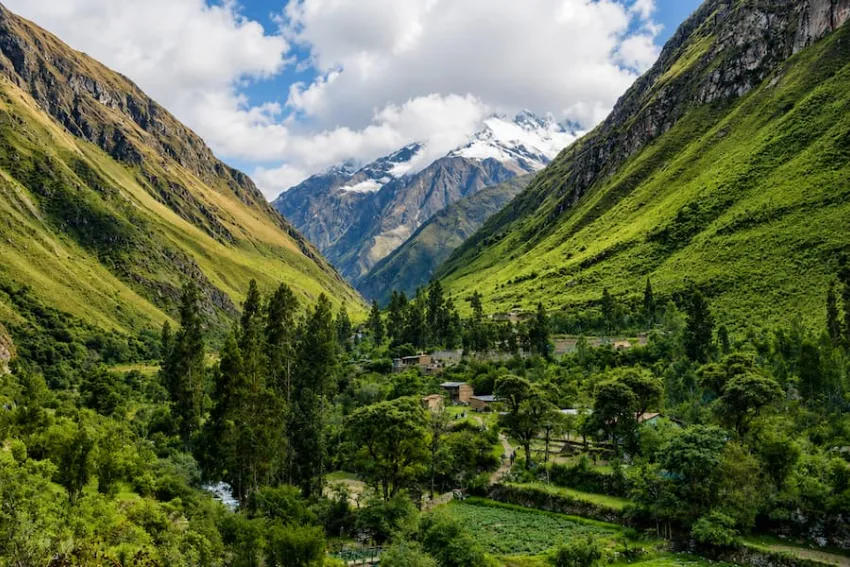
The valley is milder and drier than many websites suggest. Per SENAMHI’s 1991‑2020 normals for Urubamba (2,850 m / 9,350 ft), highs stay around 22 to 24 °C (72 to 75 °F) all year, and lows drop to about 2 °C (36 °F) in July.
| Month | High | Low | Rain |
|---|---|---|---|
| January | 22.2 °C / 72 °F | 9.5 °C / 49 °F | 105 mm / 4.1 in |
| February | 22.0 °C / 72 °F | 9.6 °C / 49 °F | 101 mm / 4.0 in |
| March | 22.3 °C / 72 °F | 9.2 °C / 49 °F | 72 mm / 2.8 in |
| April | 23.0 °C / 73 °F | 7.7 °C / 46 °F | 23 mm / 0.9 in |
| May | 23.4 °C / 74 °F | 5.0 °C / 41 °F | 4 mm / 0.2 in |
| June | 22.8 °C / 73 °F | 3.1 °C / 38 °F | 5 mm / 0.2 in |
| July | 22.4 °C / 72 °F | 2.1 °C / 36 °F | 5 mm / 0.2 in |
| August | 23.2 °C / 74 °F | 3.6 °C / 38 °F | 7 mm / 0.3 in |
| September | 23.6 °C / 75 °F | 6.0 °C / 43 °F | 8 mm / 0.3 in |
| October | 23.6 °C / 75 °F | 8.1 °C / 47 °F | 38 mm / 1.5 in |
| November | 23.8 °C / 75 °F | 8.9 °C / 48 °F | 56 mm / 2.2 in |
| December | 22.7 °C / 73 °F | 9.3 °C / 49 °F | 93 mm / 3.7 in |
Swipe the table sideways to see more →
The dry season runs from May to September, with sunny days and cold nights. It is high season, busiest in June, July and August. The rainy season runs from November to March, with heavy rain in January and February.
For us, April, May, September and October are the best months: good weather and fewer crowds. Wear sunscreen all year, because the high‑altitude sun burns even when it does not feel hot.
Sacred Valley Festivals
- Señor de Torrechayoc (Urubamba): held on Pentecost, with more than 30 traditional dances. In 2027 the main day falls on May 16.
- Señor de Choquekillka (Ollantaytambo): four days around Pentecost with more than 400 dancers, declared Cultural Heritage of the Nation in 2008.
- Ollantay Raymi (Ollantaytambo): on June 29 the town stages the Quechua drama Ollantay.
Sacred Valley Elevation
The valley floor sits between 2,792 m / 9,160 ft (Ollantaytambo) and about 2,970 m / 9,750 ft (Pisac), below Cusco’s 3,399 m (11,152 ft). Maras (3,300 m), Moray (3,500 m) and Chinchero (3,762 m), however, sit at Cusco’s level or higher.
That is why it makes sense to sleep on the valley floor first and leave the plateau for later. We explain it in detail in our Sacred Valley altitude guide.
From the Sacred Valley to Machu Picchu by Train
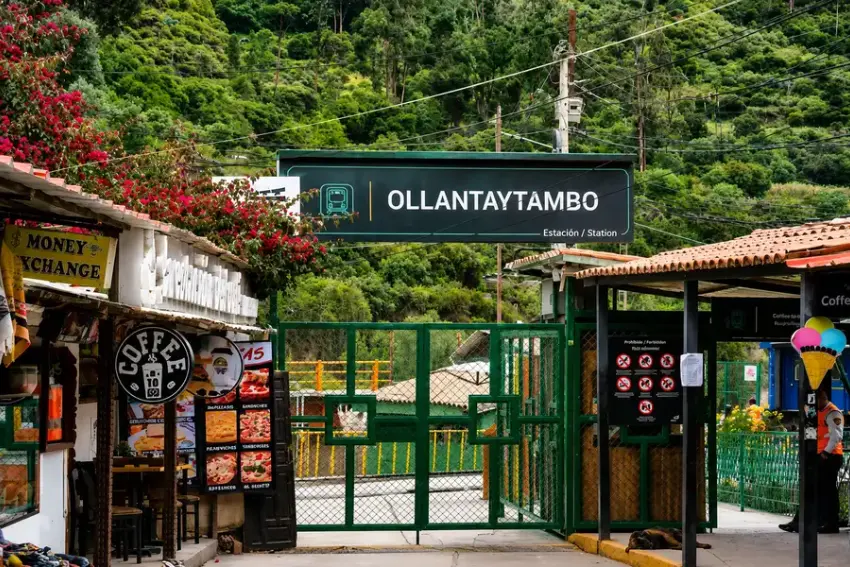
Trains to Machu Picchu leave mainly from Ollantaytambo, run by PeruRail and Inca Rail. The ride to Aguas Calientes takes 1 hr 30 min to 1 hr 50 min, and tickets cost about US$60 to 135 each way, depending on class and time.
Stations, classes, real fares and timetables of both companies are in our guide to the train to Machu Picchu.
PeruRail also runs one daily train from Urubamba. In the rainy season the stretch from Cusco is often replaced by a bus to Ollantaytambo, one more reason to sleep in the valley the night before.
The other ways to get there are in our guide to the routes to Machu Picchu, and how to pick a circuit in our Machu Picchu tickets guide.
Frequently Asked Questions About the Sacred Valley
How many days do I need in the Sacred Valley?
A day tour covers the highlights. Two days let you explore at an easy pace and make full use of the Partial Ticket III, which is valid for exactly two days. If you continue to Machu Picchu, two nights in the valley is ideal.
Is it better to stay in Urubamba or Ollantaytambo?
Ollantaytambo if you take the train the next day, since you can walk to the station. Urubamba if you want a spacious countryside hotel and a central base for exploring.
Can you visit the Sacred Valley without a tour?
Yes. Pisac, Urubamba and Ollantaytambo are easy by minivan from Cusco. Moray and the Maras Salt Mines are harder because no public transport goes there, so a tour or a taxi saves time.
Does the Tourist Ticket include the Maras Salt Mines?
No. The salt mines are paid separately: S/20 for foreigners and S/15 for Peruvians, in cash. The ticket covers Pisac, Chinchero, Moray and Ollantaytambo.
Can you walk among the salt pans at Maras?
No. It has been forbidden since June 2019 for hygiene reasons. You visit from viewpoints and marked paths, and the view is still impressive.
What is the best day for the Pisac market?
The market is open every day. Monday to Friday it is calm. Sunday is the traditional market day and can get busy, although it is usually easy to visit.
Should I visit the Sacred Valley before or after Machu Picchu?
Before. The valley is lower than Cusco, it helps you acclimatize, and the train to Machu Picchu leaves from Ollantaytambo. The most practical plan is to sleep in the valley and board the train there.
Are shared minivans to the Sacred Valley safe?
Generally yes; locals and travelers use them every day. The road through Chinchero has tight bends, so pick vehicles in good condition, travel by daylight and pack light, because space is limited.
Sacred Valley or South Valley?
If you only have time for one, the Sacred Valley. The South Valley (Tipón, Pikillaqta and Andahuaylillas) makes a good extra half day with far fewer visitors. Tipón and Pikillaqta are covered by the Partial Ticket II, not III.