The Short Answer
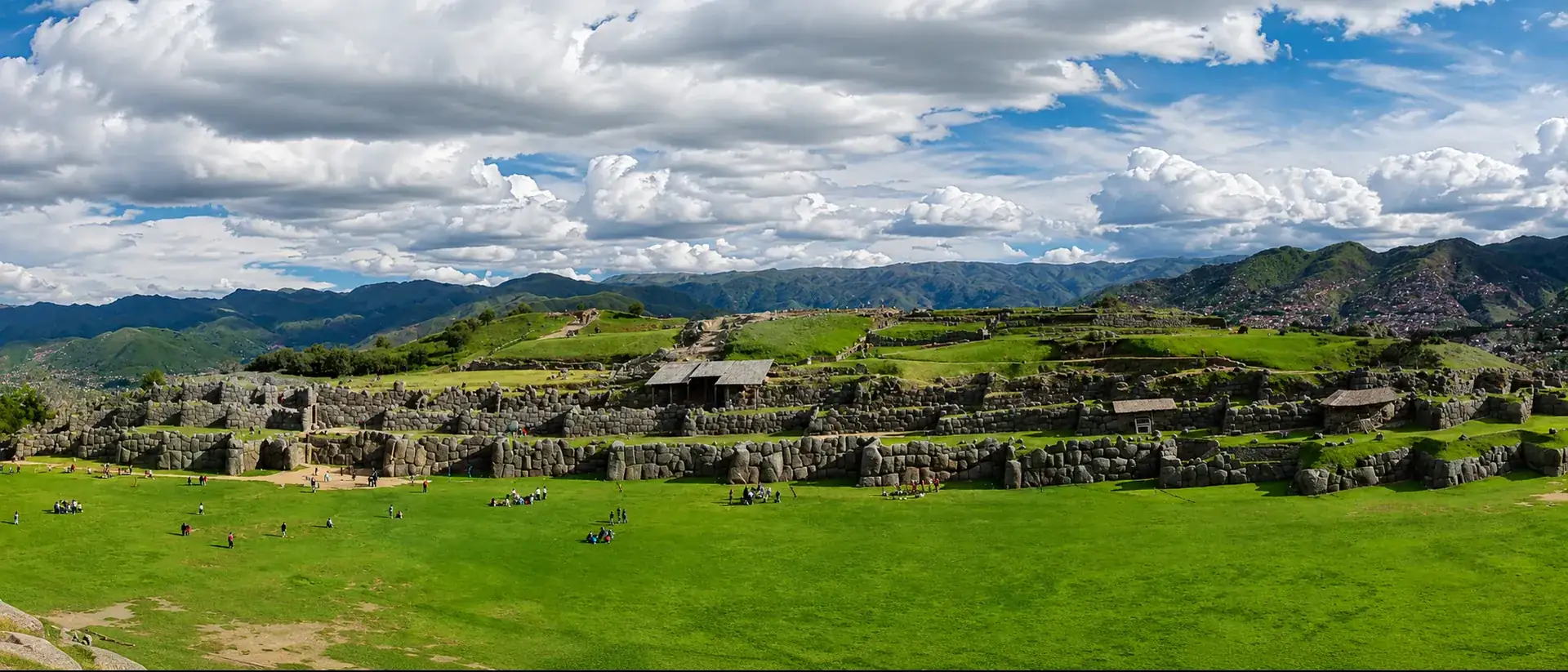
The Cusco Inca ruins fall into three practical groups: the four City Tour ruins right above the city (Sacsayhuaman, Q’enqo, Puka Pukara and Tambomachay), the Sacred Valley sites (Pisac, Ollantaytambo, Chinchero and Moray), and the quieter South Valley sites (Tipon, Pikillacta and Raqchi). Most of them, plus the world famous Machu Picchu, were built by the Inca in the 15th century. One ticket, the Boleto Turistico del Cusco, covers 16 of these sites for S/130. Machu Picchu, the Qorikancha convent and the Inca Trail need separate tickets. If you have three or four days, you can comfortably see the best of them.
This guide to the Cusco Inca ruins covers every site worth your time, what each one actually is, its elevation and how to get there, exactly which ticket you need, and the four museums people confuse when they search for the “Inca museum” in Cusco. Prices below were verified for 2026; always reconfirm at the ticket office before you travel.
Which Ticket Do You Need? The Boleto Turistico Explained
This is the single most confused point for visitors, so it comes first. The Boleto Turistico del Cusco (BTC) is one pass, run by COSITUC, that covers 16 sites across three circuits. It is personal, non transferable, and sold in person only. There is no official online sale, so bring your passport and cash in Peruvian soles.
| Ticket | Price (foreign adult) | Valid | Covers |
|---|---|---|---|
| Integral (full) | S/130 | 10 days | All 16 attractions, all three circuits |
| Partial Circuit I | S/70 | 1 day | Sacsayhuaman, Q’enqo, Puka Pukara, Tambomachay |
| Partial Circuit II | S/70 | 2 days | Tipon, Pikillacta, Museo de Sitio Qorikancha and city museums |
| Partial Circuit III | S/70 | 2 days | Pisac, Ollantaytambo, Chinchero, Moray |
Swipe the table sideways to see more →
What the Boleto does NOT cover, so you buy these separately: Machu Picchu (Ministry of Culture ticket), the Qorikancha church and convent (S/15, not the same as the site museum below), the Inca Trail (permit through a licensed operator), the Maras salt pans and Raqchi (S/10).
Here is the trap almost every other guide gets wrong: the Qorikancha convent (the Santo Domingo church built on top of the Sun Temple) charges its own entry of S/15, but the Museo de Sitio del Qorikancha, the underground museum next to it on Avenida El Sol, is included on the Boleto. Two different places, two different rules. Buy the Boleto at the COSITUC office, Avenida El Sol 103, or at any included site entrance.
Every Inca Ruin Around Cusco at a Glance
Use this table to plan. Elevations are given in meters and feet, and we distinguish the ruins from the town below them where sources often blur the two (Pisac and Tipon especially).
| Site | Group | Elevation | From Cusco | Builder / era | Visit time | On Boleto? |
|---|---|---|---|---|---|---|
| Qorikancha | Cusco city | 3,400 m / 11,150 ft | City center | Inca, 15th c. | 1 hr | No (S/15) |
| Sacsayhuaman | City Tour | 3,700 m / 12,140 ft | 2 km | Inca, Pachacutec | 1.5 to 2 hr | Yes |
| Q’enqo | City Tour | 3,580 m / 11,745 ft | 4 km | Inca, 15th c. | 30 to 45 min | Yes |
| Puka Pukara | City Tour | 3,580 m / 11,745 ft | 7 km | Inca, 15th c. | 30 min | Yes |
| Tambomachay | City Tour | 3,700 m / 12,140 ft | 8 km | Inca, 15th c. | 30 to 45 min | Yes |
| Pisac | Sacred Valley | Ruins 3,300 to 3,500 m; town 2,972 m | 33 km | Inca, Pachacutec | 1.5 to 3 hr | Yes |
| Ollantaytambo | Sacred Valley | 2,792 m / 9,160 ft | 72 km | Inca, Pachacutec | 1.5 to 2 hr | Yes |
| Chinchero | Sacred Valley | 3,762 m / 12,343 ft | 30 km | Inca, Tupac Yupanqui | 1.5 to 2 hr | Yes (church separate) |
| Moray | Sacred Valley | 3,500 m / 11,480 ft | 50 km | Inca | 1 hr | Yes |
| Tipon | South Valley | 3,250 to 3,960 m | 22 km | Inca, early 15th c. | 1 to 2 hr | Yes |
| Pikillacta | South Valley | 3,250 m / 10,660 ft | 30 km | Wari, pre Inca | 1 hr | Yes |
| Raqchi | Puno road | 3,480 m / 11,350 ft | 110 km | Inca | 1.5 hr | No (S/10) |
| Machu Picchu | Machu Picchu | 2,430 m / 7,972 ft | 80 km (train) | Inca, Pachacutec | 2 to 4 hr | No (separate) |
Swipe the table sideways to see more →
The Cusco City Ruins
These are the closest sites to the city, ringing Cusco within about eight kilometers. Together the four upper ruins form the classic half day Cusco city tour. A useful tip: they sit higher than Cusco itself, between 3,580 and 3,700 meters, so save them for after you have acclimatized.
Sacsayhuaman
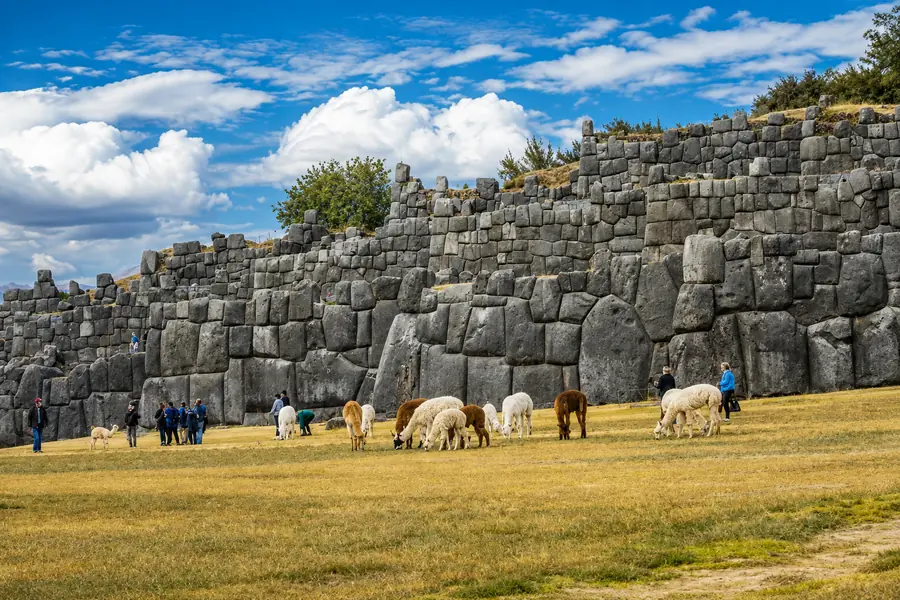
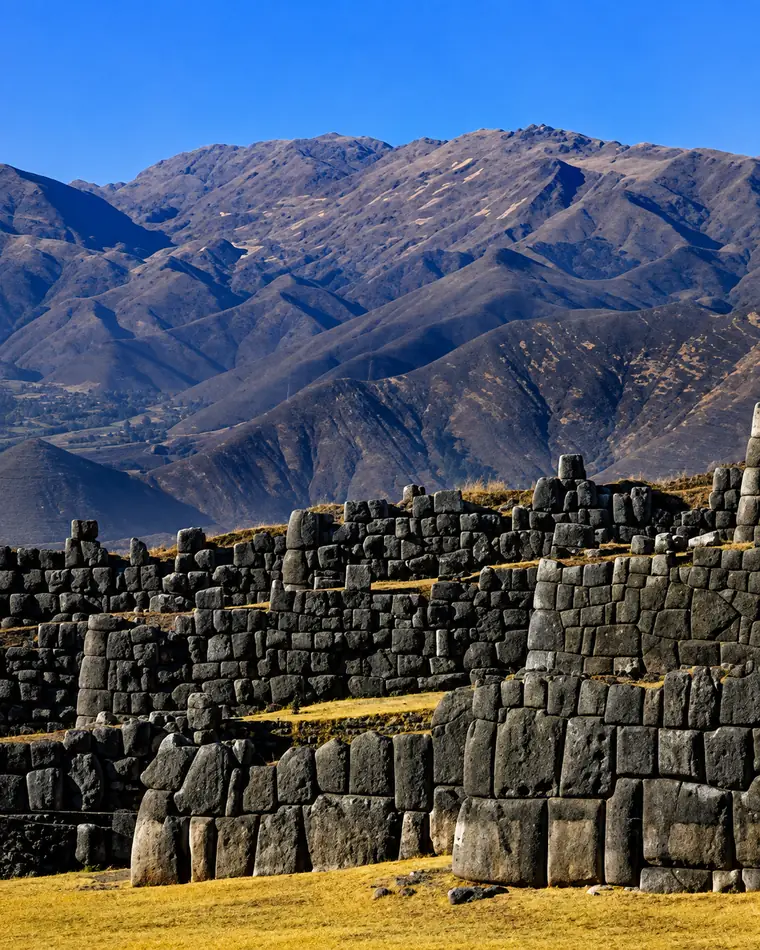
The essential one. A monumental complex on the hill above Cusco, famous for cyclopean zigzag walls whose largest stones weigh well over 100 tons, fitted so tightly without mortar that a blade will not pass between them. It was built under the emperor Pachacutec in the 15th century, on top of an earlier Killke settlement confirmed by 2008 excavations. In 1536 it was the site of the decisive battle when Manco Inca besieged the Spanish. Whether it was primarily a fortress or a ceremonial temple to the sun is still genuinely debated by archaeologists; it was almost certainly both. Two kilometers from the Plaza de Armas, walkable uphill in about 40 minutes.
Q’enqo
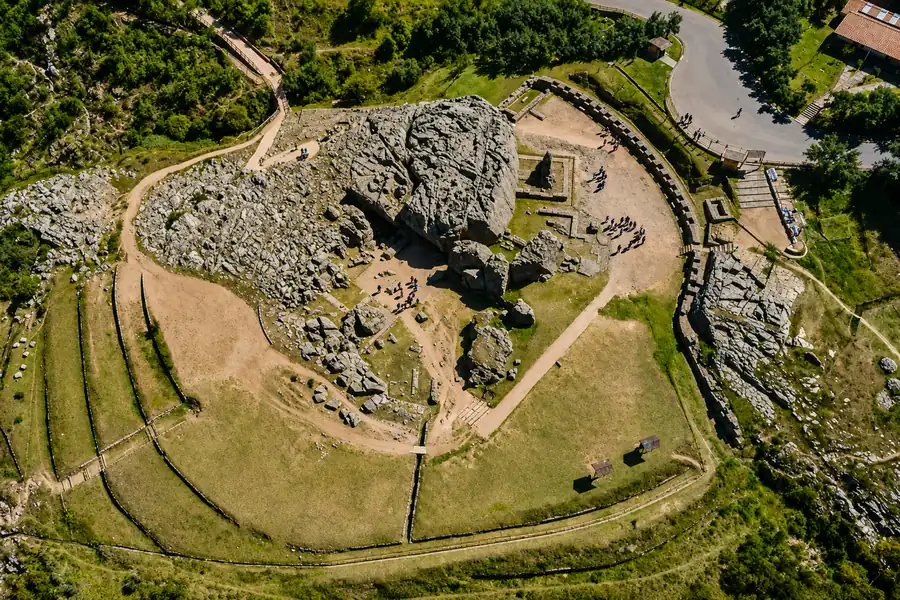
A carved limestone outcrop whose name means “labyrinth” or “zigzag.” Channels cut into the rock likely carried chicha or sacrificial liquid, and a subterranean chamber served ritual use. Purely ceremonial, and a quick but atmospheric stop.
Puka Pukara
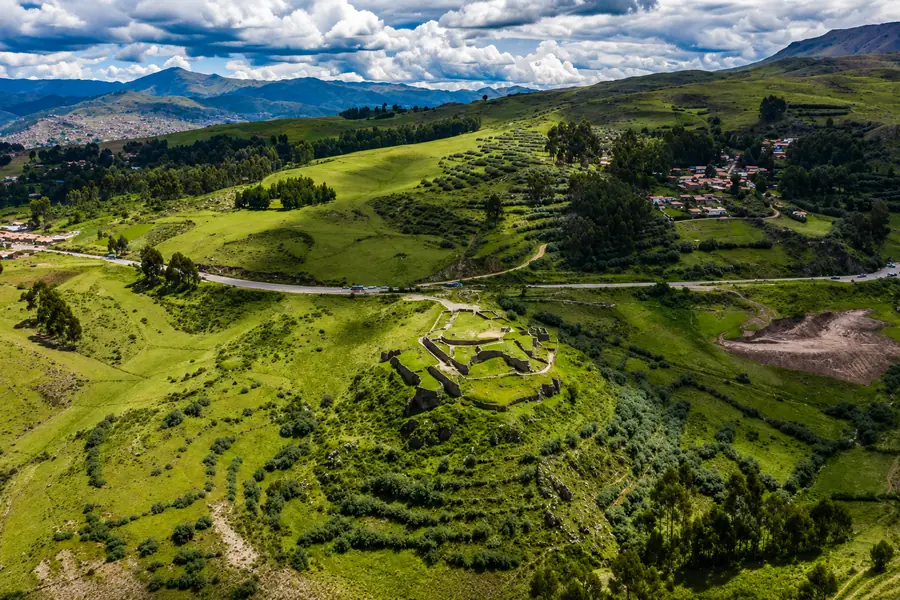
The “red fort,” a terraced complex of reddish stone on the Pisac road. Its rougher masonry points to a functional role: a checkpoint and lodging (tambo) on the royal road guarding the approach to Cusco, rather than a temple.
Tambomachay
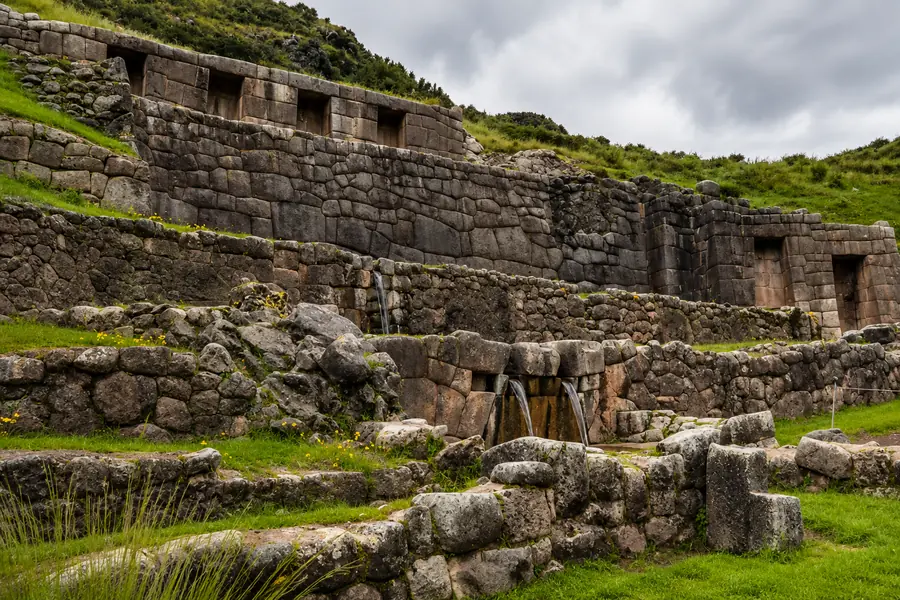
The so called “Inca baths,” a water shrine where a natural spring still feeds carved stone channels and fountains that run to this day. It was a huaca, a sacred site, dedicated to the worship of water. It sits directly across the road from Puka Pukara.
Qorikancha and the Twelve Angled Stone
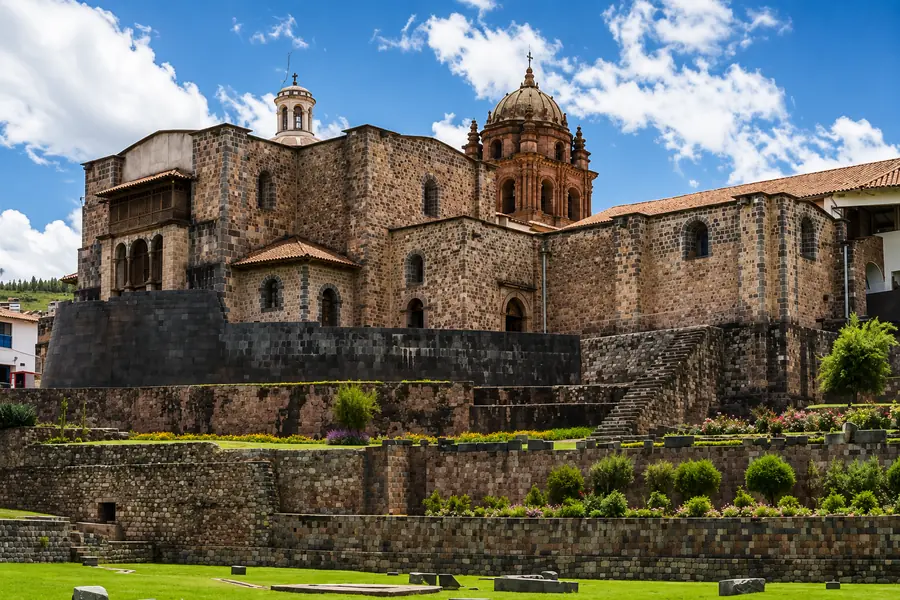
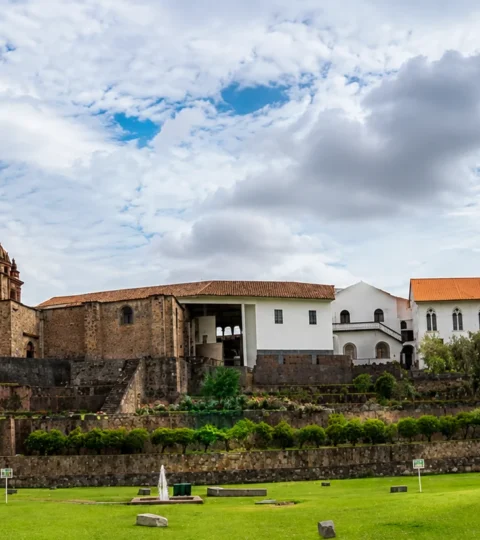
In the city itself, Qorikancha was the most important temple of the entire Inca empire, dedicated to the sun and once sheathed in gold. After the conquest the Dominicans built the church and convent of Santo Domingo directly on its foundations. When the 1950 earthquake toppled the colonial structure, the Inca walls beneath stood intact, a lesson in Inca engineering you can still see today. Entry to the convent is S/15 and is not on the Boleto. A short walk away on Hatun Rumiyoc street, the Twelve Angled Stone is a single polygonal block fitted with twelve perfect angles into the wall of Inca Roca’s former palace. It is free to view from the street.
The Sacred Valley Ruins
The Sacred Valley of the Urubamba holds the grandest Inca sites after Machu Picchu, and its lower elevation makes it the ideal place to start your trip and acclimatize. All four main sites below are on the Boleto (Circuit III) and combine perfectly into a full day Sacred Valley tour.
Pisac
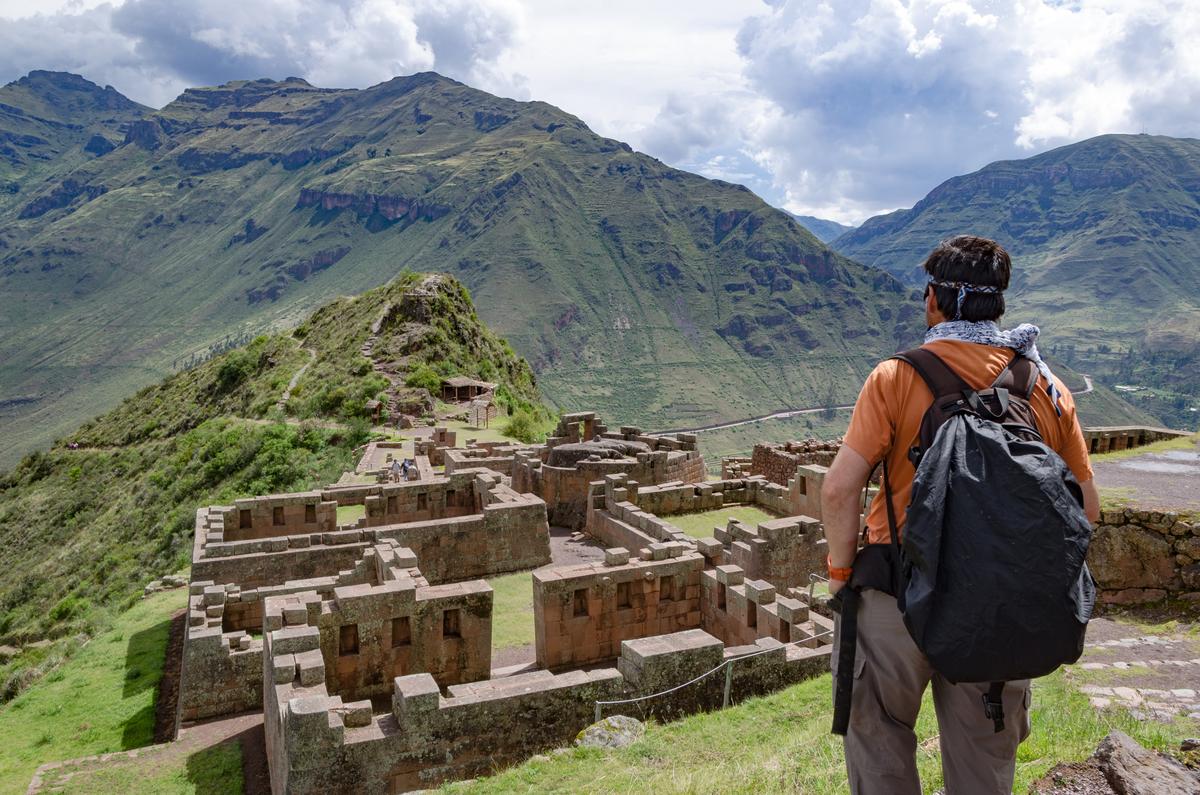
A hilltop citadel above the valley, built under Pachacutec. Its highlights are the Intihuatana sun temple with its carved ritual stone, sweeping fan shaped agricultural terraces, and a large Inca cemetery set into the cliff face. The town below is famous for its market. Note that the ruins sit at 3,300 to 3,500 meters, well above the town at 2,972 meters.
Ollantaytambo
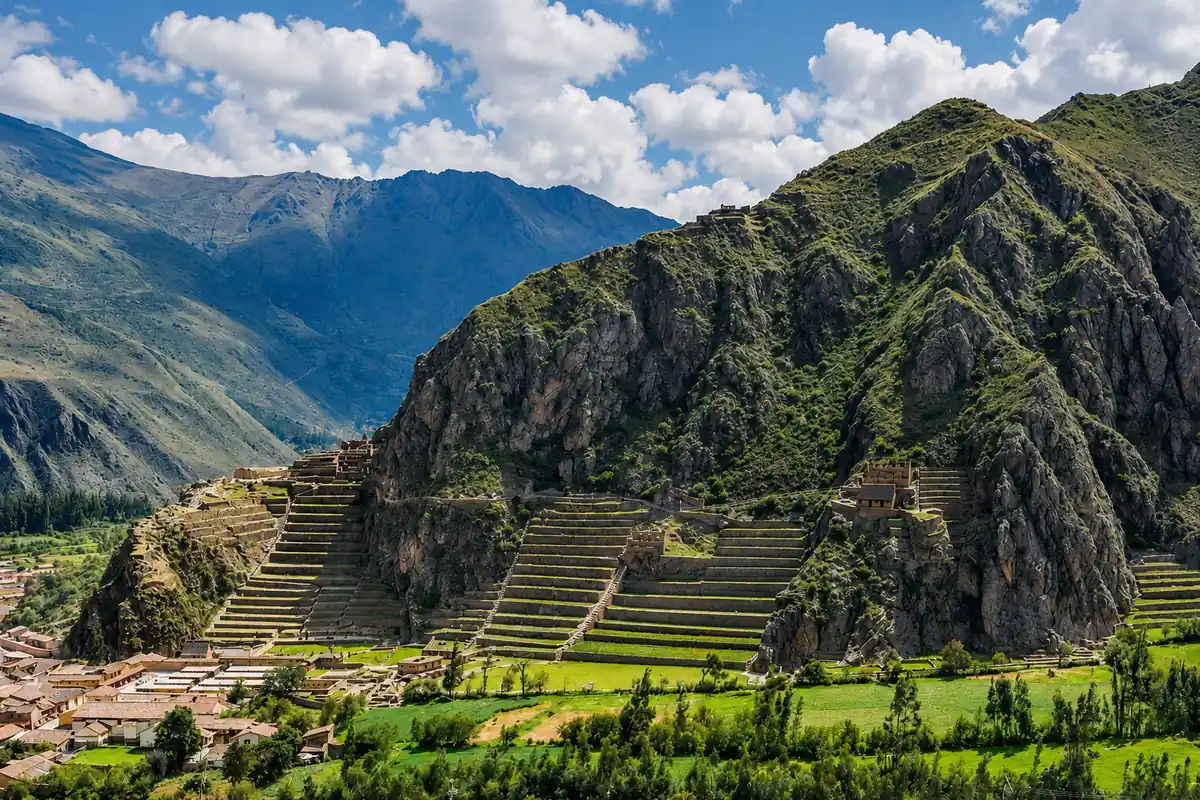
A living Inca town whose original street grid is still inhabited, combined with a monumental ceremonial complex that was a royal estate of Pachacutec. The Temple Hill carries six colossal rose porphyry monoliths quarried across the valley at Kachiqhata and hauled up the slope, a feat studied in detail by the architect Jean Pierre Protzen. It was never finished, interrupted by the conquest, and in 1537 Manco Inca famously defeated a Spanish force here by flooding the plain. Today it is also the train gateway to Machu Picchu.
Chinchero
Known as the birthplace of the rainbow, at 3,762 meters. A colonial church sits on the palace foundations of the emperor Tupac Inca Yupanqui, surrounded by Inca terraces and a plaza wall of ten trapezoidal niches. Chinchero is also a living center of traditional backstrap loom weaving. The ruins are on the Boleto; the church charges a separate ticket.
Moray
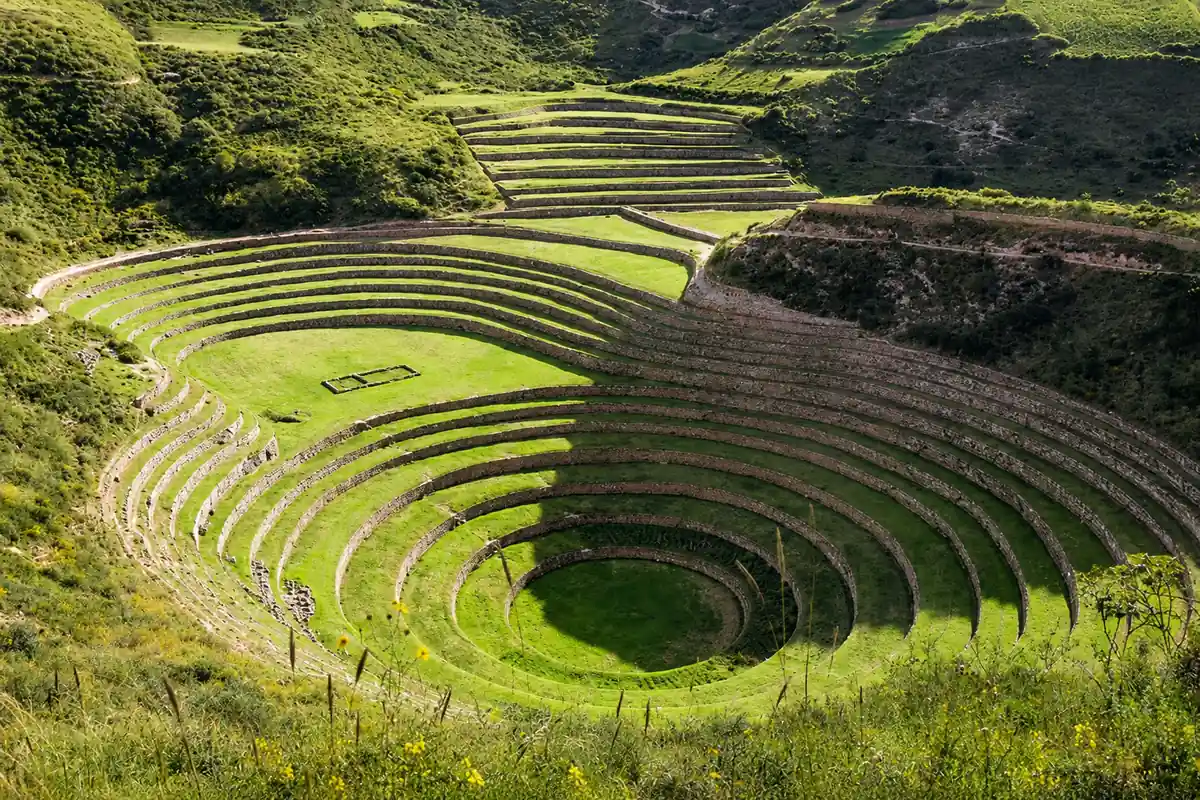
A striking set of concentric circular sunken terraces. You will often hear Moray described as an Inca “agricultural laboratory,” a place to acclimatize crops using the temperature difference between the top and bottom rings. It is an appealing idea, but it remains a hypothesis rather than a proven fact, and even the temperature gradient data behind it has been questioned. Enjoy the engineering and the mystery, but treat the laboratory story as a theory. Moray pairs naturally with the nearby Maras salt pans, thousands of pre Inca salt evaporation ponds that are community run and require a small separate fee.
The South Valley Ruins: The Cusco Most Visitors Miss
Southeast of the city, the South Valley (Valle Sur) is far quieter than the Sacred Valley and holds two of the region’s most important sites, both on Boleto Circuit II.
Tipon
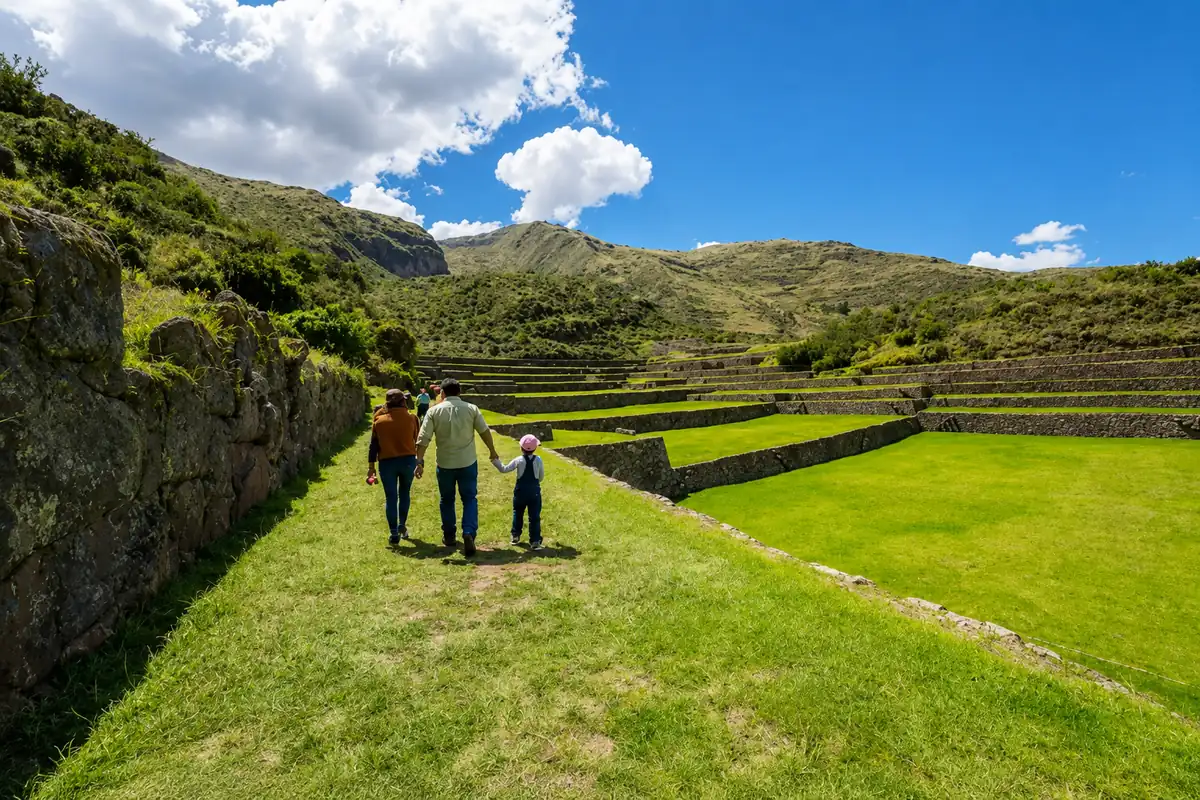
A masterpiece of Inca hydraulic engineering. Its canals, aqueducts and a still functioning monumental fountain irrigate grand terraces, so refined that in 2008 the American Society of Civil Engineers named it an International Historic Civil Engineering Landmark. If you appreciate how the Inca moved water, no site is more impressive.
Pikillacta
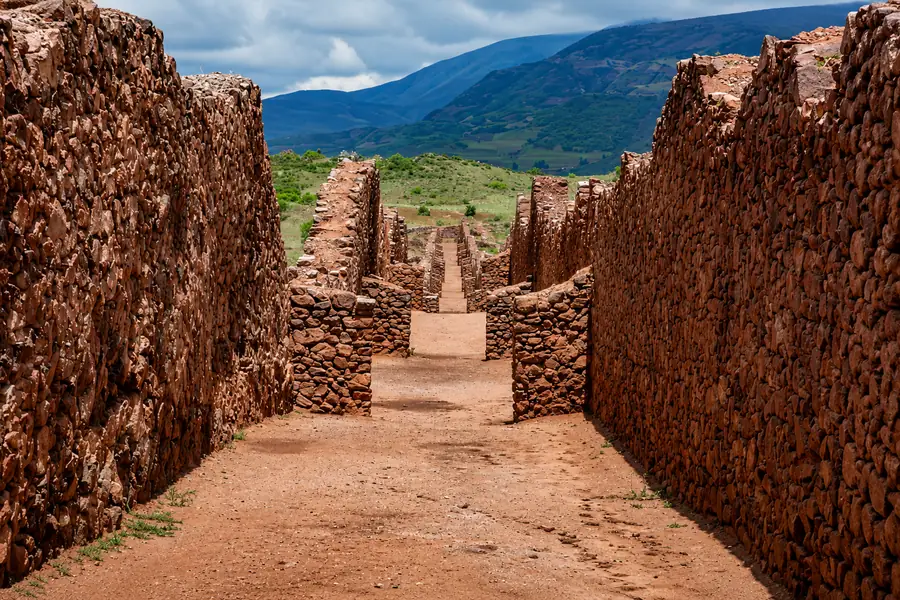
The one major site here that is not Inca at all. Pikillacta was a large administrative center of the Wari culture, occupied roughly between AD 550 and 1100, centuries before the Inca. Archaeologist Gordon McEwan’s excavations documented a walled city of some 700 buildings covering around 50 hectares, with walls that once stood up to 12 meters high. It is the best place near Cusco to grasp the deep pre Inca history of the region.
Raqchi
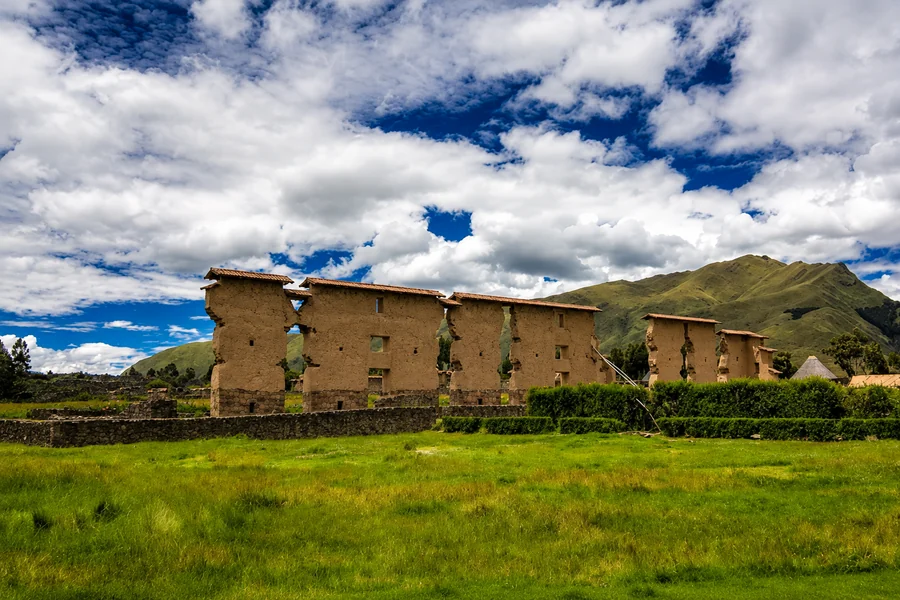
Further out on the road to Puno, Raqchi preserves the Temple of Wiracocha, whose central wall of adobe on a stone base is the tallest surviving Inca wall, alongside rows of circular storehouses. It needs a separate S/10 ticket and is usually seen on the scenic route between Cusco and Lake Titicaca.
Machu Picchu, the Inca Trail and Choquequirao
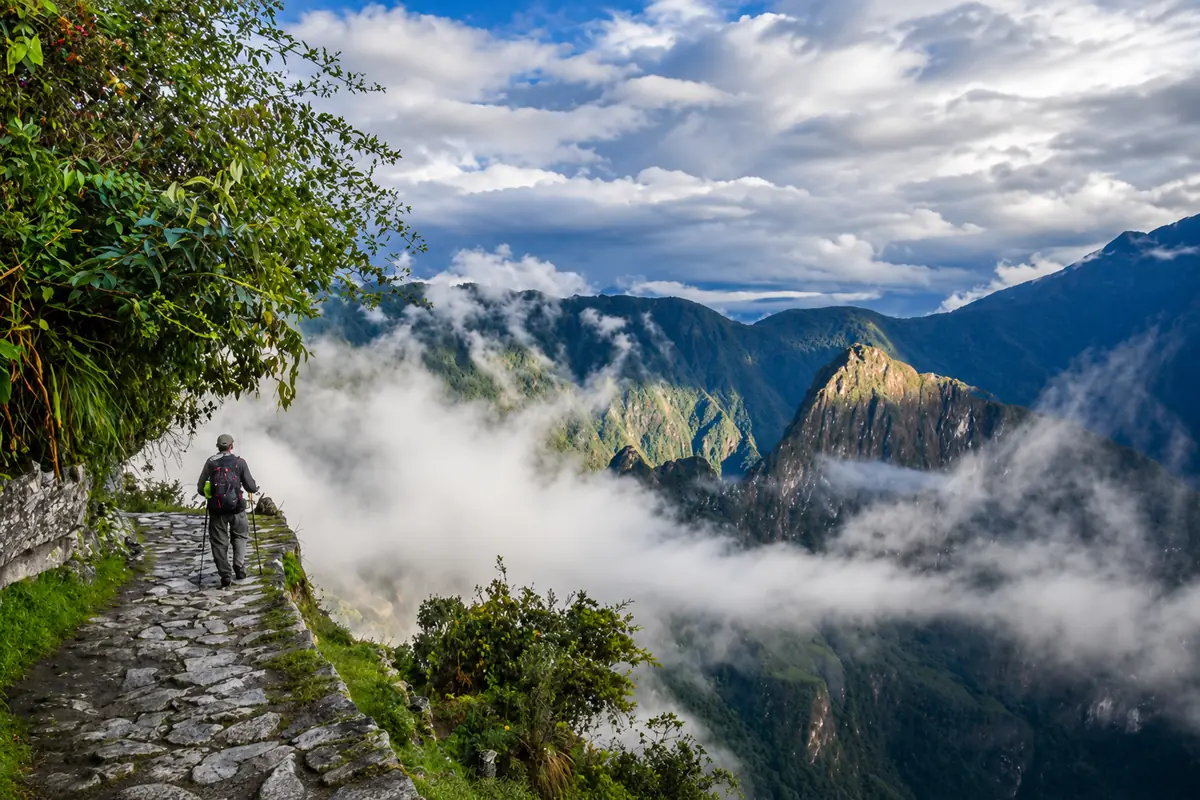
The most famous ruins of all sit beyond the Boleto’s reach and deserve their own planning. Machu Picchu is the 15th century royal estate of Pachacutec, at 2,430 meters, roughly a thousand meters lower than Cusco, so altitude is less of a concern here. It runs on a timed circuit system with daily caps of 4,500 visitors on most days and 5,600 on peak dates, and tickets sell out weeks ahead in high season. Most travelers reach it as a day trip by train or as part of a multi day Machu Picchu package.
The Inca Trail is itself a chain of ruins. Walking the classic route you pass Runkurakay, Sayacmarca, Phuyupatamarca (“town above the clouds”) and Wiñay Wayna, widely considered the finest site on the trail, before reaching the Sun Gate. Permits are limited and released months in advance, and the trail is walked only with a licensed operator on either the 4 day or 2 day route. For those who want Inca grandeur without the crowds, Choquequirao, the “cradle of gold” and a sister city to Machu Picchu, is reached only on a demanding multi day trek and is still largely uncovered.
The “Inca Museum” in Cusco: Which One Do You Mean?
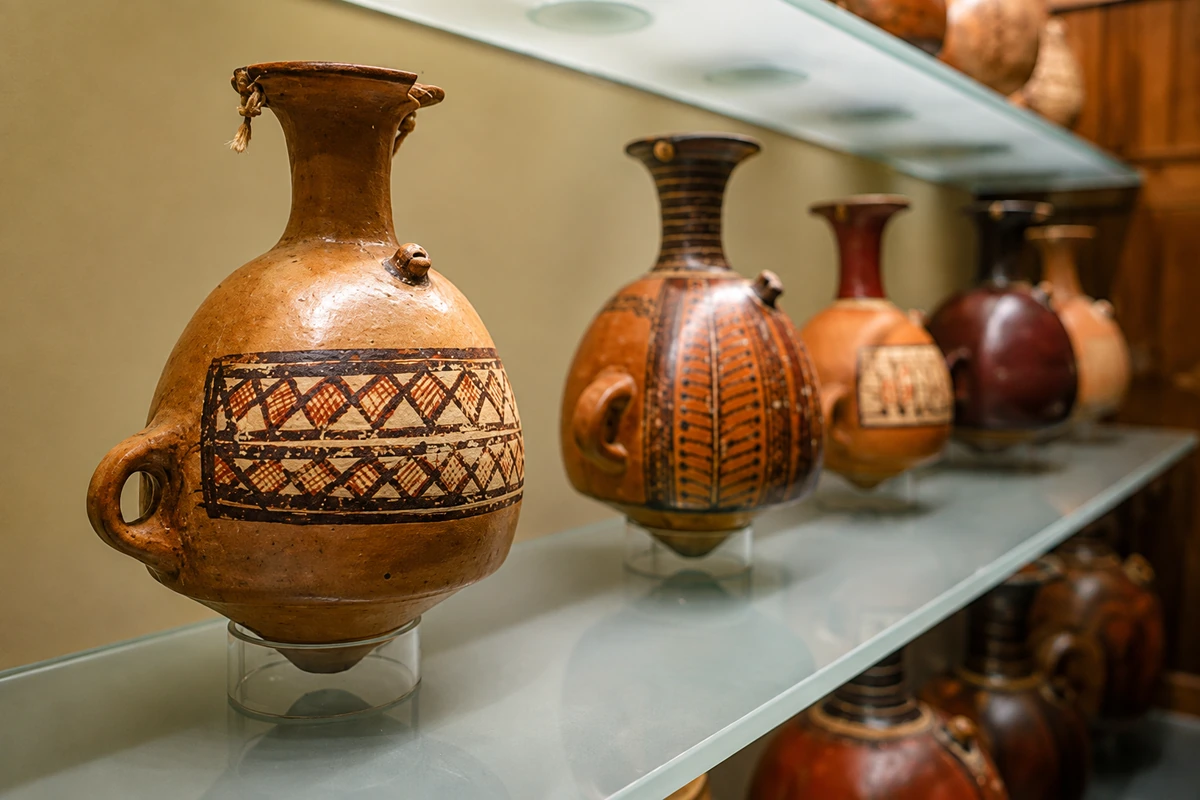
Search results for the Inca museum in Cusco mix up four different institutions. Here is what each one actually is, so you visit the right one.
- Museo Inka is the one most people mean. Run by the San Antonio Abad University in the Casa del Almirante just off the Plaza de Armas, it holds Cusco’s finest Inca collection, including what is reported to be the world’s largest set of keros (carved wooden ceremonial cups), plus textiles, metalwork and mummies. It is not on the Boleto and charges a small separate entry.
- Museo de Sitio del Qorikancha is the underground archaeology museum on Avenida El Sol, and it is included on the Boleto. Do not confuse it with the Qorikancha convent above it.
- Museo Machu Picchu (Casa Concha) holds the artifacts Hiram Bingham took to Yale, returned to Peru a century later. It is the best context to see before you visit Machu Picchu itself.
- Museo de Arte Precolombino (MAP) displays some 450 pre Columbian masterworks in a beautifully lit colonial mansion, and stays open late.
How to Plan Your Cusco Inca Ruins Trip
Acclimatize first. Cusco sits at 3,399 meters and the City Tour ruins are higher still. The smart sequence is to head down to the lower Sacred Valley on your first day or two, then visit Machu Picchu, and save the high city ruins for last. Take it easy on arrival, hydrate, and give yourself two or three days before anything strenuous.
Best time to visit. The dry season from May to September brings clear skies and the biggest crowds. The wet season from November to April is greener and quieter, with afternoon rain and some landslide risk from January to March. The classic Inca Trail closes every February.
How the sites cluster. Think in days: one day for the City Tour ruins, one for the Sacred Valley, one for Machu Picchu, and an optional day for the South Valley. A comfortable trip that sees the best of the ruins takes four to five days including acclimatization. If you want the wider picture of what else Cusco offers beyond its ruins, see our complete guide to things to do in Cusco.
A Little History, and the Myths Worth Correcting
Cusco was the capital of Tawantinsuyu, the Inca state whose name means “the four parts together.” Most of the monumental sites you visit were built in a single burst of imperial expansion under Pachacutec and his son Tupac Inca Yupanqui in the 15th century. From Qorikancha, ritual lines called ceques radiated out to hundreds of shrines across the landscape, a system mapped in detail by the archaeologist Brian Bauer.
The famous stonework comes in two main styles: neat rectangular ashlar blocks laid in courses at the finest temples, and the massive irregular polygonal blocks of places like Sacsayhuaman. Protzen’s experimental archaeology showed these were shaped simply by pounding with harder hammerstones and fitted by patient trial, no lost technology required. A few myths are worth clearing up before you go:
- Aliens or a lost super civilization built the walls. False. The methods have been demonstrated experimentally, and there is no evidence of “melted” or softened stone.
- Machu Picchu was a lost city. Local families knew it well, and Agustin Lizarraga reached it in 1902, nine years before Bingham. It was brought to international attention, not literally discovered.
- Sacsayhuaman was just a fortress. Its role was very likely as much ceremonial as military. Present it as both.
- Pikillacta is an Inca site. It is Wari, pre Inca by several centuries.
- Moray was a proven agricultural laboratory. It is a popular theory, not established fact.
Frequently Asked Questions
How many Inca ruins are there around Cusco?
Dozens, if you count minor sites. The Boleto Turistico alone covers 16 attractions across three circuits, and most travelers realistically prioritize about ten to twelve, from Sacsayhuaman and the Sacred Valley sites to Machu Picchu.
Which Cusco ruins are free to visit?
The Twelve Angled Stone and the many Inca walls throughout the old town are free to see from the street. Almost all the enclosed archaeological parks require the Boleto Turistico.
Is Sacsayhuaman worth visiting?
Yes. After Machu Picchu and Ollantaytambo it is the most impressive Inca stonework in the region, and it is the closest major site to the city, walkable in under an hour.
Can I visit the ruins without a tour?
Yes. With the Boleto Turistico and a taxi or colectivo you can reach the sites independently. The catch is that most have no interpretive signs, so a guide adds a great deal to what you understand and see.
Which ruins are closest to Cusco city?
Qorikancha and the Twelve Angled Stone are in the city itself, and Sacsayhuaman is just two kilometers away on the hill above, reachable on foot.
How many days do I need to see the Cusco Inca ruins?
A minimum of three: one for the City Tour, one for the Sacred Valley, and one for Machu Picchu. Four to five days is ideal once you include acclimatization and the South Valley.