
The Short Answer
The cost to go to Machu Picchu depends entirely on how you get there. If budget is the main question on your mind, here it is upfront. Getting to Machu Picchu can cost as little as $100 to $160 per person, and by the end of this guide you will also see how the exact same citadel can cost more than $6,000 for someone standing right next to that first traveler. Neither one is wrong, they are simply paying for very different trips.
This guide walks through the real price ladder we see in the Cusco market today, starting from the cheapest option and moving up one step at a time, so you can find the version of Machu Picchu that actually fits your budget.
Starting your trip in Lima? Our guide to how far Machu Picchu is from Lima covers the flight to Cusco, the train and the real travel times.
The Cheapest Way In: Machu Picchu by Car (About $100 to $160)
The most affordable organized way to reach Machu Picchu skips the train completely. It is usually sold as “Machu Picchu by Car” or “Machu Picchu by Hidroelectrica,” and it works by driving overland to the Hidroelectrica station, then walking about 11 kilometers along the train tracks into Aguas Calientes. No train ticket, no premium bus company. Just a van, your legs, and a basic hostel for the night.
Most operators price this two day trip between $100 and $160 per person, with the market average sitting close to $130. That already includes transport, one night of simple lodging, the entrance ticket, and a guide for the citadel visit the next morning. It will not be a comfortable trip, expect long travel days and basic accommodation. But it genuinely is the floor of the market. Andean Moments runs this exact itinerary as our Machu Picchu by Car 2 Day tour, if you want the full details.
Why Nobody Goes Much Cheaper Than That
There is a reason prices do not drop much below $100, and it has nothing to do with an operator trying to squeeze more out of you. Three costs are fixed by law or by the transport monopoly in the valley, and every visitor pays them no matter which agency they book with.
- The official Machu Picchu entrance ticket, which runs about $44 to $58 for a foreign adult depending on the circuit
- The Consettur bus between Aguas Calientes and the citadel, about $24 round trip
- If you go in by train instead of on foot, a round trip economy ticket adds another $120 to $170
Add those up and a traveler going in by train is looking at a floor of roughly $185 to $250, before a single dollar goes toward a guide, a hotel, or a meal. The Hidroelectrica route is popular for exactly this reason. It replaces the most expensive fixed cost, the train, with a long walk instead.
Mid Range: The Train and the Sacred Valley Combo ($220 to $450)
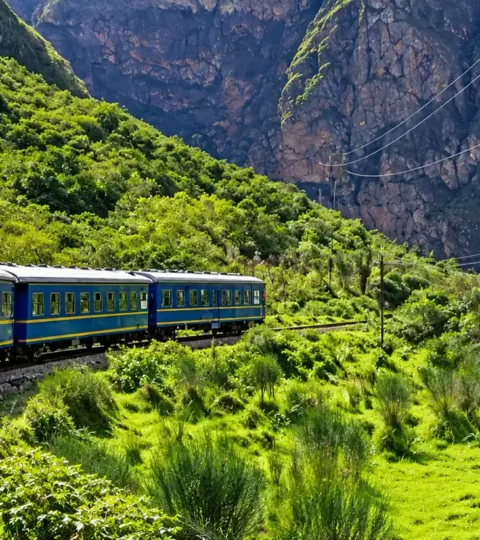
Once the train comes back into the itinerary, prices climb quickly, and this is where a lot of travelers get surprised. A one day Machu Picchu by Train trip, round trip train, bus, entrance and a guide packed into a single long day, typically runs $220 to $350. Stretch it into a two day, one night itinerary that also covers the Sacred Valley and Machu Picchu (Pisac, Ollantaytambo, sometimes Chinchero) and prices move up to roughly $350 to $450, mostly because you are now paying for a hotel night in Aguas Calientes on top of everything else.
It is worth noticing something here, these “cultural” trips are not more expensive because they are luxurious. Most of them still use shared group transport and a shared group guide, they simply cost more because a train ticket alone can run $60 to $135 each way.
The Classic Treks: Salkantay and the Inca Trail ($450 to $1,200)
Now the story flips. Multi day treks like Salkantay or the Inca Trail do not rely on an expensive train for most of the route, yet they usually cost more than the train based cultural trips above. The reason is logistics, not comfort. A four or five day trek needs porters or mules, cooks, camping equipment and staff walking the same trail you do, and someone has to pay all of them.
A group Salkantay Trek, four or five days, generally runs $450 to $680 per person. The classic Inca Trail, four days and three nights, is pricier still, usually $795 to $1,200, largely because Peru’s government caps the trail at 500 people per day, staff included, and permits for popular months sell out five to six months in advance. Scarcity, not luxury, is doing most of the work on that price tag.
Premium and Private: When the Group Becomes Just You ($1,200 to $2,000)
Past the $1,200 mark, pricing starts to reflect exclusivity more than logistics. A private guide instead of a shared group, a private vehicle instead of a shared van, an upgraded Vistadome train instead of the economy Expedition class, and noticeably better camping gear or hotel rooms, all live in this bracket.
Group size matters enormously here too. The same Salkantay trek that costs about $650 per person in a group of ten can cost well over $2,000 for a party of one or two people traveling entirely on their own schedule.
Full Luxury: Private Lodges and the Hiram Bingham Train ($2,500 and Up)
At the very top of the market, the numbers stop looking like a hiking trip and start looking like a five star hotel stay. Fully private Inca Trail departures with a personal chef, heated glamping domes and a masseuse at camp run $2,000 to $6,500 per person. Lodge to lodge treks that swap tents for boutique lodges with hot tubs and fireplaces sit in a similar range, often $3,000 to over $6,500.
Add the Belmond Hiram Bingham train, a round trip ticket alone is close to $950 to $1,000, plus a night at the Belmond Sanctuary Lodge right at the entrance to the ruins, where a single night can run $1,600 to $2,500, and the trip stops being a trekking question and becomes a hospitality question. This combination, not the classic guided Inca Trail, is the real ceiling of the Machu Picchu market, well above the $1,500 to $2,000 figure most articles quote.
What You Are Actually Paying For
Across every price jump in this guide, the same handful of factors keep repeating.
- Train class: Expedition, Vistadome, or Hiram Bingham, usually the single biggest jump in the cultural itineraries
- Hotel category, from a shared hostel to a boutique lodge to the Belmond Sanctuary Lodge at the citadel gate
- Private guide versus a shared group guide
- Group size, smaller and more private is always more expensive per person
- Food and equipment quality, from basic camp meals to a private chef and heated tents
- Extra entrances like Huayna Picchu or Machu Picchu Mountain, usually around $65 more per person
- Trail permits and scarcity, the main reason the Inca Trail costs more than Salkantay even though both are similar treks
Quick Price Comparison
| Tour | Style | Price Range (USD per person) |
|---|---|---|
| Machu Picchu by Car, 2 Days | Cultural, no train | $100 to $160 |
| Machu Picchu by Train, 1 Day | Cultural | $220 to $350 |
| Sacred Valley and Machu Picchu, 2 Days | Cultural | $350 to $450 |
| Salkantay Trek, 4 to 5 Days | Adventure trek | $450 to $680 |
| Inca Trail Classic, 4 Days | Adventure trek | $795 to $1,200 |
| Private or Luxury Inca Trail | Adventure, private | $2,000 to $6,500 |
| Lodge to Lodge Luxury Trek | Adventure, luxury | $3,000 to $6,500+ |
Which Price Makes Sense for You
If the number one goal is standing in front of the citadel for the lowest possible price, Machu Picchu by Car is the honest answer. If you want the postcard train ride without a trekking budget, the Sacred Valley combo or a one day train trip covers it. If a multi day trek is part of why you are coming to Peru in the first place, Salkantay or the Inca Trail deliver that experience for a mid range price. And if budget genuinely is not the constraint, the private and luxury tier turns the same mountain into a very different kind of trip altogether.
That is the real cost to go to Machu Picchu in 2026, whichever tier ends up matching your trip. Not sure which one fits your dates and your budget. Talk to a travel specialist and we will build the itinerary around the number you actually want to spend, not the other way around.