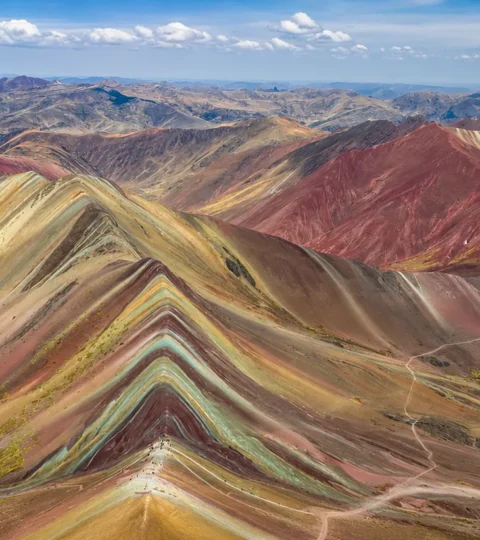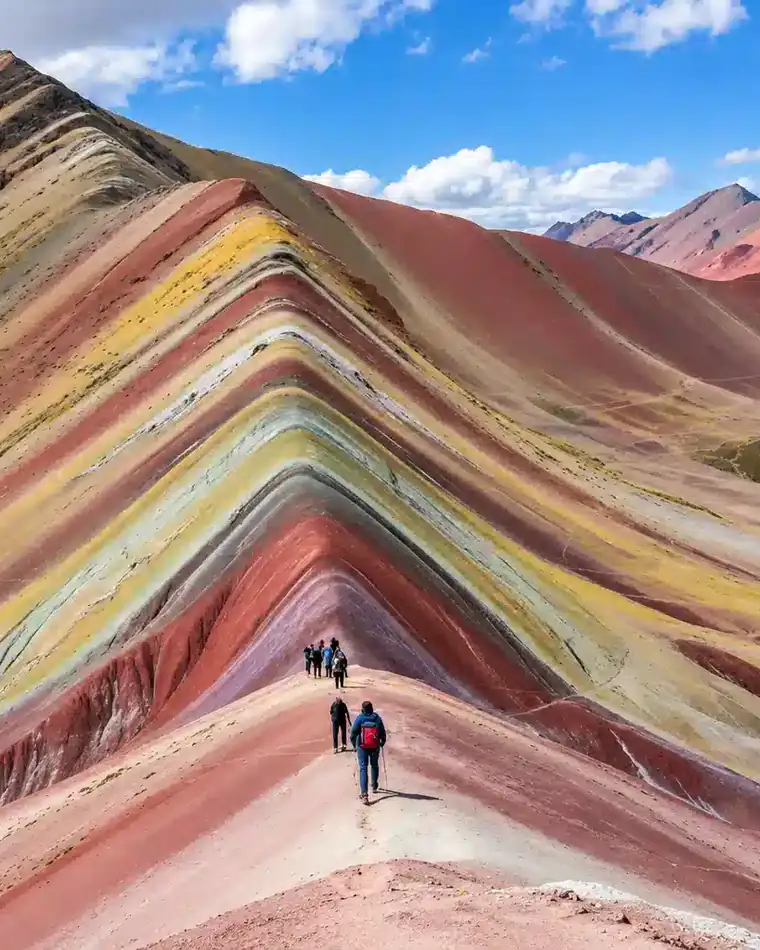

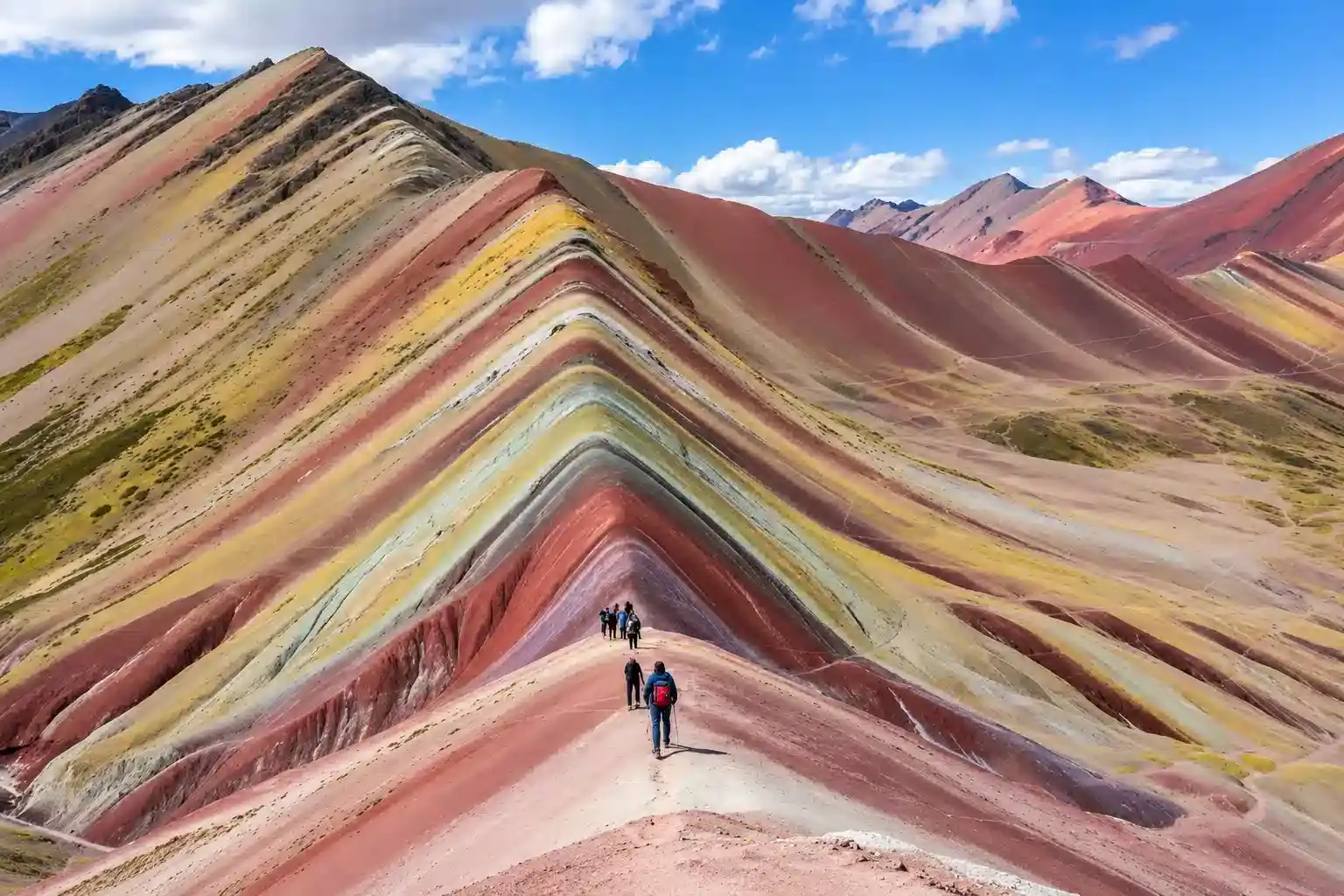
The Rainbow Mountain Peru altitude sits at 5,036 meters (16,522 feet) above sea level, the figure on the summit sign itself, though many tour operators still advertise 5,200 meters. Either way, this is one of the highest points most travelers will ever stand on, close to the height of Everest Base Camp. The real danger on this hike is not the 4 to 5 hour round trip distance. It is the thin air, and almost every visitor feels it to some degree.

Rainbow Mountain Peru Altitude: How High Is It Really?
Two numbers circulate for Rainbow Mountain, and both are correct in their own way. 5,036 meters is the elevation marked on the physical summit sign at Vinicunca, surveyed and posted for visitors standing right there. 5,200 meters is the figure most tour agencies print in their marketing, rounding up and in some cases measuring a slightly higher point along the ridge above the main viewpoint.
For planning purposes, treat the mountain as sitting between these two figures. The practical difference of roughly 160 meters changes nothing about how your body will react. Either number puts you well above 5,000 meters, deep into what mountaineers call high altitude terrain.
The Full Elevation Profile From Cusco to the Summit
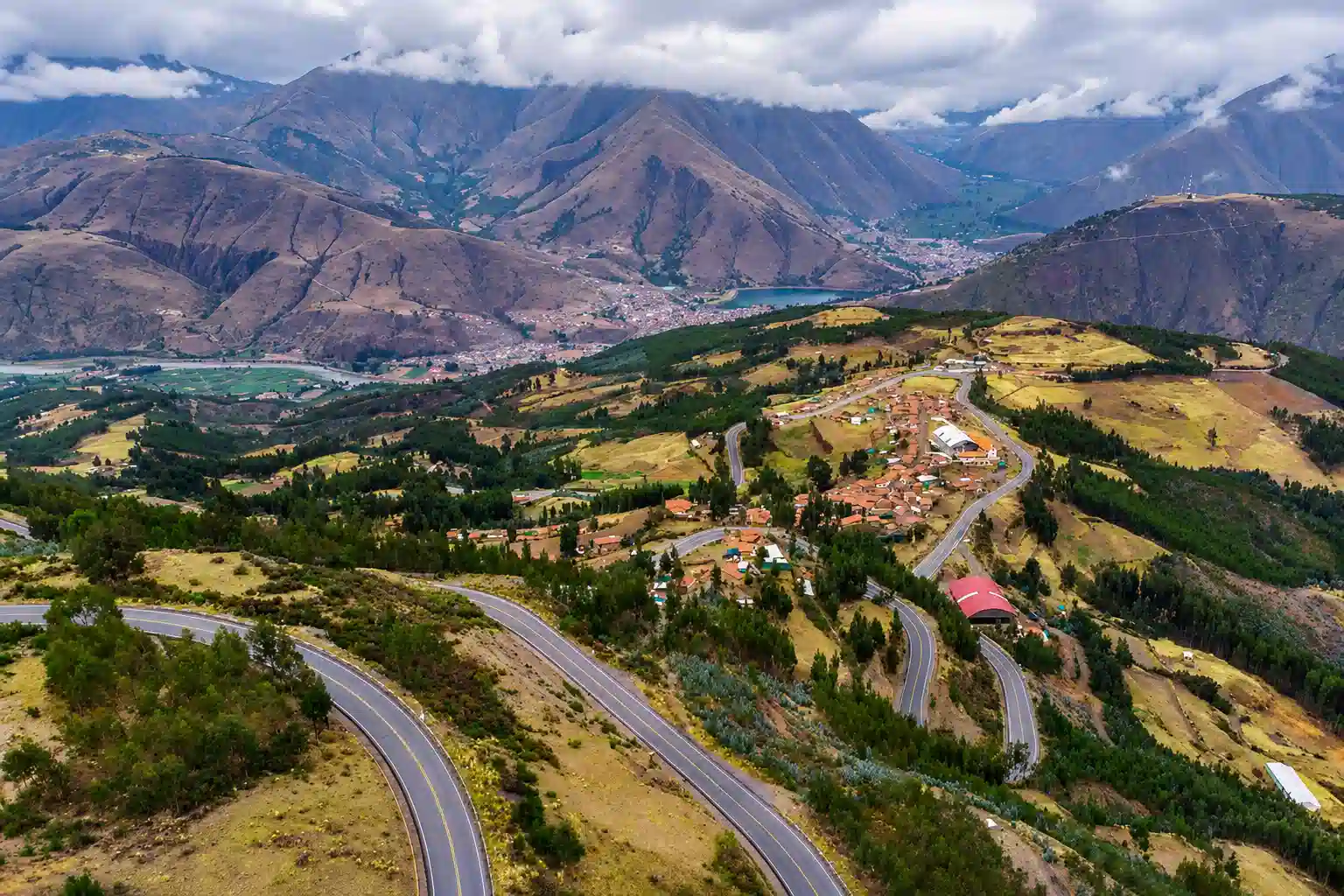
The altitude problem starts long before the trailhead. Cusco itself sits at 3,399 meters, already higher than most ski resort peaks in North America or Europe. The drive to Rainbow Mountain climbs steadily from there, and the final hike adds the last push into genuinely thin air.
| Stop | Elevation | What happens here |
|---|---|---|
| Cusco | 3,399 m (11,152 ft) | Starting point, where most visitors feel the first mild symptoms overnight |
| Urcos | 3,150 m (10,335 ft) | Brief descent along the route, a short break in the climb |
| Cusipata | 3,310 m (10,860 ft) | Last town before the road turns toward the mountains |
| Chillihuani (trailhead) | 4,600 m (15,092 ft) | Where the vehicle stops and the walk begins |
| Red Valley viewpoint | 5,000 m (16,404 ft) | The red, iron oxide valley next to the main summit |
| Rainbow Mountain summit | 5,036 m (16,522 ft) | The highest point of the hike, marked by the official sign |
The hike itself only gains about 436 meters from the trailhead to the summit. That sounds modest next to a trek like Salkantay. The catch is that you start that climb already at 4,600 meters, higher than the Dead Woman’s Pass on the Inca Trail (4,215 m) and close to the Salkantay Pass itself (4,630 m).
Why the Altitude Is the Hardest Part of the Hike, Not the Distance
At sea level, the air holds roughly 21 percent oxygen and your lungs work with full atmospheric pressure behind every breath. At 5,000 meters, the percentage of oxygen is the same, but the air pressure has dropped by nearly half. Every breath delivers close to half the oxygen molecules it would at sea level.
Your body answers by breathing faster and raising your heart rate, which is why a short, flat looking stretch of trail at Rainbow Mountain can leave even fit hikers gasping. Fitness level barely predicts who struggles here. Marathon runners get hit with headaches and nausea while sedentary travelers walk up with no issue at all, because altitude tolerance is largely genetic and depends on how quickly your body acclimatizes, not on how many miles you can run at sea level.

Altitude Sickness at Rainbow Mountain: Symptoms and Risk
Acute Mountain Sickness, AMS, is the name for the cluster of symptoms your body produces when it has not yet adjusted to reduced oxygen. At Rainbow Mountain’s elevation, mild AMS is common. Severe AMS is rare among day visitors, almost always because people who already feel sick are sent back down rather than pushed to the summit.
Watch for these signs, especially in the hours after you arrive in Cusco and during the hike itself:
- Headache. The most common first symptom, usually mild and centered behind the eyes or across the forehead.
- Nausea and loss of appetite. Often arrives alongside the headache, usually within the first day at altitude.
- Fatigue and breathlessness. Expect to breathe harder on inclines than you would at home, even on easy ground.
- Dizziness or lightheadedness. Common when standing up quickly or moving fast uphill.
- Poor sleep. A frequent complaint the first night in Cusco, before the hike even happens.
These symptoms typically appear within 2 to 12 hours of reaching a new altitude. Serious warning signs are different and rare: confusion, difficulty walking in a straight line, breathlessness while resting, and vomiting that will not stop. Any of these mean immediate descent and medical attention, not rest and continuing on. The Wilderness Medical Society guidelines follow the same rule: descend first, treat second.
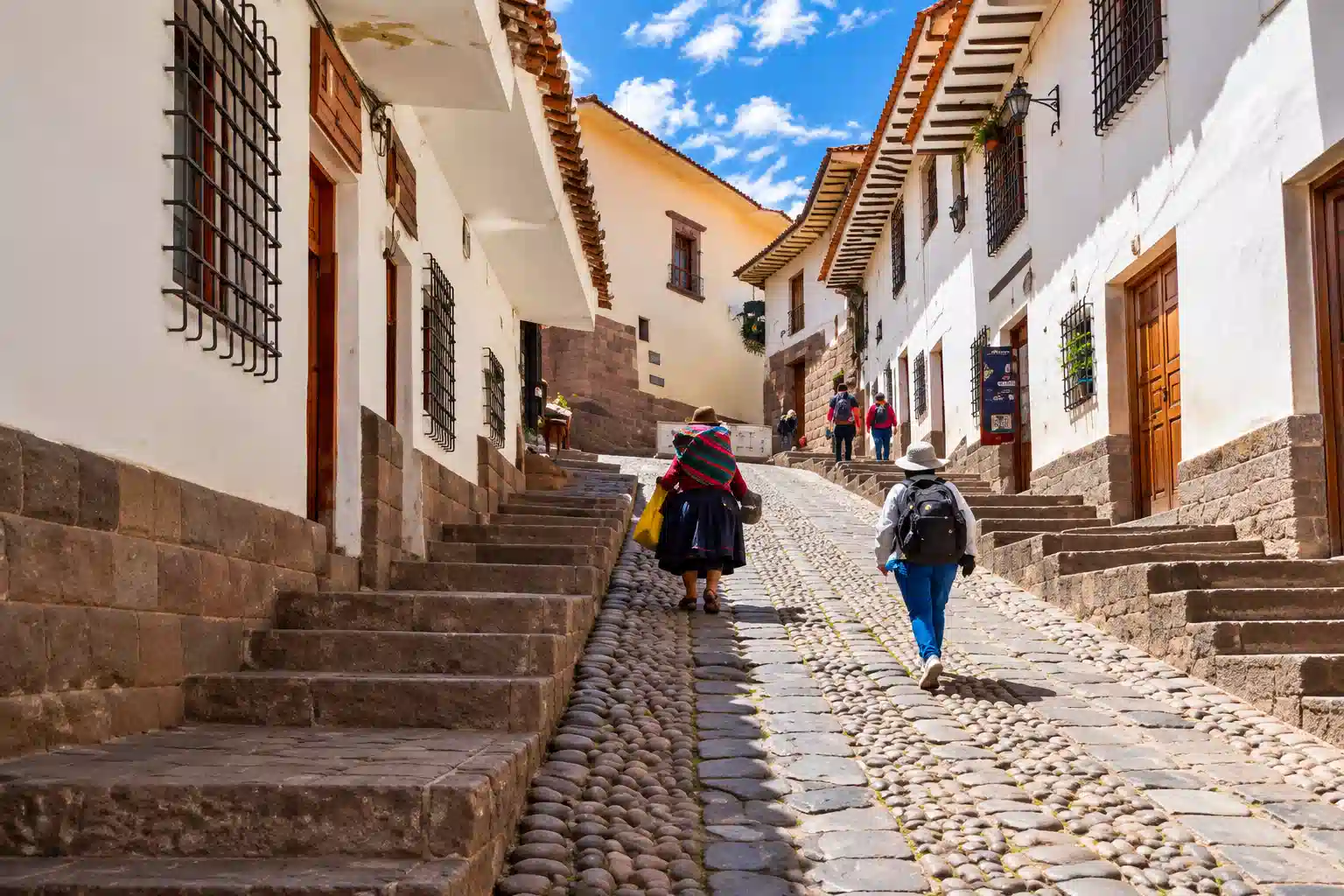
How to Acclimatize Before You Hike
The single biggest mistake visitors make is flying into Cusco and heading straight to Rainbow Mountain the next morning. Your body needs time at altitude before it starts producing the extra red blood cells and adjusting the breathing rate that make high elevation bearable.
- Spend at least one full day, ideally two, in Cusco before the hike. Cusco’s 3,399 meters is a good training step before Rainbow Mountain’s higher ground.
- Keep your first day light. Walk the historic center, visit a museum, sit at a café. Save strenuous activity for later in your trip, after you have started adjusting.
- Hydrate more than feels necessary. Dry mountain air and increased breathing rate dehydrate you faster than you notice, and dehydration makes every AMS symptom worse.
- Skip alcohol the first two nights. Alcohol worsens dehydration and disrupts the deeper, slower breathing your body needs while sleeping at altitude.
- Eat lighter, carbohydrate rich meals. Heavy, fatty food takes more oxygen to digest, oxygen your body would rather send to your brain and muscles.
- Try coca tea. It is the traditional Andean remedy, served everywhere in Cusco, and many visitors find it genuinely eases mild symptoms.
Diamox and Other Medication
Acetazolamide, sold as Diamox, is the standard prescription option for altitude sickness prevention. The typical adult preventive dose is 125 mg taken twice daily, starting one to two days before you reach altitude and continuing for the first two to three days in Cusco. It works by encouraging the faster, deeper breathing pattern your body would otherwise take days to adopt on its own. This dosing follows the CDC Yellow Book guidance on high altitude travel.
Diamox is not for everyone. Talk to a travel doctor before your trip, particularly if you have a sulfa allergy, kidney problems, or are pregnant. The two most common side effects are harmless but noticeable: tingling in the fingers and toes, and a metallic taste that makes carbonated drinks taste strange. Both fade once you stop taking it.
Soroche pills, a Peruvian over the counter altitude remedy sold in Cusco pharmacies, are a milder alternative that many travelers use instead. Ibuprofen or paracetamol handle the headache itself if Diamox is not an option.
What Tour Operators Do to Keep You Safe
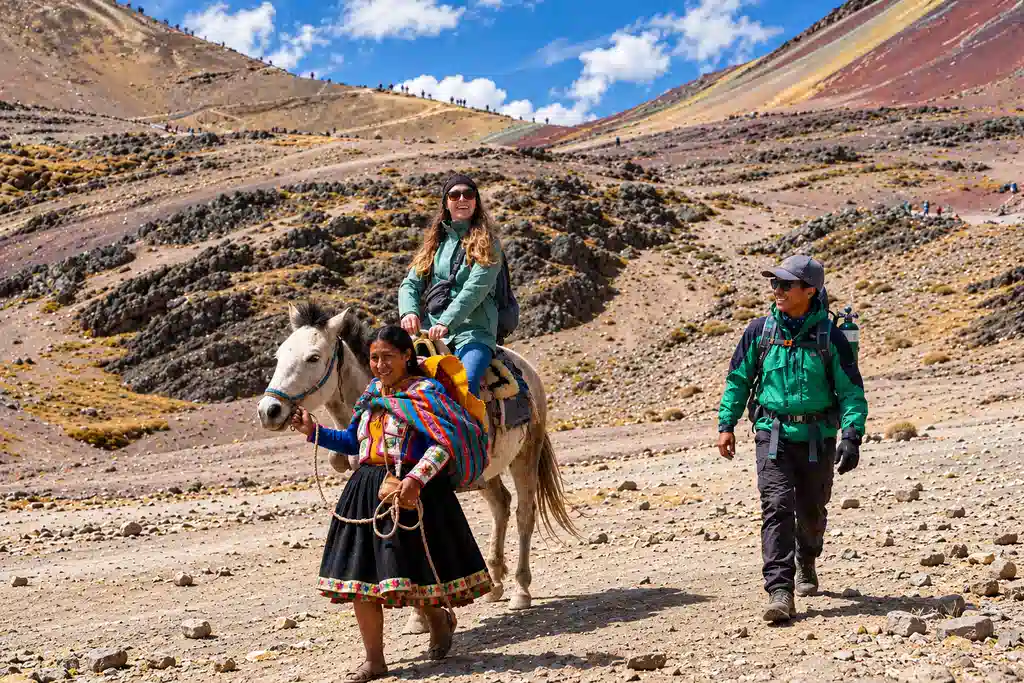
A good agency treats altitude as the main risk of the day, not an afterthought. At Andean Moments, every Rainbow Mountain tour departure carries an emergency oxygen tank and a first aid kit, and our guides are trained to recognize early AMS symptoms before they escalate.
Horses are available at the trailhead for anyone who starts to struggle partway up, an option worth knowing about even if you do not plan to use it. The pace itself matters more than most visitors expect: a guide who sets a slow, steady rhythm from the first step keeps far more clients comfortable than one who lets the group rush the first kilometer.
Who Should Think Twice Before Hiking at This Altitude
Most healthy travelers hike Rainbow Mountain without serious trouble, but a few groups face real added risk and should plan differently.
- Travelers with heart or lung conditions. Reduced oxygen puts extra strain on the cardiovascular system. Get clearance from a doctor before booking, and mention the exact altitude, 5,036 meters, when you ask.
- Pregnant travelers. Medical guidance on high altitude during pregnancy is cautious by default. Discuss the trip with your doctor well before arriving in Peru.
- Young children. There is no official age limit, but a private tour with extra horses and a flexible pace is the safer way to bring kids, rather than joining a fixed group schedule.
- Travelers arriving from sea level with less than 48 hours in Cusco. The single largest predictor of a rough day is insufficient acclimatization time, more than age or fitness.
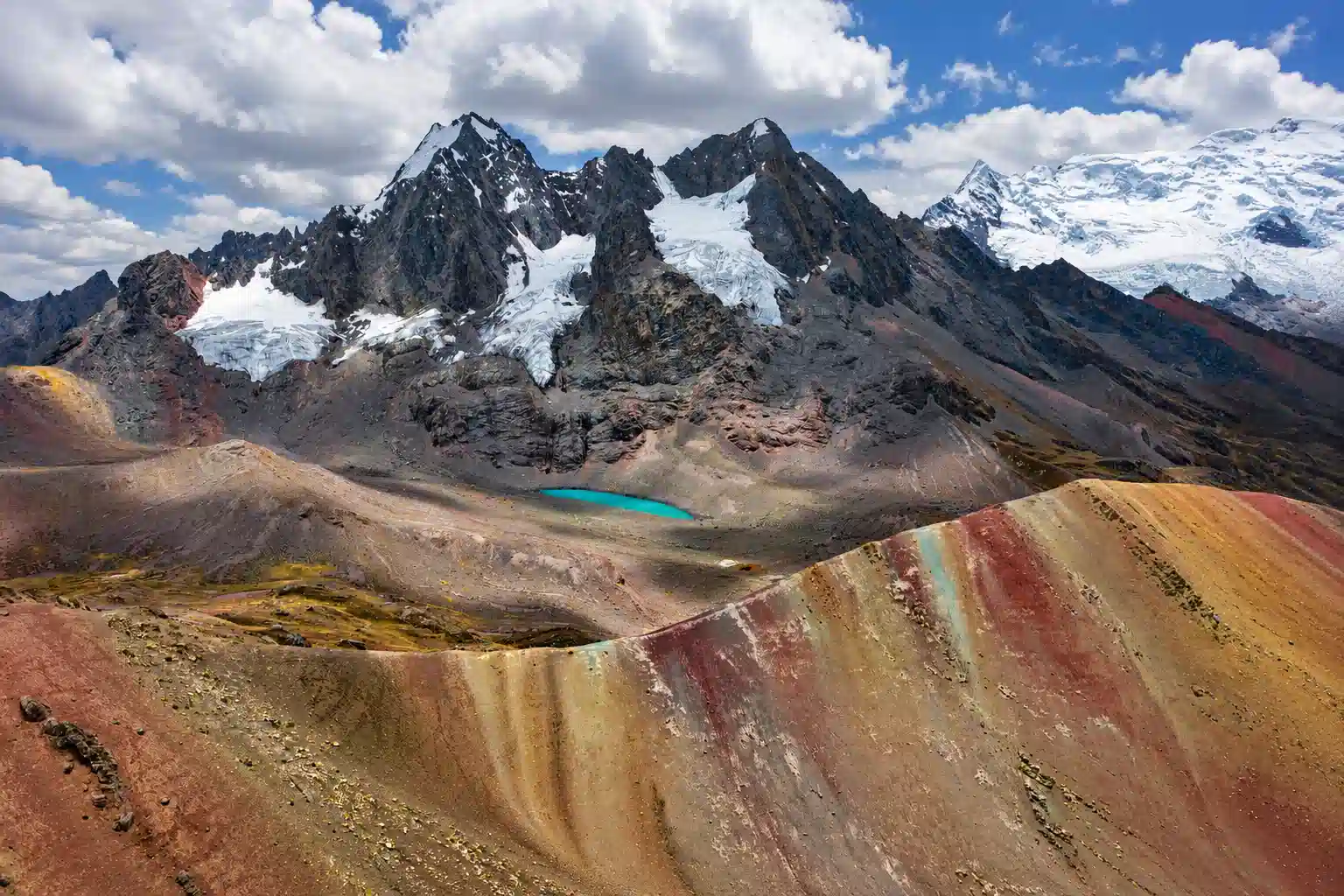
Rainbow Mountain vs Other High Altitude Stops in Peru
The Rainbow Mountain Peru altitude is high, but it is far from the only elevated stop on a typical Peru itinerary. Seeing where it ranks helps you plan your acclimatization schedule for the whole trip, not just this one day.
| Location | Elevation | Context |
|---|---|---|
| Machu Picchu | 2,430 m (7,972 ft) | Lower than Cusco, rarely causes altitude symptoms |
| Humantay Lake | 4,200 m (13,780 ft) | A common acclimatization hike before Rainbow Mountain |
| Cusco | 3,399 m (11,152 ft) | Where most trips start, already moderately high |
| Dead Woman’s Pass, Inca Trail | 4,215 m (13,829 ft) | The hardest point of the classic 4 day trek |
| Salkantay Pass | 4,630 m (15,190 ft) | Nearly matches the Rainbow Mountain trailhead |
| Lake Titicaca | 3,812 m (12,500 ft) | Higher than Cusco, a gentler stop by boat |
| Rainbow Mountain summit | 5,036 m (16,522 ft) | The highest point most travelers reach on a Peru trip |
If your itinerary includes Rainbow Mountain and the Inca Trail or Salkantay Trek, doing Rainbow Mountain first works well as an acclimatization test. Struggling here is a clear signal to add rest days before a multi day trek at similar or greater elevation.
A Lower Altitude Alternative: Palccoyo
Travelers worried about the elevation, or traveling with children or older relatives, have a genuine alternative close by. Palccoyo reaches similar striped mountain scenery at a gentler walk, mostly flat ground instead of a steep final climb, with a comparable but slightly lower summit elevation. It trades some of the drama of the main Vinicunca viewpoint for a far easier day at altitude.
For travelers who want to go further into the same mountain range instead of avoiding the altitude, the Ausangate 7 Lakes day tour explores the glacier fed lakes of the massif Rainbow Mountain belongs to, at a similar elevation range.
Best Time of Day and Season to Hike
Altitude and weather interact more than most visitors realize. Cold, thin air at dawn feels different in your lungs than warm, thin air at midday, and both are easier to manage than hiking in rain or snow at 5,000 meters.
Dry season, May through September, brings the clearest skies and the firmest trail conditions, both of which make the altitude easier to handle because you are not also fighting mud or exposure to cold rain. Most tours leave Cusco between 3:00 and 4:30 a.m. to reach the trailhead before the clouds typically roll in after late morning. Starting early also means hiking in cooler temperatures, which reduces the dehydration that makes altitude symptoms worse.
Wet season, November through March, adds snow and mud to an already demanding hike. If you have any concern about how your body handles altitude, book during the dry season and give yourself the easiest possible conditions for the climb.
Frequently Asked Questions
How high is Rainbow Mountain in Peru?
The Rainbow Mountain Peru altitude at the summit is 5,036 meters (16,522 feet) above sea level according to the official sign, though 5,200 meters is also widely cited.
Is Rainbow Mountain higher than Machu Picchu?
Yes, by a wide margin. Machu Picchu sits at 2,430 meters, while Rainbow Mountain’s summit reaches 5,036 meters, more than double the elevation.
Do I need to acclimatize before hiking Rainbow Mountain?
Yes. Spending at least one full day, ideally two, in Cusco at 3,399 meters before the hike significantly lowers your risk of altitude sickness.
Should I take Diamox for Rainbow Mountain?
Many travelers do, typically 125 mg twice daily starting one to two days before arriving in Cusco. Confirm with a doctor first, since it is not suitable for everyone.
Is Rainbow Mountain dangerous because of the altitude?
Mild altitude sickness is common but rarely dangerous. Severe symptoms are rare on a guided day tour, where oxygen, horses, and a trained guide are available if needed.
Can children or older travelers hike Rainbow Mountain?
Yes, with proper acclimatization and a flexible pace. A private tour with horses available makes the day safer for both groups than a fixed group schedule.
Is there an easier alternative to Rainbow Mountain?
Palccoyo offers similar striped mountain scenery with a flatter, easier walk, making it a good choice for travelers most concerned about the elevation.