
The Short Answer
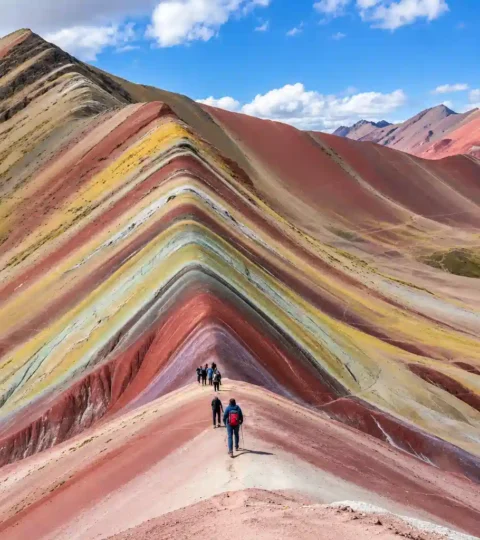
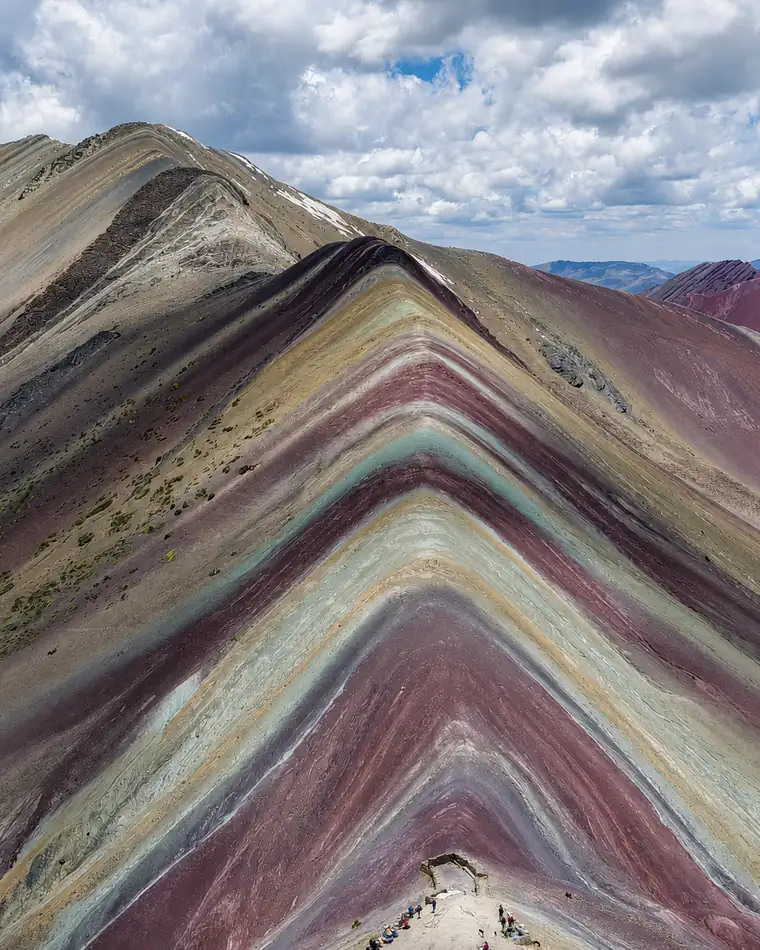
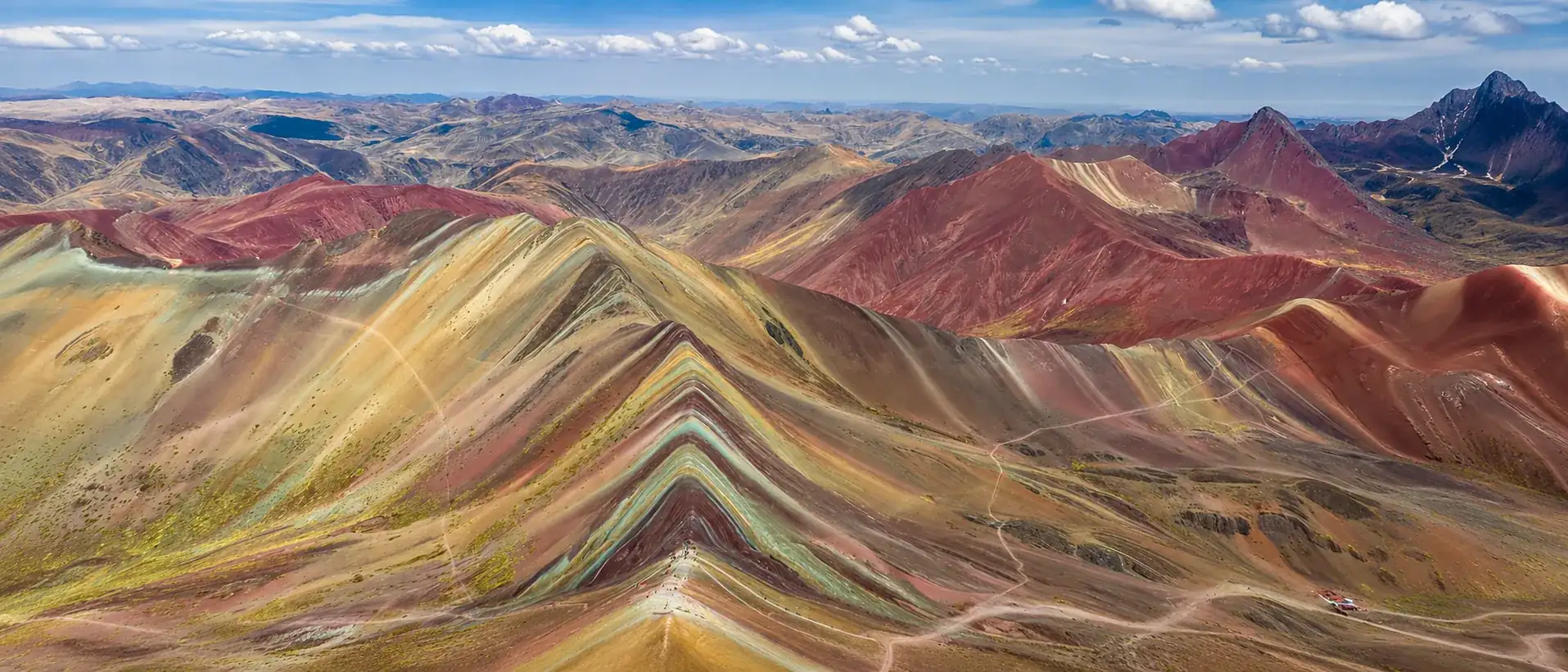
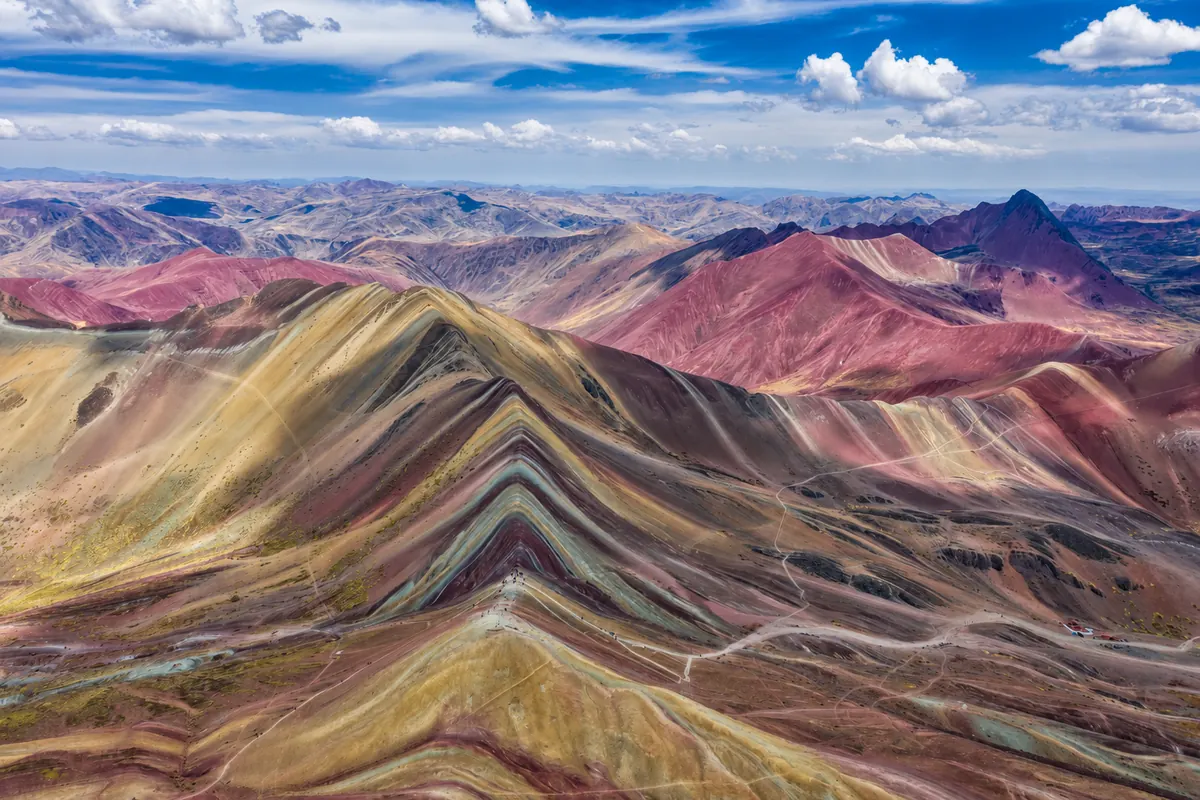
Why is Rainbow Mountain Peru colorful? In short, because it is built from dozens of layers of mineral rich sedimentary rock. Rainbow Mountain, known locally as Vinicunca, wears each layer as a different colored band. Each layer holds a different mineral that weathers and oxidizes into a different color, and the same tectonic forces that raised the Andes tilted these once flat layers to steep angles. Erosion later cut a clean cross section through them, so today the bands sit side by side as vivid parallel stripes. In short, iron oxide paints the reds and pinks, iron sulphide and limonite the yellows, chlorite the greens, and sandstone and marl the whites and lavenders. The colors are 100 percent natural. Nothing here is painted or man made.
What Gives Rainbow Mountain Its Colors?
Every stripe on the mountain is a different rock layer, and the color of each one comes down to the minerals inside it and how much they have oxidized. Two respected sources line up closely here: geologist Trevor Nace, writing in Forbes, and a report from the Geological Society of Peru (Sociedad Geologica del Peru) carried by the BBC. This is the mineral behind each band.
| Color band | Mineral responsible | Why it looks that way |
|---|---|---|
| Red and pink | Iron oxide (hematite) | The same rust that forms when iron meets oxygen and water. Pink bands mix red clay with mud and sand. |
| Yellow and gold | Iron sulphide and limonite | Sulfur rich, calcareous sandstone that oxidizes to a mustard tone. |
| Green | Chlorite and iron magnesium clays | Chlorite is the geologist preferred explanation. Some layers also carry copper minerals. |
| Brown and maroon | Goethite and oxidized limonite | Iron minerals at a different stage of oxidation than the bright reds. |
| White | Quartz sandstone with limestone and marl | Pale, iron poor rock with little to oxidize. |
| Lavender and purple | Marl (clay and calcium carbonate) with silicates | A softer, mixed rock that reads as a muted violet. |
The reds, yellows, and greens are the best established colors, confirmed by both sources. The purples and any turquoise or copper tones are named by fewer experts, so treat those as the finishing touches rather than the headline. The key idea is simple: this is a mineral chart written into a mountainside.
How the Colored Layers Formed
The stripes are the result of three long stages, played out over tens of millions of years.
- Sedimentation. Long before the Andes existed, this ground lay low and flat. Marine, lake, and river sediments settled here in horizontal layers, each with its own mix of iron clays, quartz sands, and carbonates. Different environments left different minerals, which is why the layers differ in color.
- Uplift and tilting. As the Nazca plate pushed beneath the South American plate, the crust shortened and folded, building the Andes and tilting these once horizontal beds to steep, almost vertical angles. This tilt is why the colors appear as clean parallel stripes rather than random blotches.
- Erosion and oxidation. Rain, wind, and freeze and thaw cycles then sliced through the tilted layers, exposing a fresh cross section. Oxygen and water turned the iron in the rock to rust, the classic red bed reaction, deepening and revealing the colors. Above 5,000 meters there is almost no vegetation to hide them.
One popular claim to set aside: Rainbow Mountain is not a chain of painted volcanoes. It is sedimentary rock, later tilted and exposed, not lava colored on the surface.
A Common Myth: It Is Not the “Mitu Group”
Most travel articles state that Rainbow Mountain belongs to a rock unit called the Mitu Group. That is an outdated mapping error worth correcting, because it is the kind of detail that separates a real geology explainer from a copied one.
The only academic study to examine Vinicunca directly, published by researchers at the Universidad Nacional de San Antonio Abad del Cusco in 2017, places the mountain in the Grupo Vilquechico “Capas Rojas”, a set of red bed layers from the Late Cretaceous to the early Paleocene, roughly 72 to 60 million years old. These beds were folded and faulted during the middle Eocene, as the Andes rose. The old “Mitu” label comes from historical maps that predate this work.
Are the Colors Real, or Painted and Photoshopped?
This is the question most first time visitors quietly ask, and the honest answer has two parts.
The colors are real. They are genuine minerals, oxidized and weathered over millions of years, not paint or pigment. The fact checking site Snopes confirmed that a genuine multicolored mountain does exist near Ausangate in Peru.
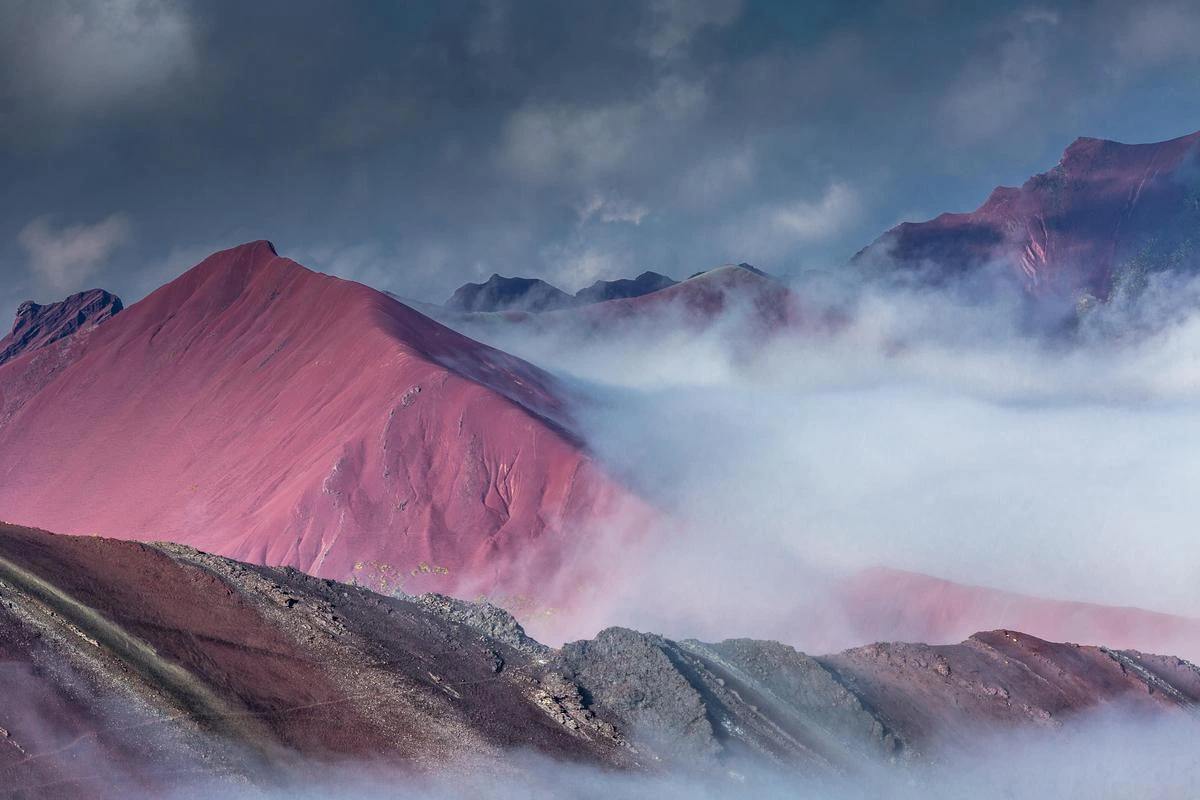
But many photos are edited. Snopes also found that the ultra saturated, neon versions that go viral online are digitally enhanced, and that some images labeled as Peru are actually of other places, such as the Zhangye Danxia landforms in China. In person, Vinicunca is more muted than the brochure shots, and on a cloudy or snowy day the colors can be hidden almost entirely. The mountain is real and beautiful. It simply looks less like a neon poster and more like a natural mineral hillside, which is the point.
Why Did Rainbow Mountain Become Famous Only Recently?
You often read that a glacier melted and suddenly revealed the mountain around 2015. The truth is more nuanced, and more interesting.
Regional glaciers really are retreating. Peer reviewed studies of the Cordillera Vilcanota, the range that includes Vinicunca and Ausangate, document a loss of roughly a third of glacier area in recent decades. That warming is real and well measured. However, a geophysicist from Peru’s Instituto Geofisico del Peru has explained that the colored ridge itself carried only partial, seasonal snow, not a thick permanent ice cap. So the melt uncovered the summit gradually rather than in one dramatic reveal.
The bigger reasons for the mountain’s sudden fame were access and social media. A walking trail was developed between about 2011 and 2014, the first guided tours ran in early 2016, and photos went viral on Facebook and Instagram that same year. Local Quechua communities had known the peak for generations. It sits on the ancient pilgrimage route to Ausangate, a sacred mountain, or Apu. What changed around 2015 and 2016 was not discovery. It was visibility.
When Are the Colors Most Vivid?
Weather at 5,000 meters decides how good the colors look on any given day, so timing matters.
- Best season: the dry season, roughly May to September, brings clear skies, firmer trails, and the strongest color contrast. June to August is busiest, while May and September balance good weather with thinner crowds.
- Best time of day: arrive before mid morning. Clouds and rain tend to build after about 10 or 11 a.m., which is why most tours leave Cusco between 3 and 4:30 a.m.
- A useful nuance: a thin film of moisture can actually deepen the colors, because wet mineral grains look more saturated. The catch is that heavy wet season snow and mist, common from November to March, usually hide the mountain instead. A light dampness helps, a snowfall does not.
Where Is Rainbow Mountain?
Rainbow Mountain sits in the Cusco region of southern Peru, on the road toward Ausangate, between the districts of Cusipata and Pitumarca. It is part of the Ausangate massif in the Cordillera Vilcanota, about 100 kilometers southeast of Cusco, or close to a 3 hour drive followed by a short but steep hike.
The summit viewpoint sits at about 5,036 meters (16,522 feet), the figure shown on the mountain’s own summit sign. You will also see 5,200 meters quoted widely, so do not be surprised by the difference. Either way, this is serious altitude, and spending one or two days acclimatizing in Cusco first makes the visit far more enjoyable.
Two nearby sites round out the area:
- Red Valley (Valle Rojo): a deep red landscape right beside Vinicunca, colored by iron oxide, and an easy add on from the main viewpoint. It features in our Rainbow Mountain and Red Valley day tour.
- Palccoyo: the gentler alternative rainbow mountain, with three striped hills and a short, mostly flat walk, ideal if the steep climb at Vinicunca sounds daunting. See our Palccoyo Rainbow Mountain tour.
If you would rather trade crowds for a longer trek among glacier fed lakes on the same massif, the Ausangate 7 Lakes day tour explores the mountain that Vinicunca belongs to.
Frequently Asked Questions
Is Rainbow Mountain real or fake?
It is real and natural. The colors are minerals in the rock, not paint. Only the ultra saturated photos online are edited.
Why is Rainbow Mountain Peru colorful?
Each stripe is a separate layer of sedimentary rock, and each layer holds a different mineral that weathers into a different color.
What causes the red color?
Iron oxide, also known as hematite. It is the same rust that forms when iron is exposed to oxygen and water.
What causes the yellow and green?
Yellow and gold come from iron sulphide and limonite. Green comes mainly from chlorite and iron magnesium clays, with copper minerals in some layers.
Is it Photoshopped?
The viral neon images are heavily enhanced. The real mountain is genuinely colorful but more muted, and the colors depend on the weather.
How old are the colored layers?
About 72 to 60 million years old, from the Late Cretaceous to the early Paleocene, tilted upright during the middle Eocene as the Andes rose.
How high is Rainbow Mountain and is it hard to visit?
The viewpoint is about 5,036 meters. The hike is short but steep at extreme altitude, so acclimatize in Cusco for a day or two first.
When is the best time to see the colors?
The dry season from May to September, arriving before mid morning for the clearest skies and strongest contrast.