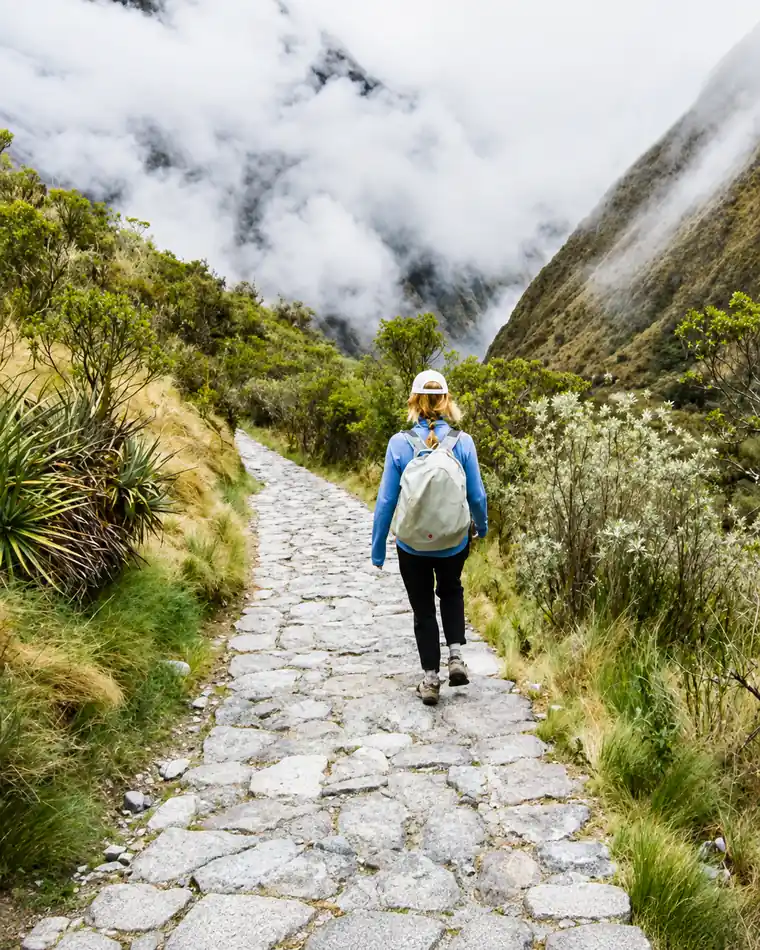

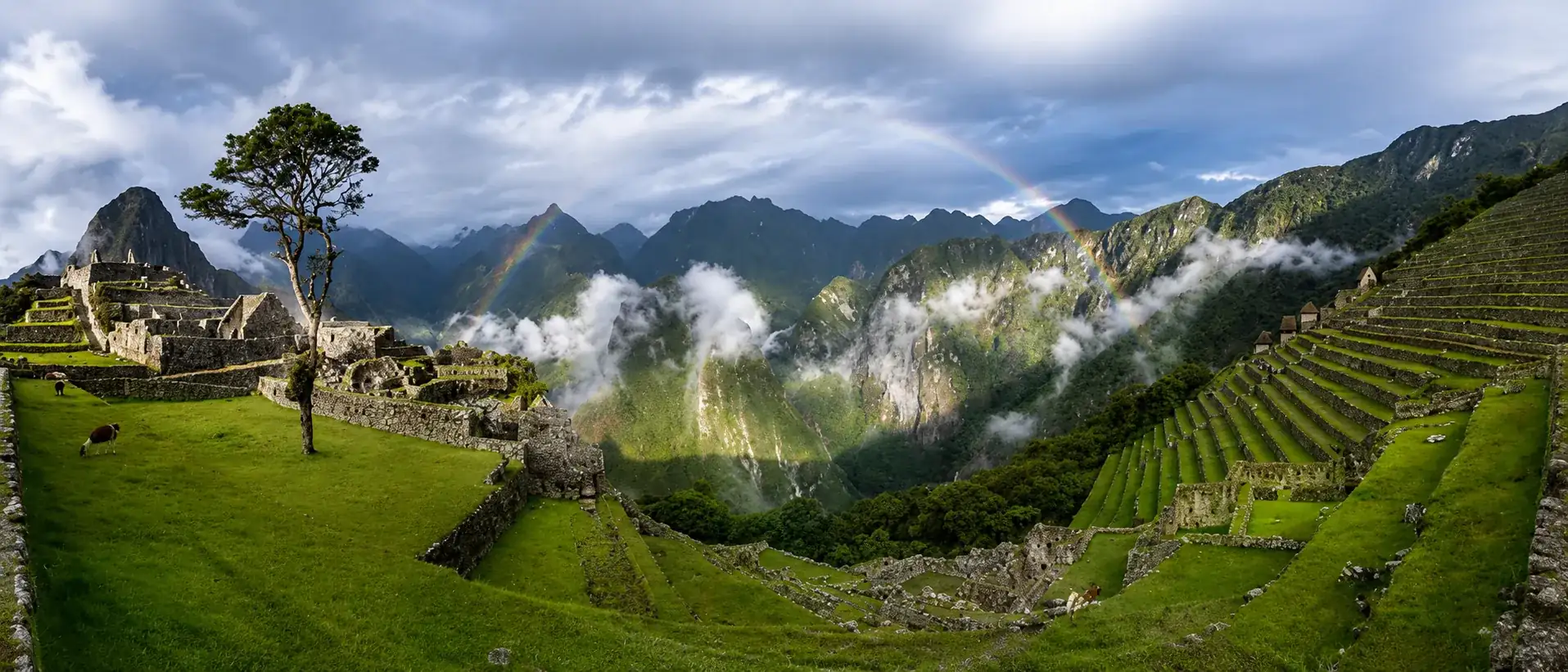
Inca Trail weather falls into two clear seasons. The dry season runs from May to September and is the best time to hike, with sunny days and cold nights. The rainy season runs from November to March. And one rule matters above all others: the trail closes completely every February for maintenance, so no one hikes it that month.
If you only want the short answer, aim for May or September. You get dry weather, fewer people on the path and lower prices than the busy midwinter peak. Below is the full picture, month by month, plus what the weather actually feels like once you are walking at altitude.
Inca Trail weather at a glance
The trail sits in the mountains around Cusco, where the year splits neatly into a dry season and a wet season. According to Peru’s national weather service (SENAMHI), the Cusco region records its heaviest rain in January and its coldest nights in July. That one fact shapes almost every decision about when to go.
- Dry season (May to September): little rain, clear skies, warm sun by day and cold nights. This is peak hiking season.
- Rainy season (November to March): green landscapes, frequent afternoon showers, mud on the stone steps and far fewer hikers.
- Shoulder months (April and October): a bit of both. Often a smart choice for good weather without the crowds.
Inca Trail weather month by month
These figures are approximate. The route crosses several altitudes, so a warm afternoon in the valley can turn into a freezing night a few hours higher up. Treat the table as a guide, not a promise.
| Month | Day | Night (valley) | Rain | Crowds | Verdict |
|---|---|---|---|---|---|
| January | 20 to 24°C | 12 to 13°C | Very high | Low | Wet and green, very quiet |
| February | Closed | Closed | Peak | Trail closed | Closed for maintenance |
| March | 20 to 23°C | 11 to 12°C | High, easing | Low | Lush, reopens March 1 |
| April | 20 to 22°C | 9 to 10°C | Moderate | Rising | Good shoulder month |
| May | 20 to 22°C | 7 to 8°C | Low | Moderate | Ideal, the sweet spot |
| June | 22 to 25°C | 5 to 9°C | Very low | High | Dry, cold nights, busy |
| July | 22 to 25°C | 5 to 9°C | Very low | Peak | Driest and coldest, busiest |
| August | 22 to 25°C | 6 to 9°C | Very low | Peak | Dry and clear, busy |
| September | 20 to 23°C | 8 to 10°C | Low | Moderate | Ideal, the sweet spot |
| October | 20 to 22°C | 9 to 10°C | Rising | Moderate | Good shoulder month |
| November | 21 to 24°C | 8 to 13°C | Moderate | Moderate | Rain returns, still fine |
| December | 22 to 26°C | 12 to 13°C | High | Low | Wet and quiet |
Swipe the table sideways to see more →
Note: the night figures above are for the lower valleys. At the high camps the nights are much colder, and from June to August they regularly fall below freezing. More on that just below.
Temperatures on the trail: why altitude changes everything
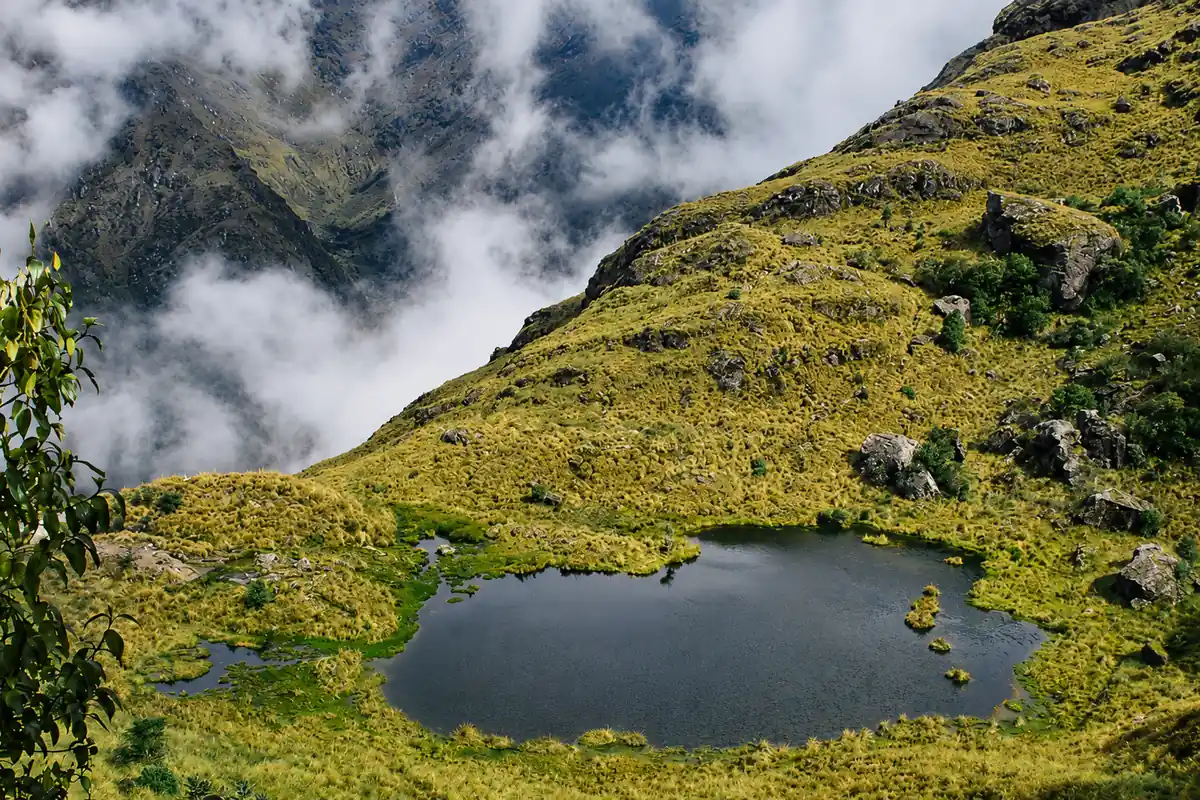
The classic route starts near Km 82 at about 2,709 m and climbs to its highest point at Dead Woman’s Pass, or Warmiwañusca, 4,215 m above sea level. It then drops through cloud forest to Machu Picchu at 2,430 m. For every 1,000 m you climb, the air cools by roughly 4 to 5°C, so the weather you feel depends far more on where you are standing than on the date.
By day, strong sun can push valley temperatures to 22 or 25°C, even in the dry season. By night the story flips. The coldest camp is usually Pacaymayo, at around 3,600 m, and from June to August the temperature there can drop well below freezing, roughly 5 to 7°C under zero, with frost on the ground by dawn. The final camp, Wiñay Wayna, sits lower in the cloud forest and stays milder. Expect a big daily swing, and pack for both extremes on the same day.
Is the Inca Trail closed in February?
Yes. The Inca Trail closes for the whole of February, every single year. This applies to both the classic 4 day route and the short 2 day route from Km 104. The last day you can start a trek is January 31, and the trail reopens on March 1.
The closure is ordered by the park authority (SERNANP) together with the Ministry of Culture and the regional Cusco office. There are two reasons. Crews spend the month repairing the stone paths, walls and campsites, and February is the peak of the rainy season, when landslides make the narrow Inca steps genuinely dangerous. This rule has been in place since the early 2000s, long before the well known floods of 2010.
If February is your only window, you still have excellent options. Machu Picchu itself stays open all year and is easy to reach by train, and the Salkantay Trek keeps running through February as an alternative route to the same destination.
Should you hike in the rainy season?
It can absolutely be done, and it has real upsides. Mornings are usually clear, the rain tends to arrive in the afternoon. The mountains are at their greenest, waterfalls appear beside the path and there are far fewer people. Permits are also much easier to get at short notice.
The trade offs are mud, slippery stone steps on the long descents and mist that can hide the views. Heavy rain in January and February has, on rare occasions, triggered landslides that suspend the train line for a day or two. If you go between November and March, bring proper rain gear, waterproof bags and trekking poles, and keep your plans a little flexible.
Which weather is best for hiking?
Purely on Inca Trail weather, June, July and August are the driest with the clearest skies, while May and September give you almost the same dry conditions with milder nights and far fewer people. April and October are solid shoulder months. But the best month to actually book depends on more than the forecast, namely crowds, permit availability and festivals. For that full decision, see our companion guide on the best time to hike the Inca Trail.
One weather related booking tip
The best weather months are also the ones that book out first. Only 500 permits are issued per day, and for the dry season, June to August above all, they routinely sell out 4 to 6 months ahead, while the rainy season is far more relaxed. If your dates land in the dry season, reserve early. For exactly how far ahead to book each month and how the permit system works, see our best time to hike guide and our full Inca Trail permit guide.
What about the weather at Machu Picchu itself?
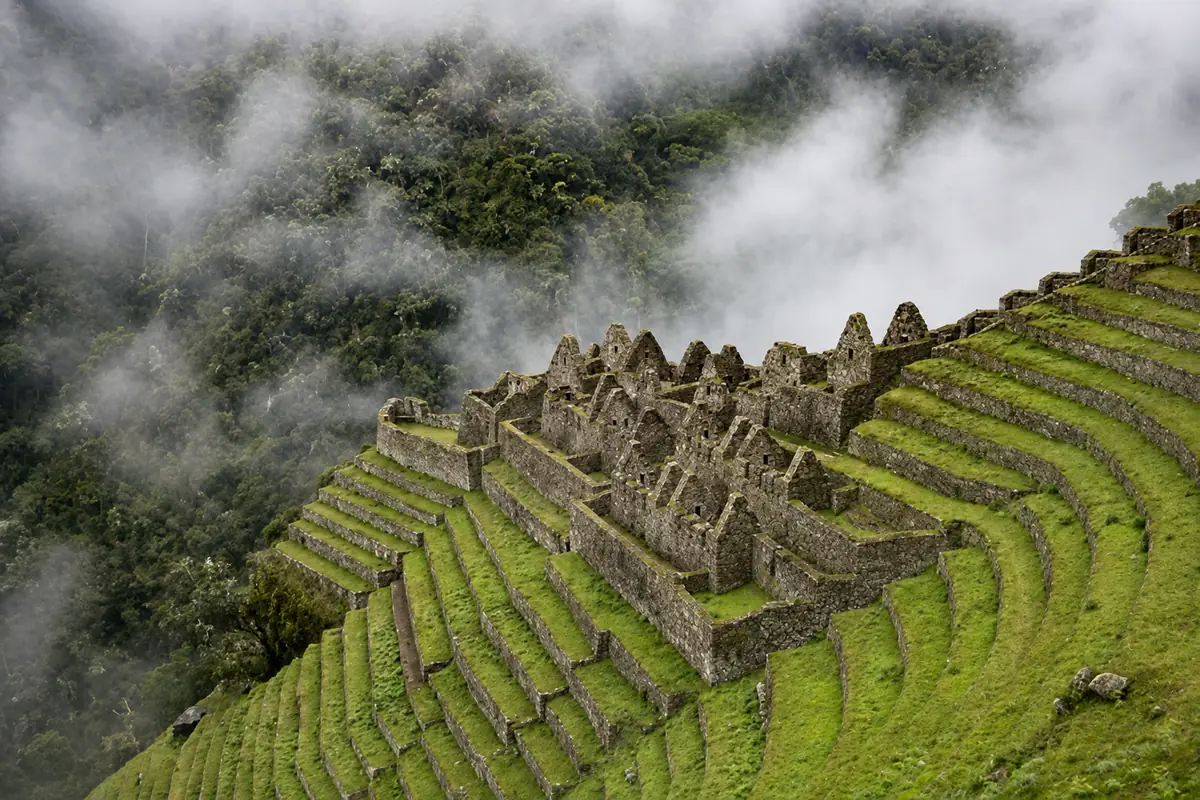
Machu Picchu sits lower than the mountain passes, so the citadel is milder and a little more humid than the trail, and it can see cloud and light rain even in the dry months. Because the citadel follows its own rhythm of weather and crowds we cover it on its own. For the full breakdown, read our guide to the best time to visit Machu Picchu.
Ready to plan your trek?
The takeaway on Inca Trail weather is simple. Hike between May and September for the driest weather, target May or September for the best balance of sun and space, and remember that February is off limits. Once your month is set, the real task is securing a permit. Browse our Inca Trail tours and lock in the classic 4 day trek before your dates are gone.