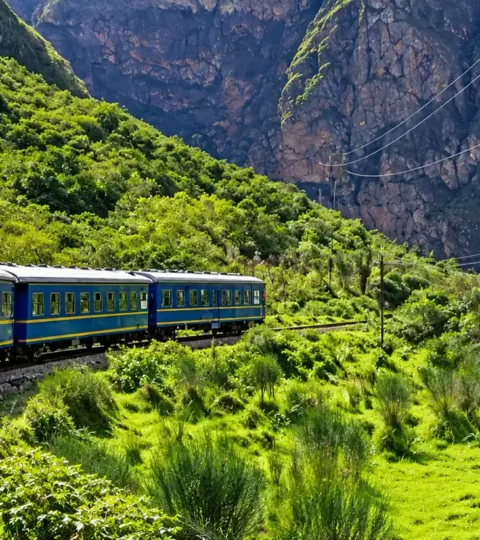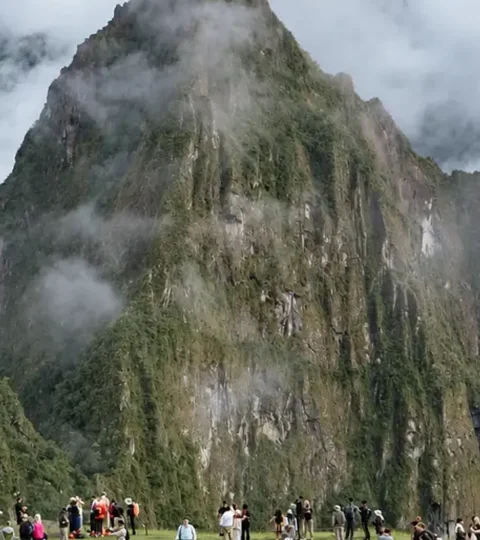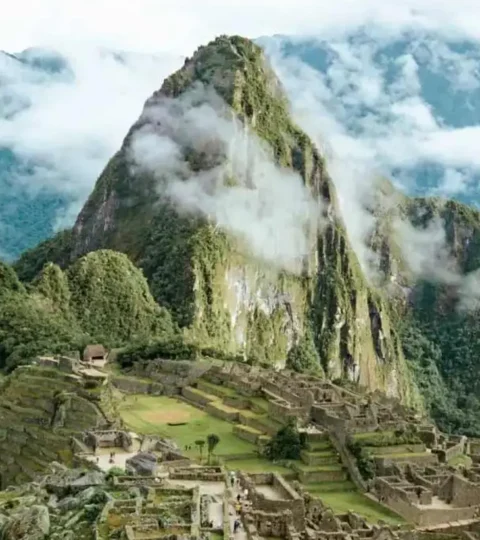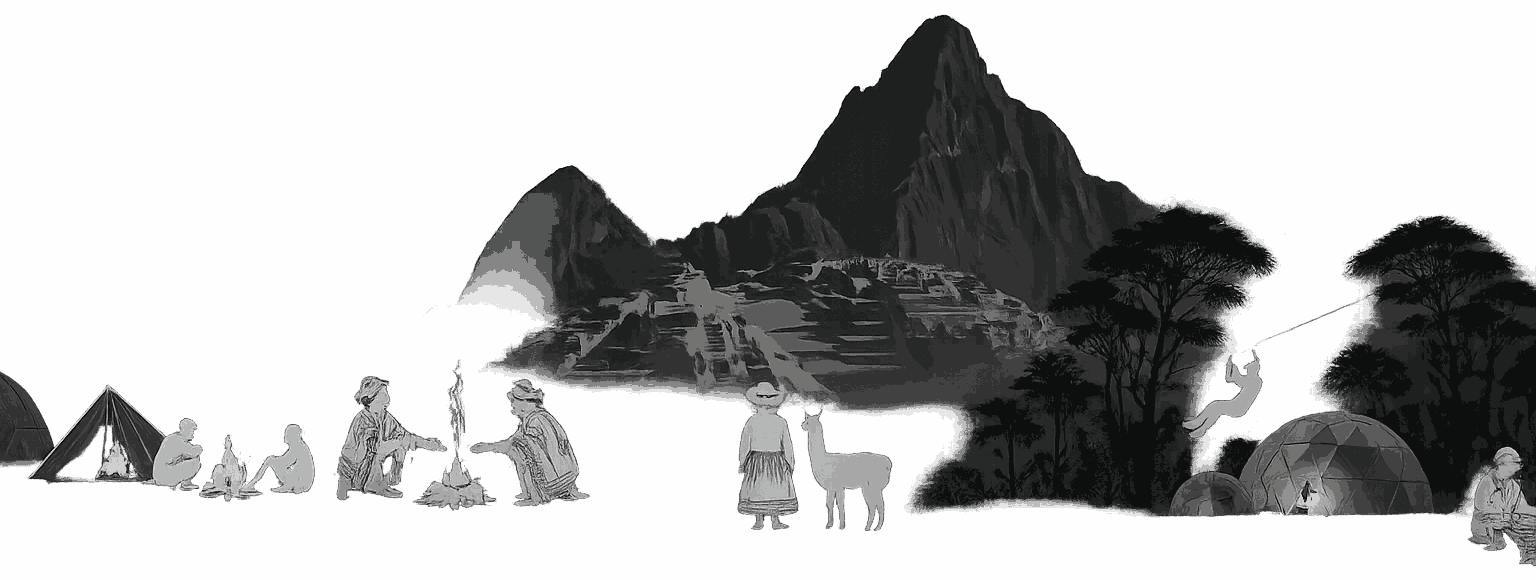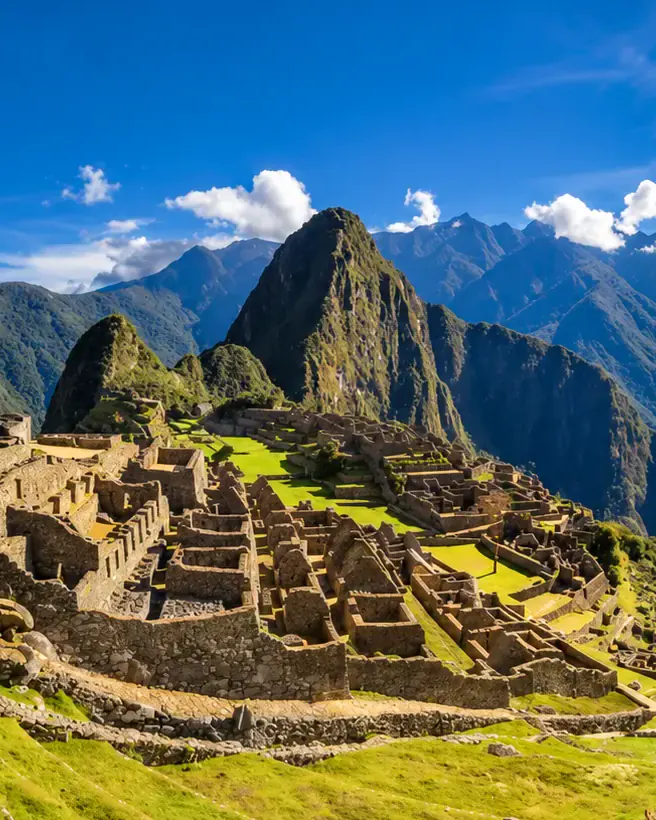

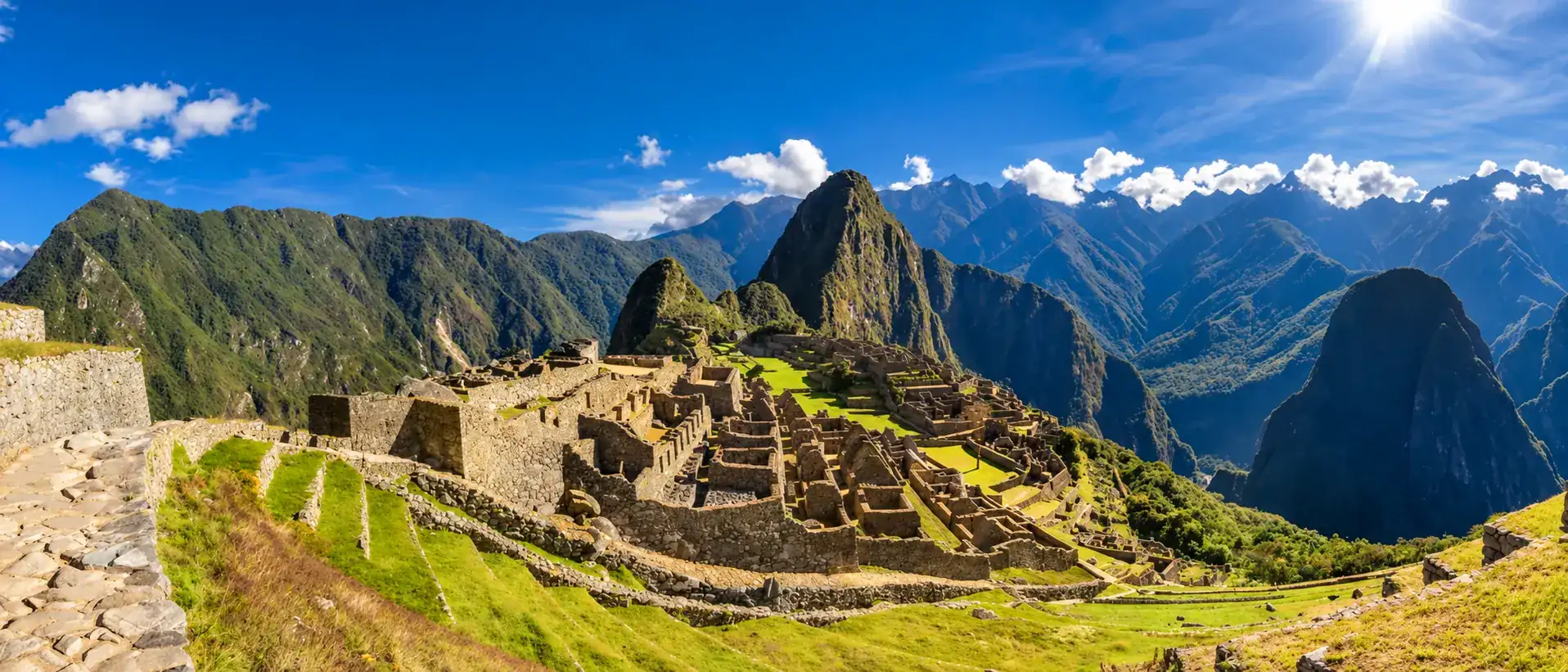
The best time to visit Machu Picchu is May to September, the dry season, when official records show about 2 to 3 inches (51 to 76 mm) of rain a month. May is our favorite month: dry weather, green landscapes and a lower daily visitor limit than in June to October.
We are a local tour operator in Cusco and we take travelers to Machu Picchu every week of the year. This guide uses official climate data from SENAMHI, Peru’s national weather service, and the 2026 rules of the Ministry of Culture.
It also covers what no weather table shows: fog, trains, crowds and our own experience on the ground.
When is the best time to visit Machu Picchu?
There is no bad month to visit Machu Picchu. The site is open every day of the year, and temperatures barely change. What changes is the rain, the crowds and what you can do around the visit.
| If you want | Go in | Why |
|---|---|---|
| The best weather | June, July, August | The driest months, about 2 inches (51 to 61 mm) of rain each |
| Good weather and fewer people | May, early June, September | Dry season; May and early June keep the 4,500 daily limit |
| Green landscapes and photos | April, November | Lush scenery, dramatic clouds, moderate crowds |
| Low prices and quiet trails | January to March (not Easter), late November | Lowest demand of the year |
| The Classic Inca Trail | May to September | Dry trail; it is closed every February |
Our honest advice: if you can choose, pick May. If May does not work, choose September. Both give you dry season weather without the busiest weeks of July and August.
Whatever the month, one night in Aguas Calientes makes the biggest difference. You enter early, before the day trippers from Cusco, and you can wait for the clouds to lift without rushing to a train. That is how our Machu Picchu and Sacred Valley 2 Days tour works.
Machu Picchu weather by month at a glance
These are the official 1991 to 2020 climate normals of the SENAMHI “Machu Picchu” station, at 7,871 feet (2,399 m). It sits between the town of Aguas Calientes and the citadel, so it describes the weather you will actually walk in.
| Month | High | Low | Rain | Crowds (2026) |
|---|---|---|---|---|
| January | 69°F (20.6°C) | 53°F (11.8°C) | 13.4 in (341 mm) | Low |
| February | 69°F (20.6°C) | 53°F (11.9°C) | 12.8 in (325 mm) | Lowest |
| March | 70°F (21.0°C) | 53°F (11.9°C) | 13.4 in (341 mm) | Low |
| April | 71°F (21.5°C) | 53°F (11.7°C) | 7.2 in (184 mm) | Moderate, peak at Easter |
| May | 71°F (21.9°C) | 51°F (10.8°C) | 2.9 in (73 mm) | Moderate |
| June | 72°F (22.0°C) | 50°F (10.0°C) | 2.0 in (51 mm) | Moderate, high from June 19 |
| July | 72°F (22.1°C) | 49°F (9.4°C) | 2.1 in (54 mm) | Very high |
| August | 74°F (23.1°C) | 50°F (10.0°C) | 2.4 in (61 mm) | Very high |
| September | 74°F (23.4°C) | 52°F (11.1°C) | 3.0 in (76 mm) | High |
| October | 73°F (22.8°C) | 53°F (11.5°C) | 6.4 in (163 mm) | High |
| November | 73°F (22.8°C) | 54°F (12.0°C) | 6.8 in (173 mm) | High until Nov 2, then low |
| December | 70°F (21.2°C) | 54°F (12.0°C) | 10.8 in (275 mm) | Low, peak Dec 30 and 31 |
Swipe the table sideways to see more →
Source: SENAMHI climate normals 1991 to 2020, Machu Picchu station. Crowd levels follow the 2026 daily limits of the Ministry of Culture.
Three things stand out. Temperatures are almost the same all year, with highs between 69 and 74°F (21 and 23°C).
Rain sets the seasons: about two thirds of the yearly 83 inches (2,116 mm) falls from December to March. And the warmest days come in August and September, at the end of the dry season.
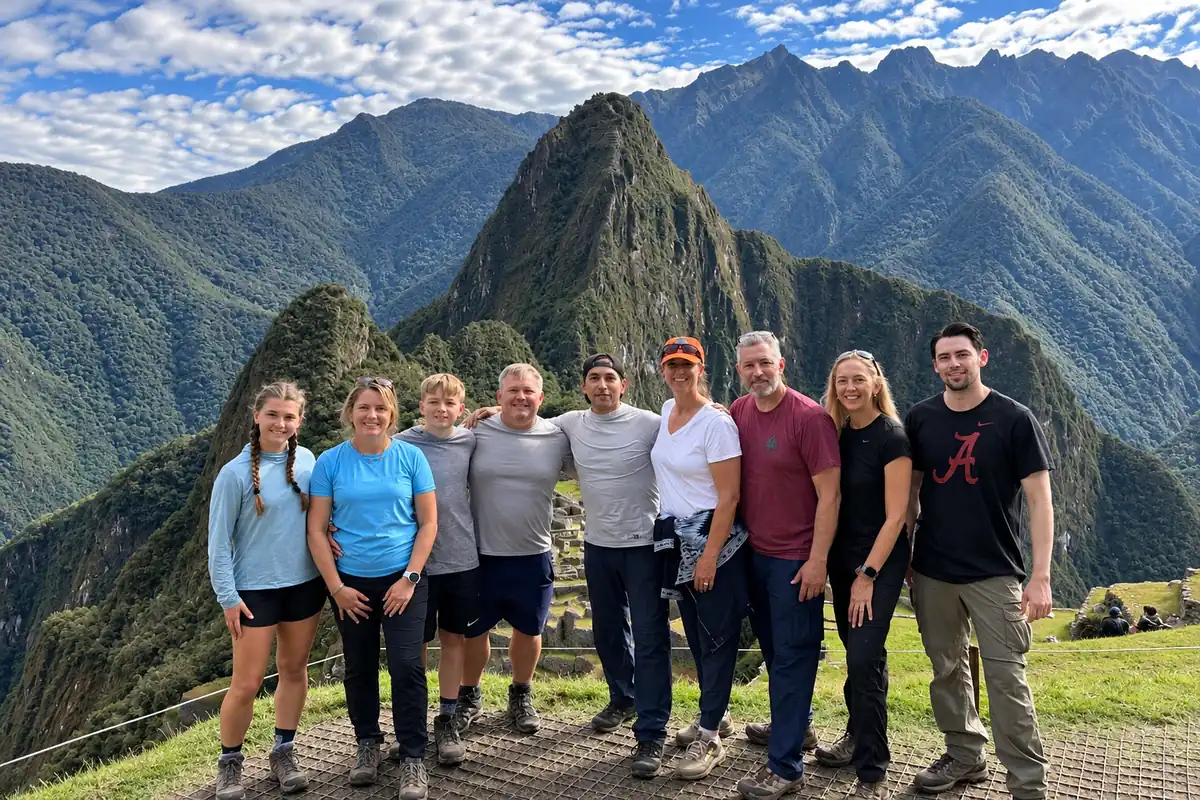
Daylight also barely changes. The sun rises between about 5:10 a.m. in November and 6:15 a.m. in July, and days last between 11 h 20 min and 12 h 55 min. Peru does not use daylight saving time.
Machu Picchu is not Cusco: compare the two climates
Most travelers sleep in Cusco, about 3,300 feet (1,000 m) higher than Machu Picchu. The two places have very different weather, and many guides mix them up.
| Machu Picchu | Cusco | |
|---|---|---|
| Elevation of the station | 7,871 ft (2,399 m) | 10,545 ft (3,214 m) |
| Rain per year | 83 in (2,116 mm) | 26 in (666 mm) |
| Wettest month | January and March, 13.4 in (341 mm) | January, 5.7 in (146 mm) |
| Driest month | June, 2.0 in (51 mm) | June, 0.1 in (4 mm) |
| Coldest night (July average) | 49°F (9.4°C) | 30°F (1.3°C below zero) |
Source: SENAMHI normals 1991 to 2020, Machu Picchu and Granja Kayra (Cusco) stations.
In short: Machu Picchu gets three times more rain than Cusco, but its nights are much milder. The freezing nights you pack for are a Cusco and Sacred Valley thing, not a Machu Picchu thing.
If you are still planning where to sleep, our guide to where to stay in Cusco helps.
Dry season vs rainy season at Machu Picchu
At the citadel itself, the seasons are:
- Dry season: May to September, with 2.0 to 3.0 inches (51 to 76 mm) of rain a month.
- Shoulder months: April, October and November, with 6.4 to 7.2 inches (163 to 184 mm).
- Rainy season: December to March, with 10.8 to 13.4 inches (275 to 341 mm).
You will often read that the dry season runs from April to October. That is true for Cusco, not for Machu Picchu. October at the citadel gets more than double the rain of September, so treat it as a wet shoulder month.
Why Machu Picchu is so much wetter: the cloud forest
Machu Picchu sits on the Amazon side of the Andes. Warm, moist air from the rainforest rises up the Urubamba canyon, cools against the mountains and turns into cloud and rain. Cusco, higher and behind the ridges, stays in a drier rain shadow.
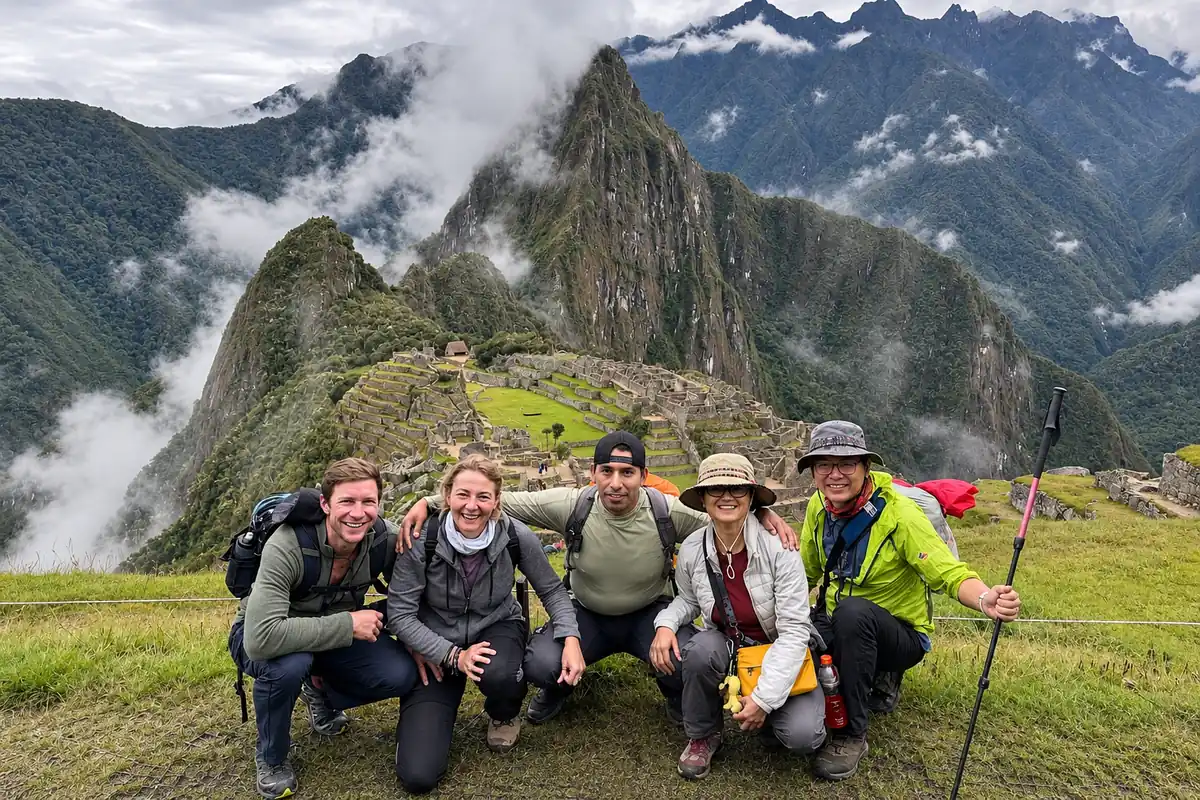
That is why the same December morning can be sunny in Cusco and drizzly at the ruins. It is also why the citadel stays green all year and so often starts the day wrapped in cloud.
What really changes on the ground
In the rainy season, expect showers almost every day, usually building in the afternoon, and low clouds that come and go. Inca stone steps get slippery, so grip matters more than anything else you wear.
The rainy season has a reward too: it is when most orchids bloom in the cloud forest around the ruins, and when birds are easiest to spot. For our guides, December to March is the best time of year for nature lovers.
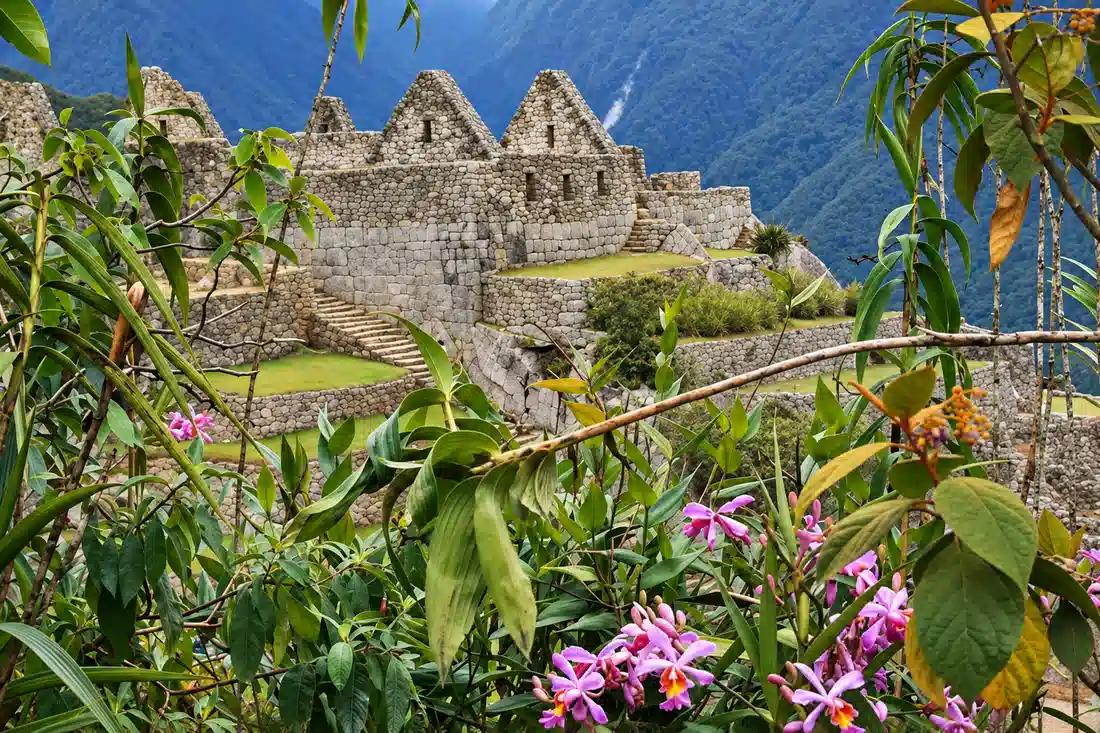
In the dry season, a short shower is still possible: even June averages 2 inches (51 mm). Mornings are often misty for the first hour, then the cloud lifts and the classic view opens up.
Real risks in the rainy season
Heavy rain can trigger landslides, called huaicos, that cut the railway. They are rare and usually local, but they do happen:
- January 2010: the worst rains in 15 years cut road and rail access. Thousands of travelers were evacuated, many by helicopter.
- January 2022: the Alccamayo river overflowed in Aguas Calientes, and 889 travelers were moved out by train.
- January and March 2026: huaicos suspended the line between Hidroeléctrica and Machu Picchu. The main line from Ollantaytambo kept running.
The Hidroeléctrica route, used by budget travelers and Salkantay trekkers, is the most exposed. From December to March we always recommend the train from Ollantaytambo and one free buffer day in Cusco after Machu Picchu.
El Niño in 2026 and 2027
Peru’s official El Niño committee (ENFEN) has an El Niño Costero alert in place since February 2026. Its forecasts from September 2026 expect normal to below normal rain in the southern highlands through the summer of 2027.
The risk of heavy rain is concentrated on the north coast. It is a forecast, not a promise: a single storm can still cause a huaico.
Machu Picchu weather month by month
Here is what each month really looks like, with the official averages, the 2026 crowd level and one tip from our guides.
Machu Picchu in January
69°F / 53°F (20.6 / 11.8°C), 13.4 inches (341 mm) of rain: one of the two wettest months. Crowds are low, except on January 1, when the daily limit rises to 5,600.
Expect rain every day, waterfalls on the canyon walls and the greenest scenery of the year. Tip: buy flexible train tickets and keep a free day in Cusco, because January has seen rail interruptions in 2010, 2022 and 2026.
Machu Picchu in February
69°F / 53°F (20.6 / 11.9°C), 12.8 inches (325 mm). The quietest month of the year at the citadel.
The Inca Trail is closed all month for maintenance. The citadel and the trains work normally. Tip: sleep in Aguas Calientes and take an early entry. Clouds often break for a while in the morning, and you will not have a train to rush to.
Machu Picchu in March
70°F / 53°F (21.0 / 11.9°C), 13.4 inches (341 mm): as wet as January. Crowds stay low, and the Inca Trail reopens on March 1.
The forest is at its most lush and clouds drift through the ruins. Tip: avoid the overland Hidroeléctrica route this month and take the train from Ollantaytambo.
Machu Picchu in April
71°F / 53°F (21.5 / 11.7°C), 7.2 inches (184 mm): the rain drops by half. Crowds are moderate, with a sharp peak at Easter. In 2026 the limit rose to 5,600 from April 2 to 5.
Landscapes are still green and afternoons start to clear. Tip: April is high season for trains. Book them about three months ahead, or avoid Easter week completely.
Machu Picchu in May
71°F / 51°F (21.9 / 10.8°C), 2.9 inches (73 mm): the dry season begins. Crowds are moderate, and the daily limit stays at 4,500 all month.
The hills are still green from the rains and the skies are mostly clear. Tip: this is our pick for the best month of the year. Book tickets and trains three to four months ahead, because everyone else knows it too.
Machu Picchu in June
72°F / 50°F (22.0 / 10.0°C), 2.0 inches (51 mm): the driest month. Crowds are moderate until June 18 and high from June 19, when the limit rises to 5,600.
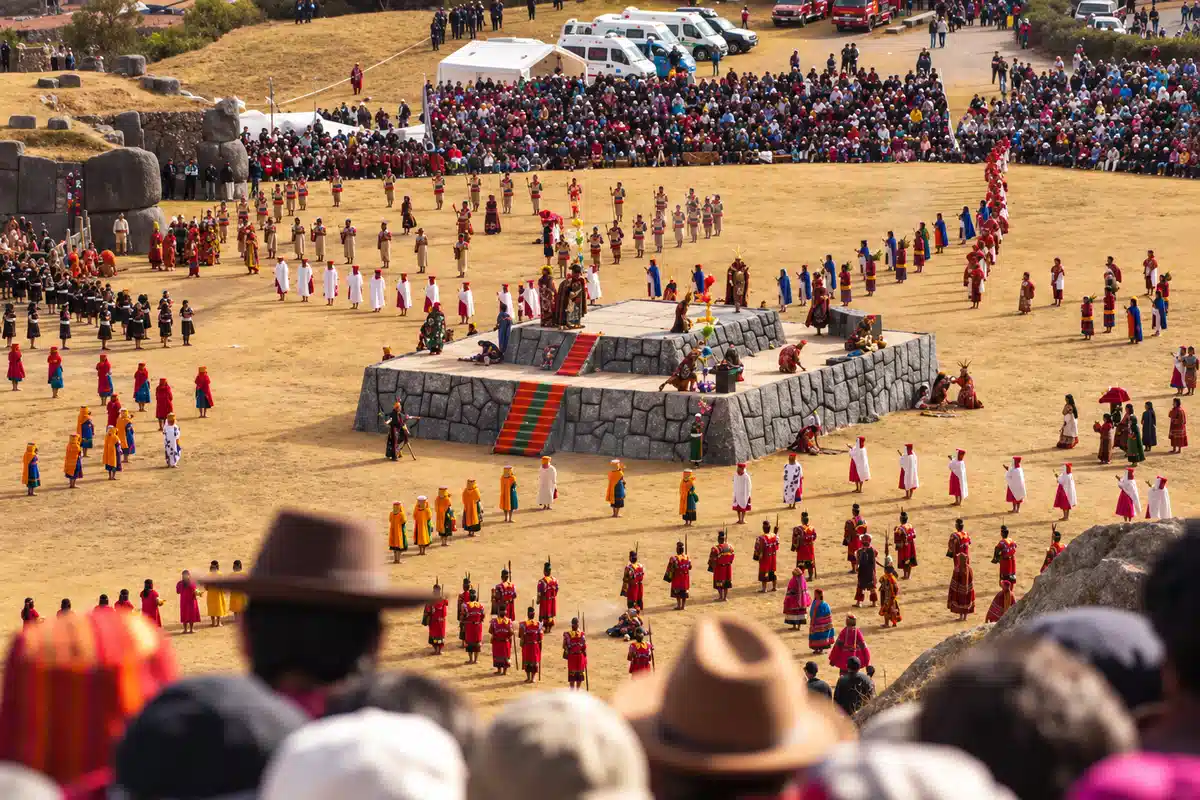
Cusco celebrates Inti Raymi on June 24, its biggest festival, and hotels fill up. Tip: Huayna Picchu was closed from June 1 to 30, 2026 for conservation work. If your trip depends on it, check for a repeat before you book June 2027.
Machu Picchu in July
72°F / 49°F (22.1 / 9.4°C), 2.1 inches (54 mm): the most reliable clear skies. Crowds are very high, with Peru’s national holidays on July 28 and 29 on top of the international peak.
July has the coolest nights at the citadel and frosty nights in Cusco. Tip: enter at 6 a.m. or after 1 p.m. to avoid the wave of day trippers in the late morning.
Machu Picchu in August
74°F / 50°F (23.1 / 10.0°C), 2.4 inches (61 mm). Crowds are very high.
Days are clear, dry and warm, and the sun is strong. Tip: SENAMHI has measured extreme UV levels in the Cusco highlands, so bring sunscreen, a hat and sunglasses even when it feels cool.
Machu Picchu in September
74°F / 52°F (23.4 / 11.1°C), 3.0 inches (76 mm): the warmest highs of the year. Crowds are high on paper, but lower than in July and August in practice.
It is the last fully dry month. Tip: September is excellent for trekkers, with stable trails and warm days. It is our second favorite month after May.
Machu Picchu in October
73°F / 53°F (22.8 / 11.5°C), 6.4 inches (163 mm): the rain doubles. Crowds stay high: in October 2025 Machu Picchu received about 4,840 visitors a day, close to the 5,600 limit.
Tip: treat October as a wet shoulder month at the citadel, even if Cusco is still fairly dry. Pack a rain jacket and expect sunny breaks between showers.
Machu Picchu in November
73°F / 54°F (22.8 / 12.0°C), 6.8 inches (173 mm). Crowds are high until November 2, then low when the limit returns to 4,500.
The green season begins and November has the earliest sunrises of the year, around 5:10 a.m. Tip: mid to late November is one of the best value windows of the year.
Machu Picchu in December
70°F / 54°F (21.2 / 12.0°C), 10.8 inches (275 mm): the rainy season is back. Crowds are low until Christmas, then spike on December 30 and 31.
December has the longest days of the year. Tip: for New Year at Machu Picchu, buy citadel tickets and trains early, because demand concentrates on those few days.
Crowds by month: when Machu Picchu is busiest
Machu Picchu admits 4,500 visitors a day, and 5,600 on high season dates. Under Ministerial Resolution 285-2025-MC, the higher limit applies in 2026 on:
- January 1
- April 2 to 5 (Easter)
- June 19 to November 2
- December 30 and 31
The real numbers confirm the pattern. From January to April 2026, Machu Picchu averaged about 3,260 visitors a day, well below the limit. In October 2025 it averaged about 4,840 a day. In total, 1,542,350 people visited in 2025.
Holidays and festivals that fill Cusco and Machu Picchu
| Event | 2026 date | Effect |
|---|---|---|
| New Year | Dec 30 to Jan 1 | 5,600 limit, very busy |
| Easter (Semana Santa) | April 2 to 5 | 5,600 limit, Peruvian travelers |
| Qoyllur Rit’i pilgrimage | Late May to early June | Busy Cusco logistics, not at Machu Picchu |
| Corpus Christi | June 4 | Busy Cusco hotels |
| Inti Raymi | June 24 | Peak demand in Cusco |
| Fiestas Patrias | July 28 and 29 | National holiday, domestic travel peak |
How far ahead tickets and trains sell out
For the classic Route 2-A, we recommend booking three to four months ahead in high season, and at least two months in low season.
For April and May, Route 2-A is often almost gone on the day sales open, and Huayna Picchu usually sells out within two weeks. Our Machu Picchu tickets guide explains every route and how to buy.
Trains are the part most travelers underestimate. Train sales open around the middle of the previous year, so seats for 2027 were already on sale in October 2026. For April, May and June, trains sell out about three months ahead.
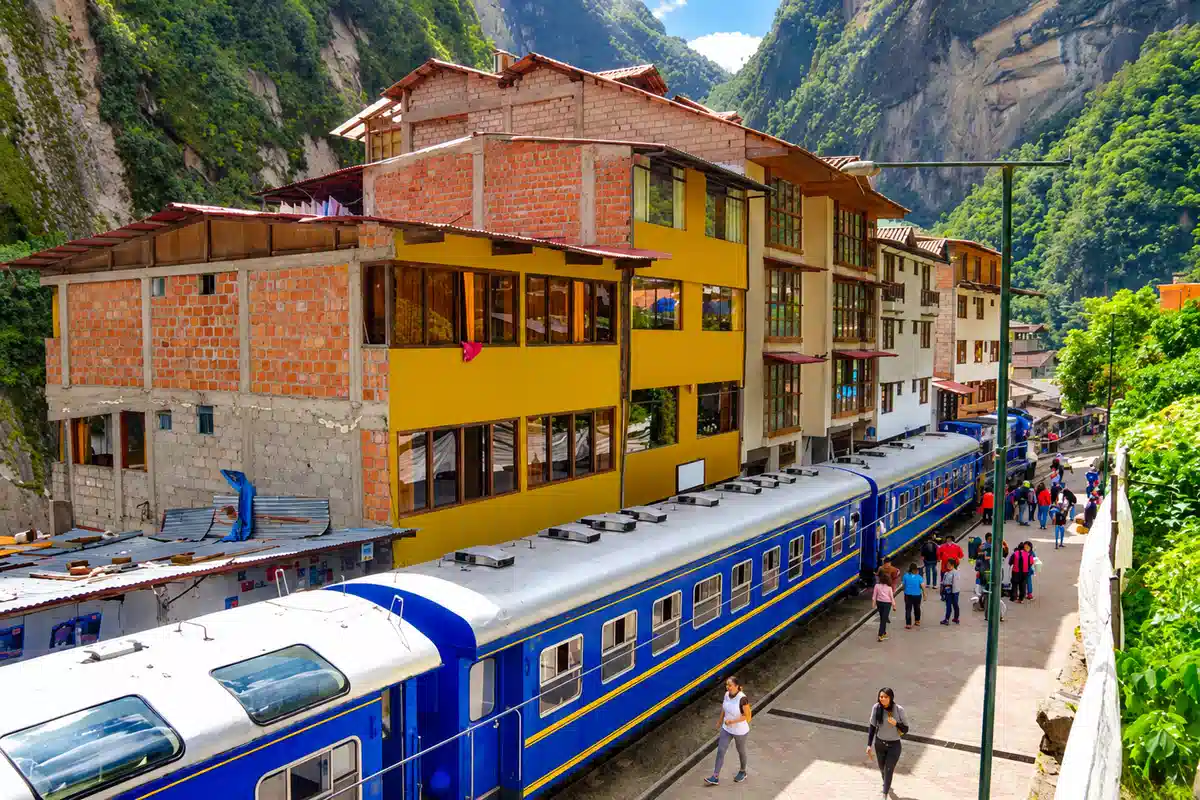
The best departures go first. Large agencies with high passenger volumes sign deals with PeruRail and Inca Rail to block seats on the most popular trains, for the high season or the whole year.
From February, the favorite afternoon returns from Aguas Calientes for April to June can already be gone: Inca Rail at 2:30 p.m. and PeruRail Expedition at 2:55 and 3:20 p.m.
Not every train sells out every day, but the risk rises sharply. It matters if you have an 8 or 9 p.m. flight out of Cusco: with a 4 p.m. train back, you will not make it. Book the train first, then the flight.
In the low season, two to four weeks ahead is usually enough for citadel tickets and trains. This is our operational experience, not an official figure.
If you travel in those months, book early: on our private tour to Machu Picchu we buy Route 2-A and the train the same day you confirm.
Best time of day to visit Machu Picchu
Entry is by fixed hourly time slots from 6 a.m. to 3 p.m., and each route has a time limit inside. Huayna Picchu has only two entries, at 7 and 10 a.m., and Machu Picchu Mountain at 7 and 9 a.m.
- 6 to 8 a.m.: the fewest people and the most atmospheric fog. Travelers who slept in Aguas Calientes fill these slots.
- 8:30 to 11 a.m.: the fog usually lifts and you get the classic postcard view. Day trippers from Cusco start arriving late in the morning.
- 1 to 3 p.m.: warm side light and thinner crowds. In the rainy season, this is when showers tend to build.
Can you see the sunrise at Machu Picchu?
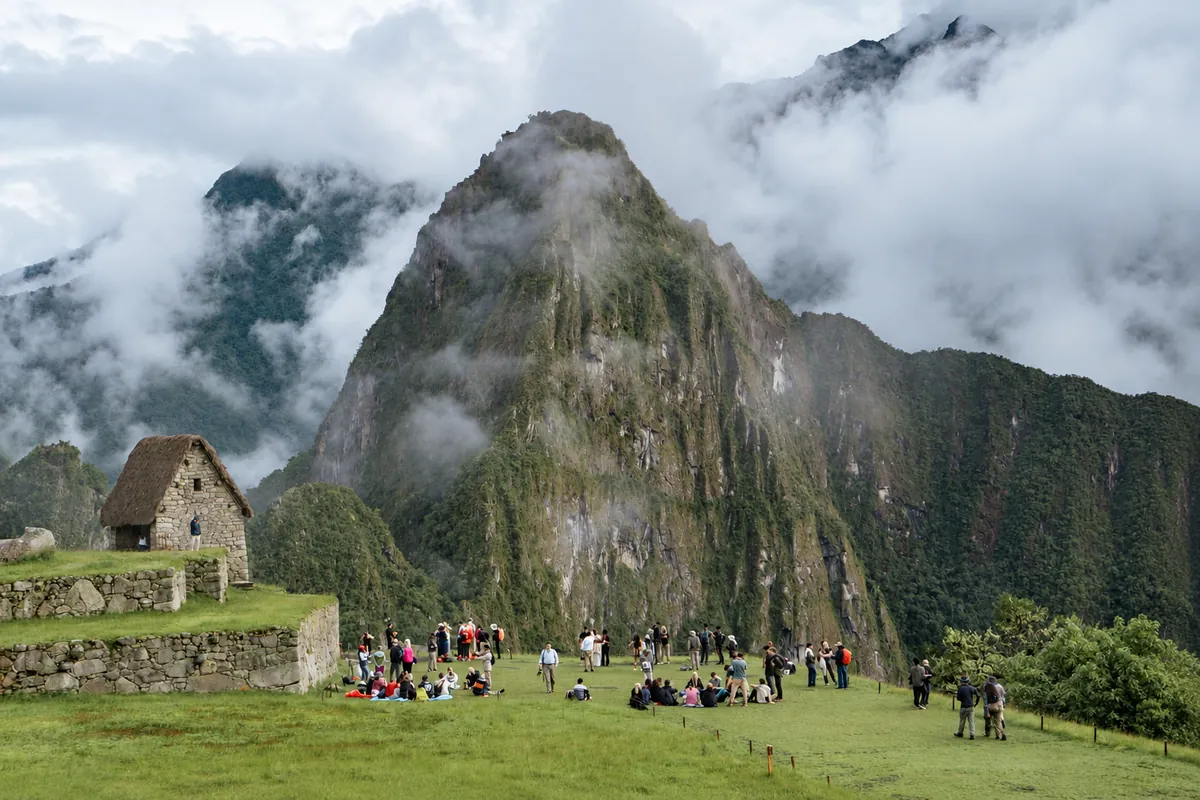
Not really, and few guides tell you this. Machu Picchu is ringed by peaks, so direct sun reaches the ruins well after sunrise, often an hour or more later. From November to January the sun is already up before the 6 a.m. gate opens.
What you see is first light: the valley slowly turning blue and gold, and the clouds rising from the river. It is beautiful, but go for that, not for a sun on the horizon. Sunset is not possible either, because the last entry is at 3 p.m.
Treks by season: the Inca Trail closure and Salkantay
The Inca Trail closes every February. The legal reason is annual maintenance under the trail’s tourism regulation: crews repair paving, stairs, retaining walls and bridges, and rain safety is a second reason. In 2026 it closed on January 31 and reopened on March 1.
The closure applies to all routes of the Inca Trail network, including the Classic trail of four days, the Short Inca Trail and the Salkantay and Inca Trail combination.
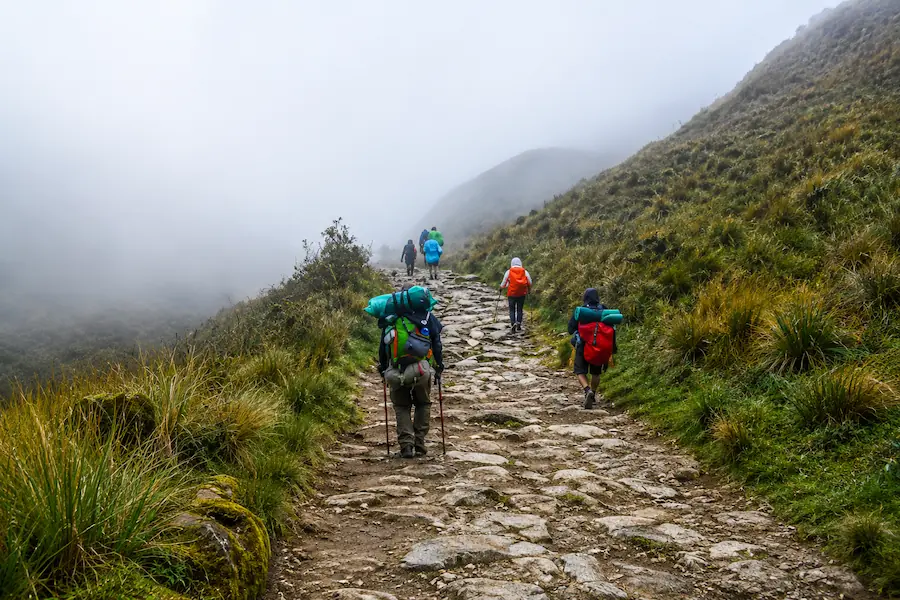
The best months for the Classic trail are May to September, with April and October as shoulder options. Our month by month guide to the best time to hike the Inca Trail covers it in detail, and the Inca Trail 4 Days is our classic trek.
The Short Inca Trail runs entirely through cloud forest, so rain matters more than cold. It is the best Inca Trail option in March, April and November.
The Salkantay Trek crosses a pass at 15,190 feet (4,630 m). From June to August expect hard frost at the high camps, and in the rainy season snow or sleet on the pass and mud on the way down.
The standard Salkantay route is outside the Inca Trail network and runs all year. Read our complete Salkantay Trek guide before you choose a month.
What to wear to Machu Picchu by season
At the citadel, mornings start around 49 to 54°F (9 to 12°C) and middays reach 69 to 74°F (21 to 23°C) all year.
Layers are the answer: a light base layer, a fleece and a rain shell. From May to September, add a warm jacket and hat for the cold evenings in Cusco.
- Rain gear in every month. A light rain jacket or poncho. Umbrellas are not allowed inside the citadel.
- Sun protection. SPF 50, a brimmed hat and UV sunglasses, even on cloudy days.
- Insect repellent. Sand flies and mosquitoes bite at Machu Picchu and in Aguas Calientes, more in the rainy season. Use lotion or a pump spray, because aerosols are not allowed inside.
- Shoes with grip. Hiking shoes or trail runners with soft soles. Hard soles and heels are not allowed, and the stone gets slippery when wet.
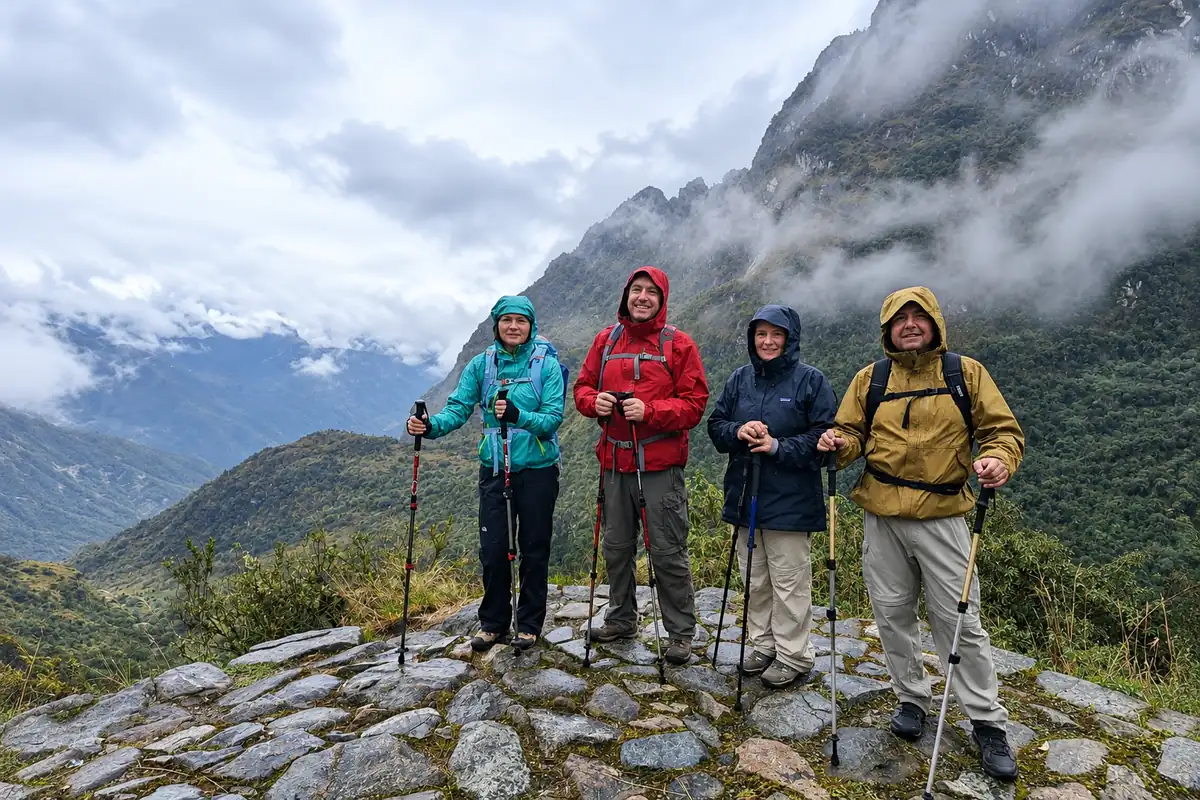
One tip from our guides: do not book a room right by the river in Aguas Calientes. The riverside has many mosquitoes even in the dry season.
What you cannot bring inside
The Ministry of Culture’s rules forbid bags larger than 40 × 35 × 20 cm (there are lockers at the entrance), food, alcohol, umbrellas, walking sticks (except ones with rubber tips for older or disabled visitors), tripods, selfie sticks, drones, aerosols and speakers.
Breaking the rules can mean expulsion without a refund.
Machu Picchu weather myths other guides repeat
- “The dry season is April to October.” At the citadel, April and October are wet shoulder months. The real dry window is May to September.
- “January gets about 5 to 7 inches of rain.” SENAMHI records 13.4 inches (341 mm), and 83 inches (2,116 mm) a year.
- “Nights at Machu Picchu drop to 41°F (5°C).” The coldest monthly average is 49°F (9.4°C). The cold figures belong to Cusco and the high trek camps.
- “It does not rain in the dry season.” June still averages 2 inches (51 mm).
- “You can stay until sunset.” The last entry is at 3 p.m. and every route has a time limit.
Machu Picchu weather FAQ
What is the best month to visit Machu Picchu?
May. It is dry, with 2.9 inches (73 mm) of rain, the hills are still green and the daily limit stays at 4,500. September is the second best choice.
What is the rainiest month at Machu Picchu?
January and March, with about 13.4 inches (341 mm) each, followed by February with 12.8 inches (325 mm).
Is Machu Picchu cold?
Not really. Average lows are 49 to 54°F (9 to 12°C) and highs 69 to 74°F (21 to 23°C). Cusco is the cold part of the trip, with July nights below freezing.
Can you visit Machu Picchu in the rainy season?
Yes. The citadel is open every day of the year. Expect showers and clouds, take the train from Ollantaytambo and keep a buffer day in Cusco in case of rail interruptions.
Is the Inca Trail open in February?
No. The whole Inca Trail network closes every February for maintenance. In 2026 it reopened on March 1.
When is Machu Picchu least crowded?
From January to March, except Easter, and from early November to mid December. In early 2026 the site averaged about 3,260 visitors a day against a limit of 4,500.
How many people can visit Machu Picchu per day?
4,500 visitors a day, and 5,600 on high season dates. In 2026 the higher limit applies from June 19 to November 2, at Easter and over New Year.
Plan your visit with a local operator
Weather, tickets and trains all depend on the date you choose.
On our Machu Picchu and Sacred Valley tour we secure the Circuit 2 ticket, the trains, the bus and the hotel in Aguas Calientes for you, and we plan the timing around the season. You can compare every option in our Machu Picchu tour packages.