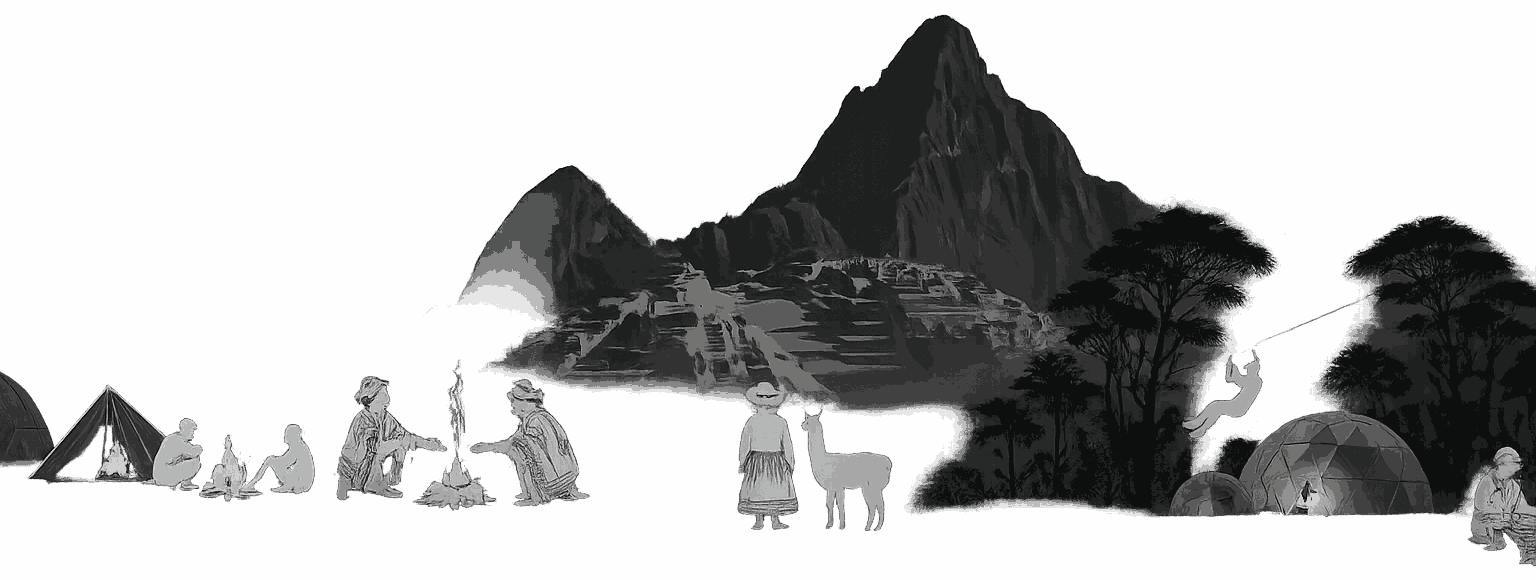

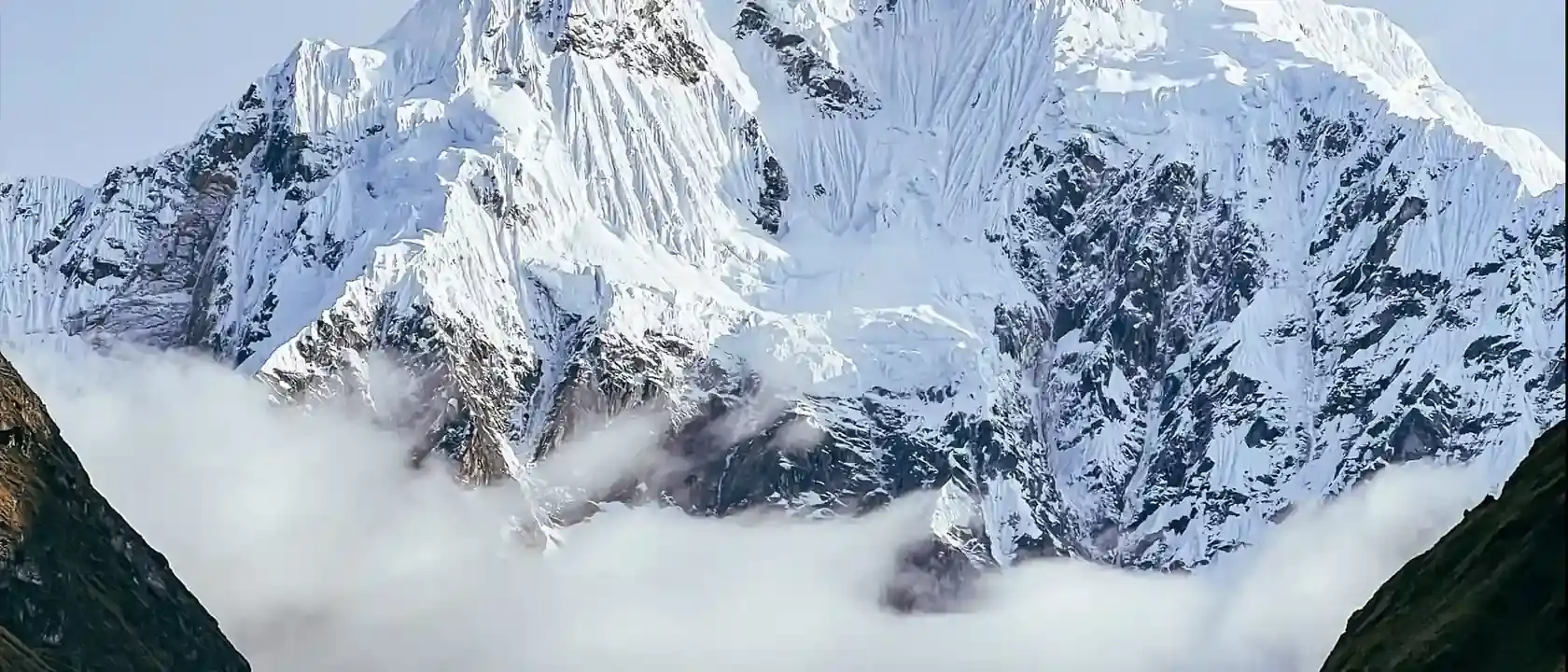
Three legendary routes lead through the Peruvian Andes to Machu Picchu and beyond — each with its own history, character and level of challenge. Here is everything you need to know before choosing your trek: Salkantay, the Inca Trail, and Choquequirao.
Salkantay Trek
The Salkantay Trek has become the world’s leading premium alternative to the classic Inca Trail — a journey of deep immersion into wild Andean nature, crossing dramatic ecological zones from glacier-capped mountain passes to dense, humid cloud forest on the way to Machu Picchu.
Origins and Cultural Significance
The name comes from the Quechua word “sallqa,” meaning “wild,” “untamed,” or “invincible” — earning the mountain its nickname, the Savage Mountain. For the Inca civilization, and for Cusco’s traditional communities today, Salkantay is far more than a geological formation: it is revered as a powerful Apu, a mountain spirit believed to control the weather, provide fresh water through glacial melt, and regulate the fertility of the valleys below. Archaeoastronomical research even suggests a ritual link to Machu Picchu — the Southern Cross aligns directly over its summit when viewed from the Intihuatana during the winter solstice.
A Pre-Hispanic Trade Route
Long before it became a hiking destination, the trails around Salkantay served as vital trade routes connecting the high puna with the resources of the cloud forest — coca leaves, medicinal plants, exotic fruits and feathers. Two significant Inca sites remain along the route: Llactapata, a tambo (rest stop) and ritual observation point with a striking direct view of Machu Picchu and Huayna Picchu, and Paucarcancha, known for its circular terracing and checkpoint structures. Many of these paths were deliberately abandoned during the Spanish conquest and the Inca resistance in Vilcabamba, to cut off intelligence and slow the Spanish advance.
The First Ascent
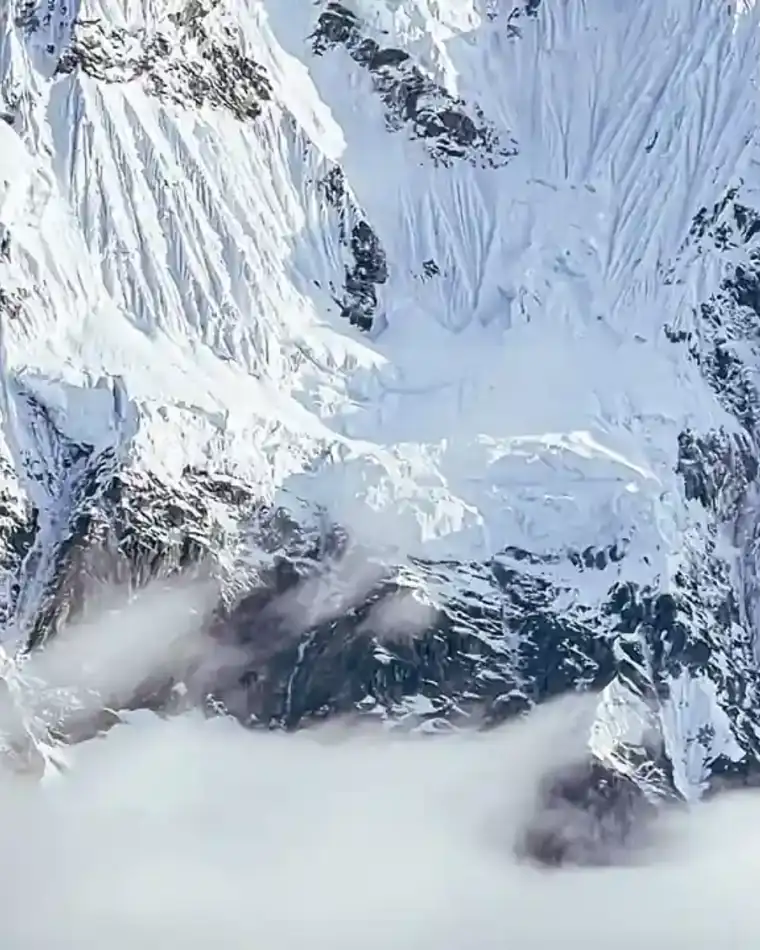
At 6,271 meters, Salkantay’s summit is one of the most technically demanding peaks in the Andes, with sheer ice walls, unstable crevasses and a chronic avalanche risk. It was first summited on August 5, 1952, by a joint French-American expedition led by pioneering French alpinist Claude Kogan and American Dr. Fred D. Ayers — days after a Swiss team was forced to turn back near the top. To this day, fewer than 25 expeditions have reached the summit.
From Hidden Gem to World-Renowned Trek
The Salkantay Trek’s popularity surged in the early 2000s, after Peru introduced strict daily permit limits on the classic Inca Trail to protect it from overtourism. Salkantay emerged as the natural alternative — unrestricted and equally breathtaking. National Geographic Adventure Travel Magazine later named it one of the 25 best treks in the world, and the route’s growing network of geodesic domes and Andean eco-lodges has repeatedly earned operators along the trail “Best Tour Operator in South America” honors at the World Travel Awards.
Choosing Your Route: Salkantay Trek Variants
The trek can be tailored to different fitness levels and timeframes:
- 6-7 Days — Salkantay + Inca Trail Connection: the most complete and demanding option, detouring over the Incachiriaska pass (5,100 m) to join the classic Inca Trail at Huayllabamba and enter Machu Picchu on foot through the Sun Gate (Intipunku).
- 5 Days — Classic Route: the most popular and recommended option, covering roughly 74 km with a well-paced acclimatization schedule, crossing the Salkantay Pass (4,650 m), the subtropical Santa Teresa area, and the Llactapata ruins.
- 4 Days — Express Route: for experienced trekkers on a tighter schedule; covers the same distance as the classic route with longer daily stages, usually skipping Llactapata for a direct route to Hidroeléctrica and Aguas Calientes.
- 3 Days — Challenge: a high-intensity itinerary combining fast-paced hiking with local transport support on lower sections — recommended only for athletes or experienced mountain trekkers.
- 2 Days — Humantay Lake & Salkantay Pass: a scenic highlights-only version, visiting Humantay Lake (4,200 m) on day one and the Salkantay Pass (4,650 m) on day two, returning to Cusco without continuing to Machu Picchu.
Difficulty & Safety
Officially rated Moderate to Challenging, the trek involves no technical climbing but does carry real environmental risks: altitude sickness at the Salkantay (4,650 m) and Incachiriaska (5,100 m) passes, dramatic temperature swings — from below-freezing nights at Soraypampa to humid tropical heat in Chaullay and Lucmabamba — and a steep, knee-testing descent of nearly 2,000 vertical meters on day two.
Before you go:
- Spend 2-3 full days acclimatizing in Cusco or the Sacred Valley before starting.
- Begin cardio and leg-strength training 6-8 weeks in advance.
- Use broken-in, waterproof hiking boots and trekking poles.
- Dress in a three-layer system: thermal, insulating and waterproof/windproof.
- Plan your trip during the dry season (May-September) to avoid landslide and trail-collapse risk in the rainy months (December-March).
View all available Salkantay Trek tours →
Inca Trail
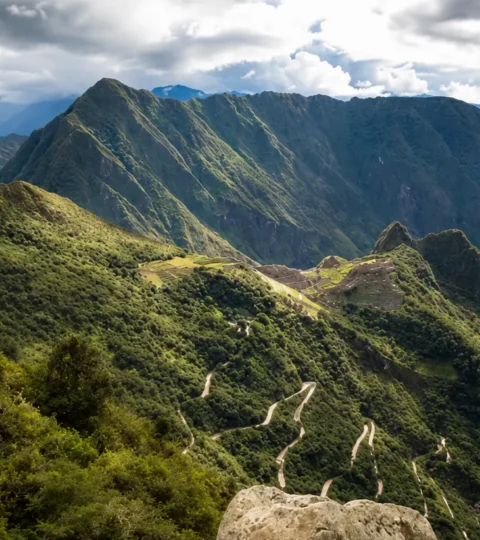
The Inca Trail is the original road to Machu Picchu — a stone-paved ceremonial route built by the Inca in the 15th century, once reserved for nobility and priests walking to the sacred citadel. It remains the only trek that ends the way the Inca intended: through the Sun Gate, with Machu Picchu appearing below at sunrise.
Part of a Much Larger Network
This stretch of trail was originally a small section of the Qhapaq Ñan, the vast Inca road system that once connected the empire across more than 30,000 km, from present-day Colombia to Chile and Argentina. Unlike the trade routes around Salkantay, the path to Machu Picchu was built with a ceremonial purpose — a pilgrimage route leading pilgrims and officials toward one of the empire’s most sacred sites.
Ruins Along the Way
The trail is one of the few in the world where the destination is not the only highlight — it passes through a chain of well-preserved Inca sites: Patallacta, a large agricultural and administrative complex; Runkurakay, a round watchtower once used as a rest post; Sayacmarca (“Inaccessible Town”), perched dramatically on a cliff; Phuyupatamarca (“Town Above the Clouds”), with its ceremonial baths; and Wiñay Wayna (“Forever Young”), among the most spectacular sites on the route, with terraces cascading down the mountainside just before the final approach to the Sun Gate (Intipunku).
Why Permits Are Limited
Since 2001, Peru has capped Inca Trail access to 500 permits per day — including guides and porters, which leaves roughly 200 spots for trekkers. It is the main reason travel dates need to be booked months in advance, especially for the May-September dry season, and it is exactly what pushed alternative routes like Salkantay and Choquequirao into the spotlight over the last two decades.
Choosing Your Route: Inca Trail Variants
- Classic Route — 4 Days / 3 Nights: the full experience, covering about 43 km and crossing Dead Woman’s Pass (Warmiwañusca, 4,215 m), the highest and most demanding point of the trek, before visiting every major ruin on the way to the Sun Gate.
- Short Inca Trail — 2 Days / 1 Night: starts further along the route at kilometer 104, skipping the highest mountain passes while still visiting Wiñay Wayna and entering Machu Picchu through the Sun Gate — ideal for travelers with less time or a lower fitness level.
- Luxury Inca Trail — 4 Days: the same classic itinerary with upgraded camping — larger tents, enhanced meals and additional porter support for a more comfortable multi-day experience.
Difficulty & Safety
Rated Moderate to Challenging, the classic route’s main test is Dead Woman’s Pass on day two, combined with long stretches of uneven stone stairs — tough on the way up, and often tougher on the knees on the way down.
Before you go:
- Book your permit 5-6 months in advance for the May-September high season — spots sell out fast.
- Spend 2-3 full days acclimatizing in Cusco or the Sacred Valley before starting.
- Use trekking poles for the steep stone descents, especially on day three.
- Pack layers — mornings are cold at altitude, afternoons can be sun-intense.
View all available Inca Trail tours →
Choquequirao Trek
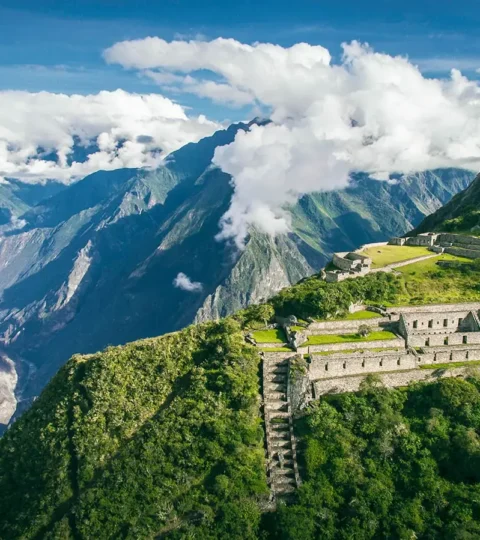
Choquequirao — “Cradle of Gold” in Quechua — is often called the sister citadel of Machu Picchu: a similarly vast and sophisticated Inca site, perched dramatically above the Apurímac River canyon. Unlike its famous sibling, it receives only a handful of visitors a day, since there is still no road access — reaching it takes a demanding multi-day trek through remote mountain terrain.
A Stronghold of the Late Empire
Choquequirao is believed to have been built in the late 15th century, likely under Túpac Inca Yupanqui or his son Huayna Cápac, serving as a regional administrative and religious center. Some historians link it to the Inca resistance based in Vilcabamba after the Spanish conquest, suggesting it may have remained active as a stronghold well after Cusco fell.
The Llama Terraces
One architectural feature sets Choquequirao apart from any other Inca site: several of its lower terraces are decorated with large llama figures built from inlaid white stone, a decorative masonry technique not found at Machu Picchu or along the Inca Trail. Archaeologists estimate that only 30-40% of the site has been excavated and cleared of vegetation so far — most of Choquequirao is still hidden beneath the cloud forest, with excavation work ongoing.
Getting There
The trek begins in Cachora, descending nearly 1,500 vertical meters into the Apurímac canyon before climbing back up to the ruins — and repeating the same elevation change on the way out. A long-discussed cable car project could eventually cut the journey from two days to around fifteen minutes, which would dramatically change how many people visit — for now, the trek remains the only way in, which is exactly what keeps Choquequirao so quiet.
Choosing Your Route: Choquequirao Variants
- 4 Days — Standard Round Trip: the recommended pace, descending to the Apurímac river, exploring the ruins with time to rest, and returning via the same route.
- 3 Days — Fast-Paced: a more intense itinerary for very fit trekkers on a tighter schedule, covering the same ground with longer daily distances.
Difficulty & Safety
Widely considered one of the toughest treks in the Cusco region — there is no permit cap like on the Inca Trail, but the repeated, steep elevation changes and strong sun exposure inside the canyon make it a serious physical challenge.
Before you go:
- Train specifically for sustained uphill and downhill hiking — the canyon crossing is relentless in both directions.
- Carry (and drink) more water than you think you need — the canyon floor gets hot and dry.
- Sun protection is essential: high-factor sunscreen, a hat and UV-protective clothing.
- Plan for the dry season (May-September) to avoid slippery canyon trails.